



UEH Green Campus Regulation
As one of the orientations of the UEH Multidisciplinary and Sustainable strategy, "From a Circular Campus to a Green University", the UEH Green Campus project wishes to embark on solving environmental problems right at the campuses of the university. To build a clean and beautiful university campus and to aim to be "green" in a comprehensive way, in July 2023, University of Economics Ho Chi Minh City (UEH) officially issued the Regulation of Green Campus Practices for the entire campus of UEH and Vinh Long, encouraging officials, employees, learners and units relevant to practices today.
On the basis of reference and compliance with current domestic and international legal documents (United Nations Environment Program Green University Toolkit V2.0, Greening Universities Toolkit V2.0, UNEP), the relevant units, under the direction of the Board of Management, the Sustainable University Project Board and the advice of leading environmental experts, have completed and officially issued the Regulation on Green Campus Practices. The regulation has been implemented synchronously for all UEHers and related units at all campuses, dormitories of the University and Vinh Long Campus since August 2023.
Details of Regulations of Green Campus Practices can be found here
This Regulation is issued for the purpose of building awareness and practices of Green Campus for officials, employees, and learners at UEH. Besides, developing a set of rules and regulations for Green Campus is an important content in the implementation of UEH University's sustainable strategy.
This Regulation consists of 5 chapters, stating general information/basic concepts, specific regulations for the Green Campus Practice at UEH, regulations for each stakeholder, management mechanism, appointment of tasks, and organization. Specifically:
Chapter 1: Regulations on general information regarding purposes, basis of issuance, subjects, scope of application, and concepts of approaches to Green Campus
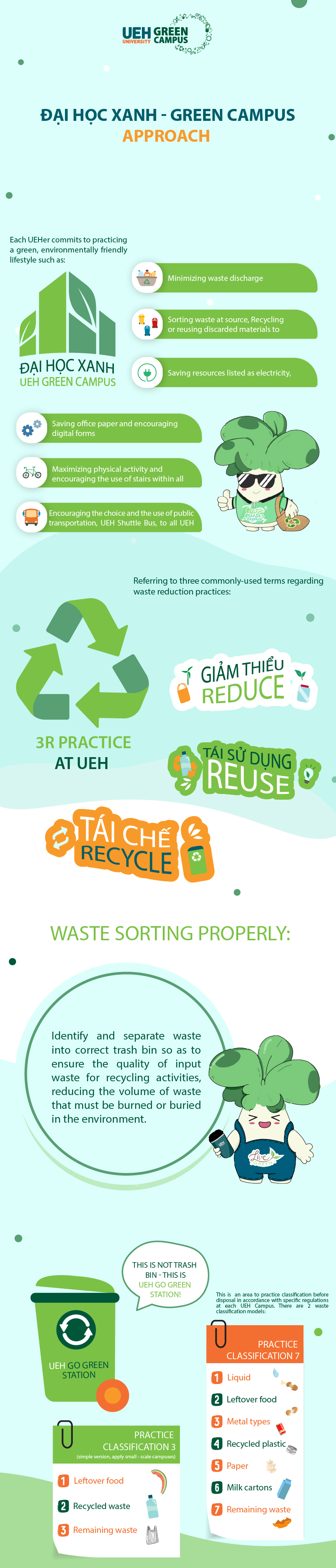
Thanks to the new modern and international approaches, the Regulations clearly state specific actions so that UEHer can: (i) Practice waste classification at source, (ii) Practice the 3R principle (Reduce, Reuse, Recycle), (iii) Green University principles. Special emphasis is placed on classifying waste at source at UEH Go Green Stations (garbage sorting stations, standardized trash bins) at campuses, forming green habits on campuses and in daily life.
Chapter 2: Detailed regulations on the UEH Green Campus Practices include 3 main parts:
Practice waste classification in accordance with Model 3 (Food scraps, recyclables, residual trash) or Model 7 (liquids, food scraps, metals, recycled plastics, paper, milk cartons, and remaining trash ) at UEH Go Green Stations located at UEH Campuses;
- Policy to reduce waste from disposable products (plastic, paper,...) by practicing 3R including Reduce, Reuse and Recycle.
2. Reuse: UEHer is encouraged to proactively reuse products and package so as to extend the product life cycle while still ensuring health through performing the following:
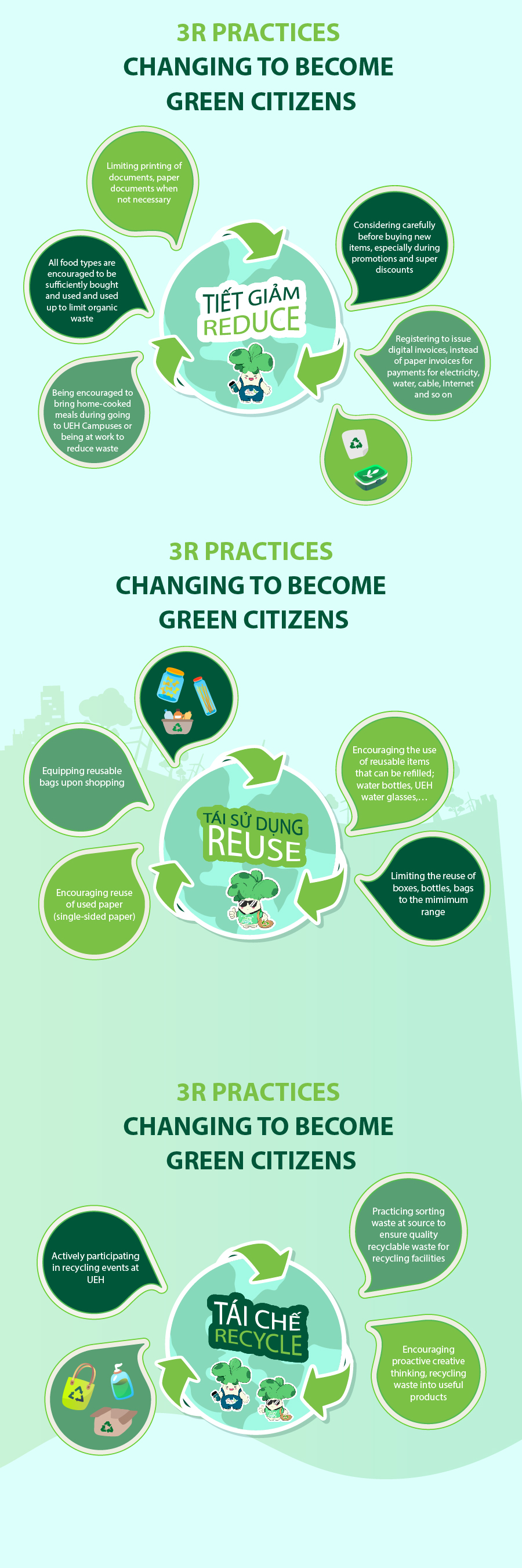
Principles of waste classification and waste treatment methods at UEH facilities in the city. Ho Chi Minh and UEH - Vinh Long Branch
|
No |
Type of waste |
Describe |
Classification method |
Processing method |
|
Model 7 |
||||
|
1 |
Liquid |
Non-residue organic liquids such as coffee, soft drinks, juice, soy sauce, etc. |
The liquid needs to be filtered of residue and residue before being put into the tank. |
Waste water treatment |
|
2 |
Leftover food |
Unprocessed or processed foods, organic liquids with residue, yard waste. |
Pour out all the water and liquid in leftover food before putting it in the bin. |
Landfill |
|
3 |
Metal |
Food cans, metal beverage cans, screws and other metal scraps. |
Pour out all the steps, remaining liquid and press the can/box before putting it in the bin; Nails and screws are wrapped in paper bags before being put into boxes. |
Send to collection partner for recycling |
|
4 |
Recycled plastic |
Bottles, jars, plastic containers, plastic straws, plastic spoons, other plastic waste products. |
Pour out all remaining water and liquid and flatten the empty plastic bottle/cup before placing it in the bin. |
Send to collection partner for recycling |
|
5 |
Paper |
Notebook paper, printing paper, newspapers, books, cardboard, paper bags, paper cups, and other paper waste. |
Keep it dry and fold it neatly before putting it in the box. |
Send to collection partner for recycling |
|
6 |
Milk carton |
Paper milk carton (no straw included). |
Empty the remaining milk from the carton and flatten it before putting it in the carton. |
Send to collection partner for recycling |
|
7 |
Remaining waste |
Waste that does not belong to the above groups (except waste that is electronic equipment and batteries brought to the Technical Department at each facility). |
Keep dry; Pour off water and liquid before putting it in the bin. |
Landfill |
|
Model 3 |
||||
|
1 |
Organic waste group |
Unprocessed or unprocessed foods, organic liquids with residue, yard waste. |
|
Landfill |
|
2 |
Recyclable waste group |
Waste such as metal, paper, plastic, milk cartons. |
Keep dry; Empty remaining water and liquids from jars, cups, bottles, and boxes; Flatten if possible before placing in the bin. |
Send to collection partner for recycling |
|
3 |
The remaining group of waste |
Waste that does not belong to the above groups (except waste that is electronic equipment and batteries brought to the Technical Department at each facility). |
Keep dry; Pour off water and liquid before putting it in the bin. |
Landfill |
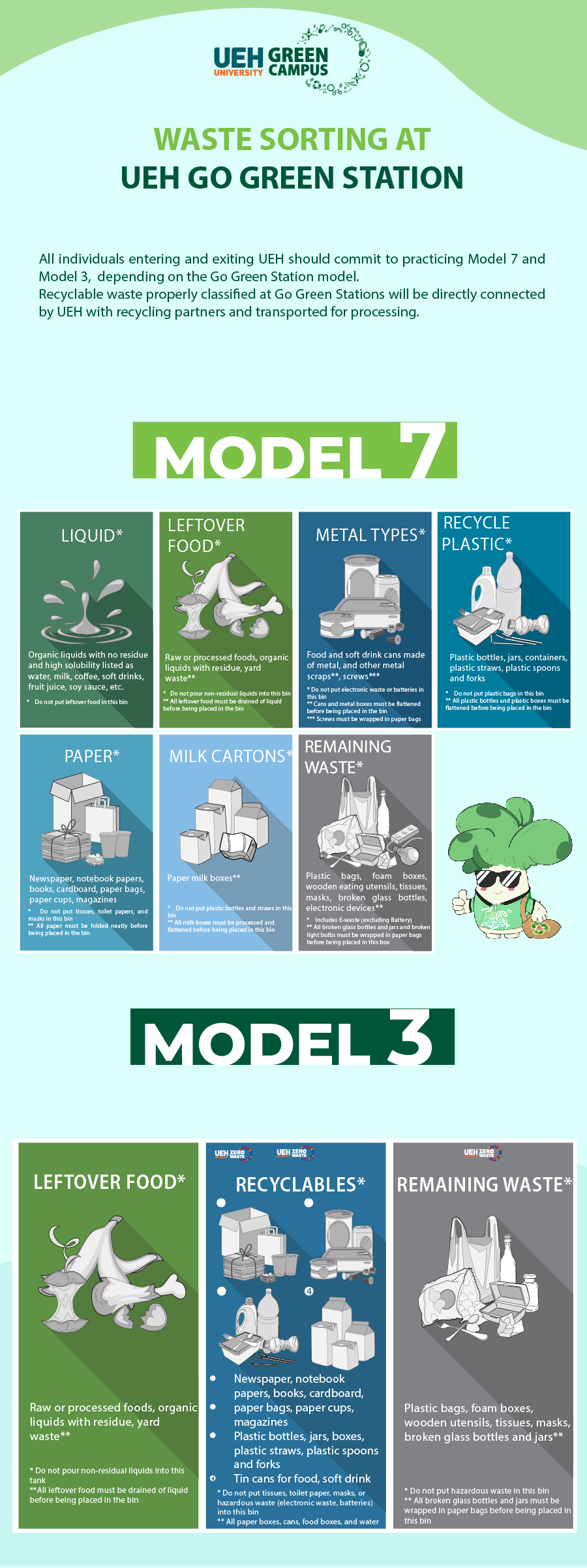
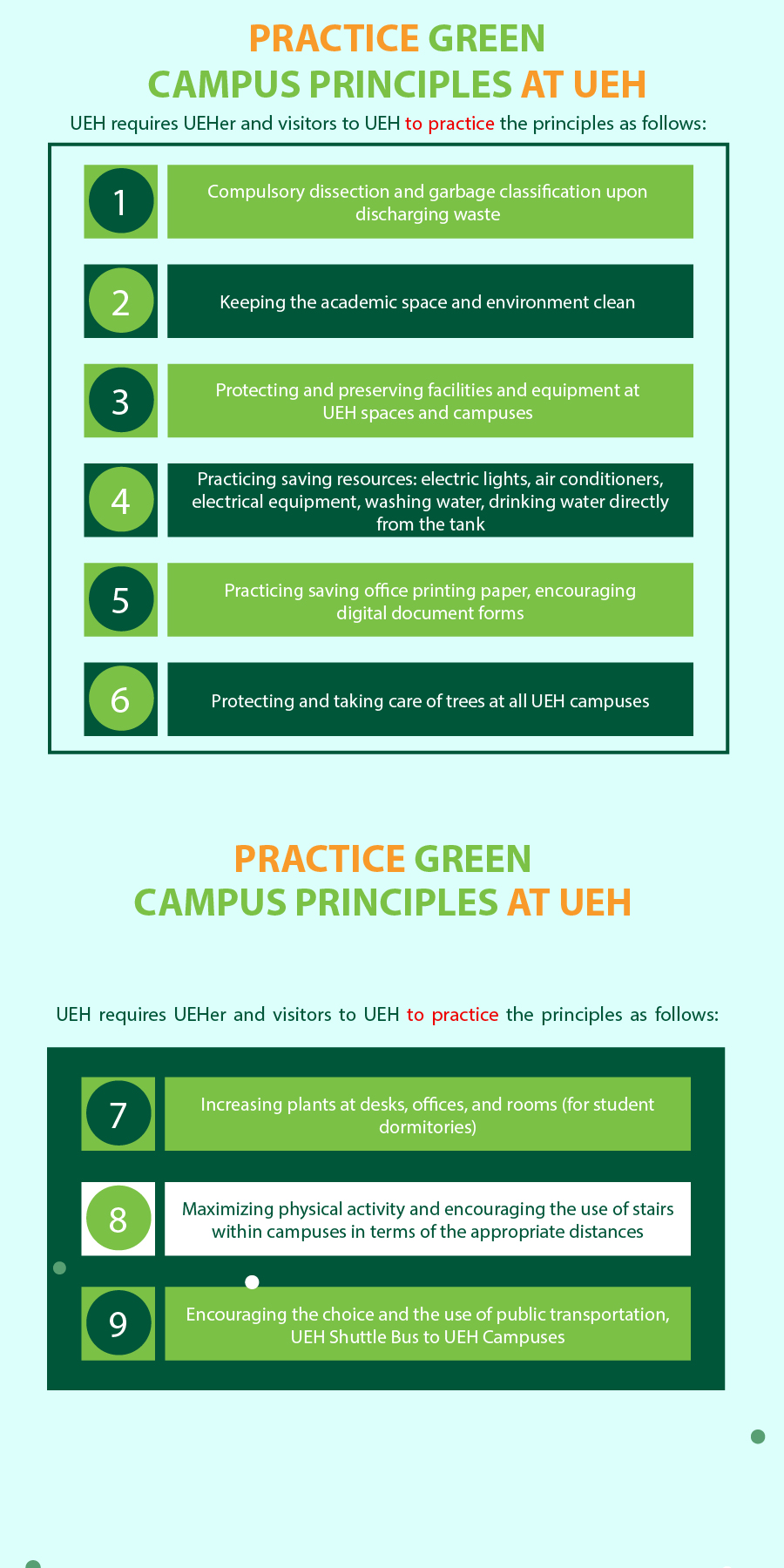
Practice Green University principles are as follows: Dissecting and classifying garbage; Keeping the academic space and environment clean; Protecting and preserving facilities and equipment at UEH campus; Saving resources: Electric lights, air conditioners, water, office printing paper; Increasing trees at desks, offices, living rooms; Increasing physical activities and using stairs within facilities; Choosing and using public transportation, UEH Shuttle Bus.
Chapter 3: Regulations for related parties, specifically units under UEH, Member UEH Colleges, and Units under Vinh Long Campus; UEHer’s responsibilities; Units related to waste collection, classification and transportation; Units involved in procurement of goods and services; Goods and service providers (canteens, supermarkets, etc.); Event and festival organizers.

Chapter 4: Management of task appointment prescribed for the Department of Facilities, Vinh Long Campus; Department of Human Resources Management, Department of Marketing and Communication, Department of Student Affairs, Department of Inspectorate, Youth Union - Student Association to implement the contents of Green Campus Regulations
Chapter 5: Implementation includes sanctions and enforcement provisions related to the Regulations
The year 2023 marked a significant advancement in the commitment of the University of Economics Ho Chi Minh City (UEH) to environmental protection and the promotion of sustainable development. In its journey toward becoming a Green University, UEH implemented a series of green initiatives aimed at raising community awareness and encouraging concrete actions for environmental conservation. Below are some of the outstanding activities undertaken by UEH over the past year.
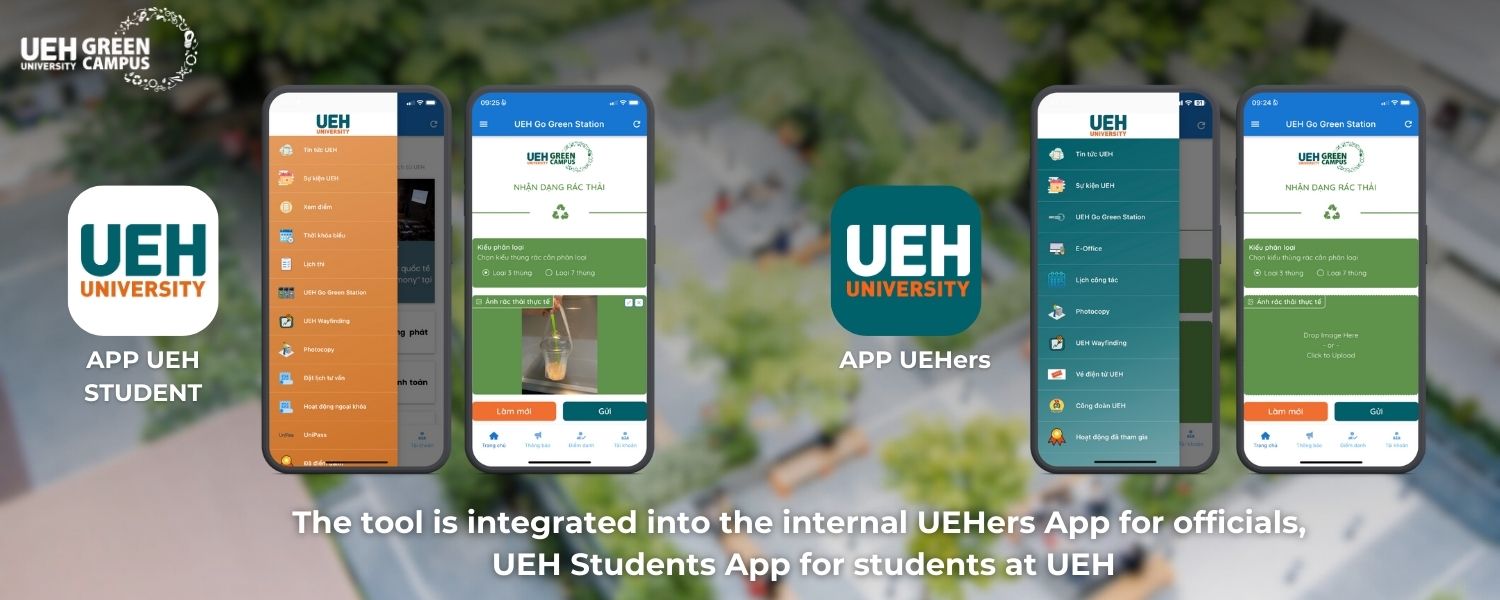
1/ Innovative technology solution: APP supporting waste classification using AI technology, free for the community
When practicing waste classification at source, one of the difficulties that receives the most feedback from the young community in general and students at UEH, in particular, is not knowing what type of waste needs to be thrown away and what kind of waste needed to be thrown in which box. Although there have been many diverse knowledge-sharing programs and activities, how to support the practice of quickly and effectively classifying waste at source, aiming at long-term behavioral adjustment, is still a question posed by UEH. Understanding this difficulty, UEH launched an App to support trash identification, based on artificial intelligence technology for UEHers and is open to the community for free. Notably, the App was developed by UEH lecturers.
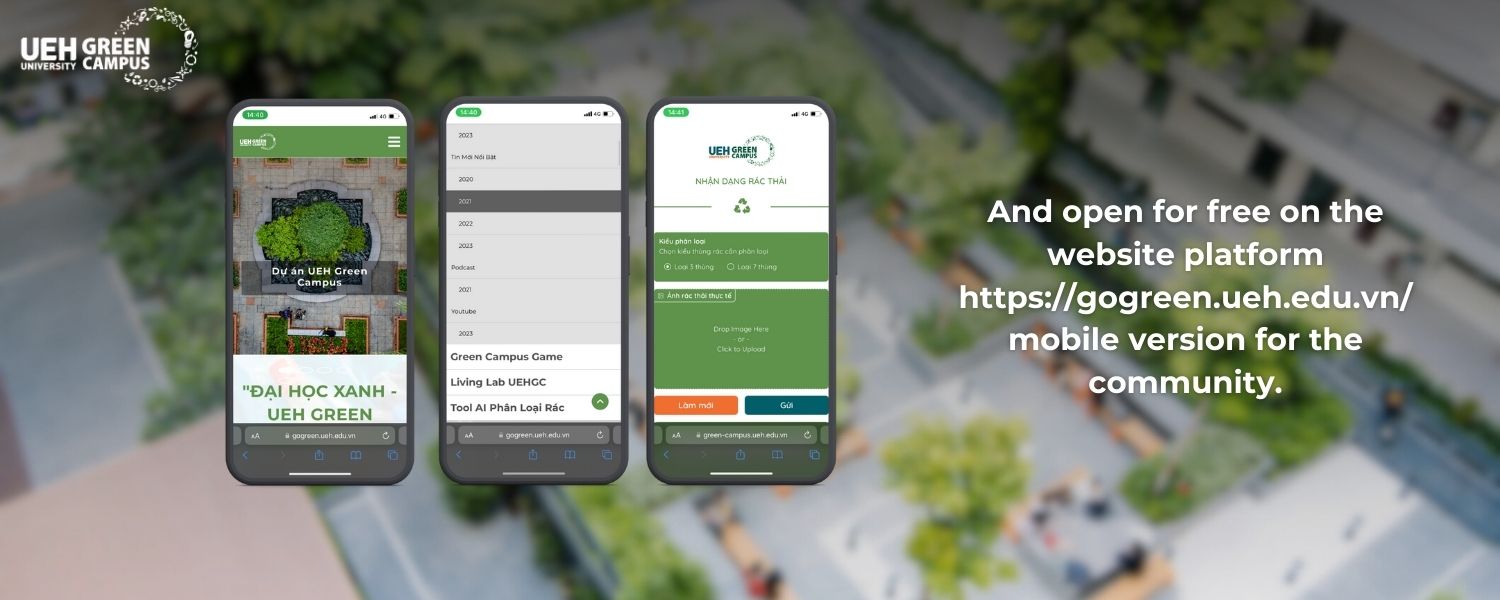
The tool, integrated into the internal UEHers App for officials and the UEH Student App, is open for free on the website https://gogreen.ueh.edu.vn/ mobile version for the community.
2/ Organizing UEH Green Day: Green Sight - From Proper Waste Sorting Awareness to Sustainable Fashion Application and Environmental Protection
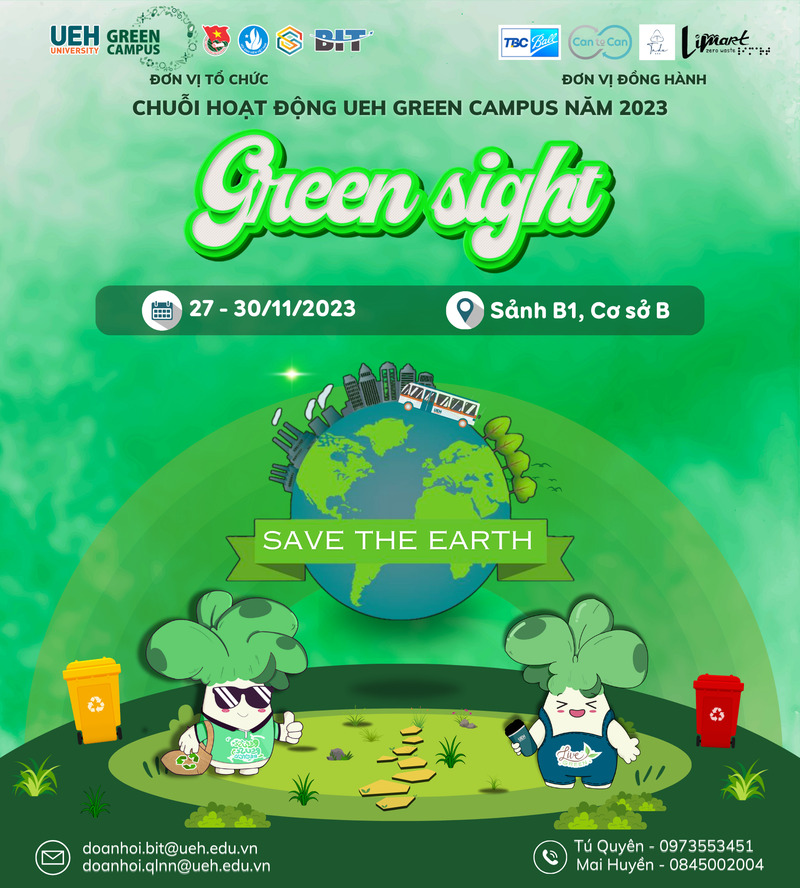
From November 27 to November 30, 2023, the University of Economics Ho Chi Minh City (UEH) held a series of activities under the theme “Green Sight” as part of the “UEH Green Campus 2023” project. The program featured a range of highly engaging and educational activities designed to enhance students' awareness and practice of the “Green Campus Principles,” thereby fostering proper waste sorting awareness, the application of sustainable fashion, and environmental protection.
The event was organized by the Student Union of the Faculty of Public Administration and the Business Information Technology Faculty’s Student Union under the guidance of the UEH Executive Board, the UEH Green Campus Project Committee, the Youth Union – UEH Student Association, and partners such as TBC Ball – Can to Can, TADU, Limart, among others. It provided a constructive and educational platform for the student community. The activities played a significant role in raising awareness among the younger generation about the importance of maintaining a green – clean – beautiful environment, starting with simple habits like sorting waste or using personal bags instead of plastic packaging in daily life, and emphasized the responsibility of UEH community members in protecting and building a sustainable Green University.
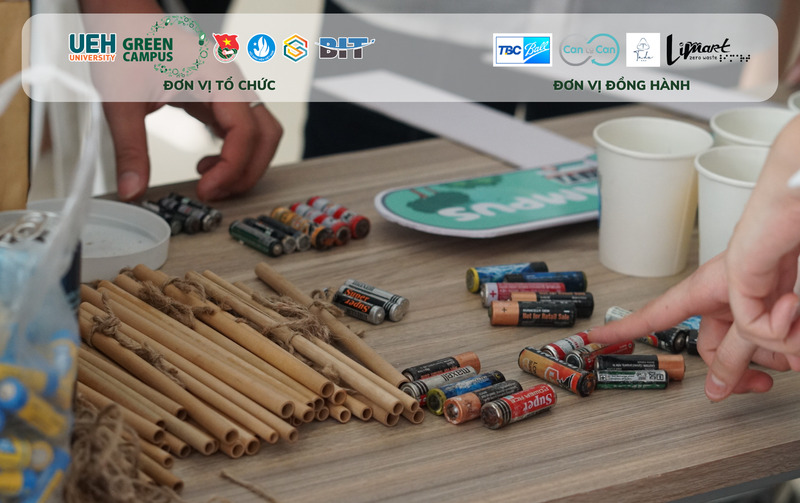
Coming to the booth "Exchange batteries for gifts", students brought old batteries to exchange for small, pretty potted plants or environmentally friendly green items such as bamboo straws.
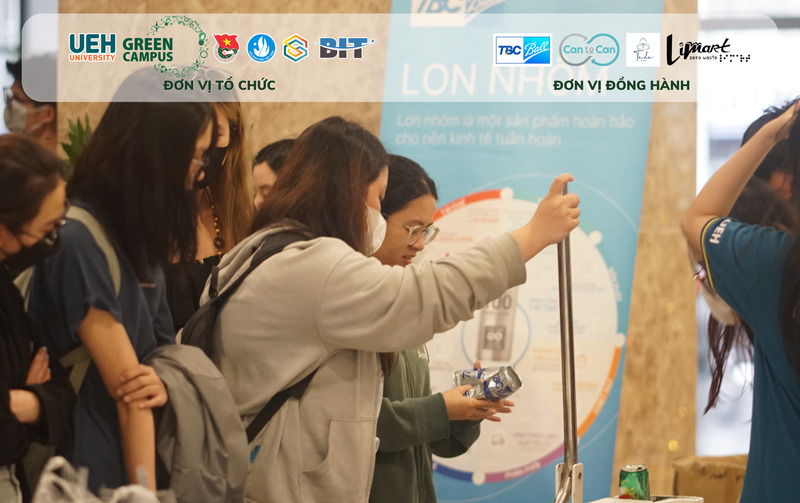
With simple participation rules, the booth of Exchanging old cans for new cans and pressing cans to regenerate the life cycle of aluminum cans with TBC BALL - Can to can also especially attracts students to bring aluminum cans to exchange for attractive gifts. When exchanging 40 used aluminum cans (soft drink cans...), you will immediately receive an extremely convenient and environmentally friendly tote bag. In addition, TBC Ball - Can to can also brings students interesting can pressing activities with extremely lovely gifts, helping them learn more about the waste recycling process from collecting used cans.
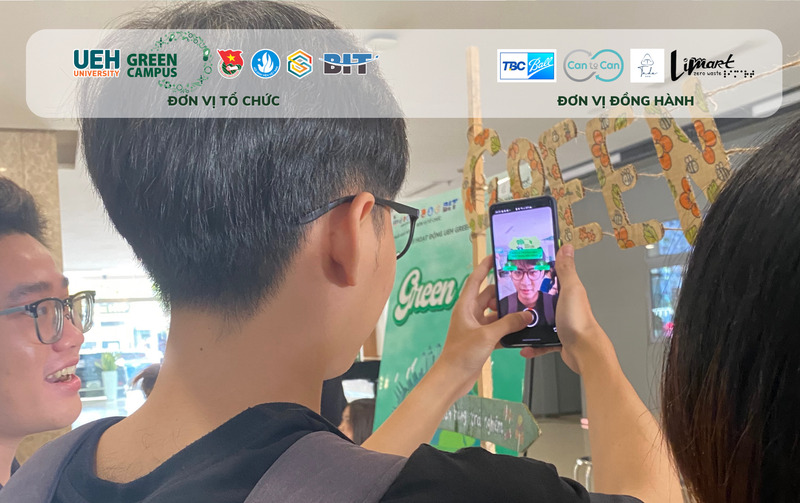
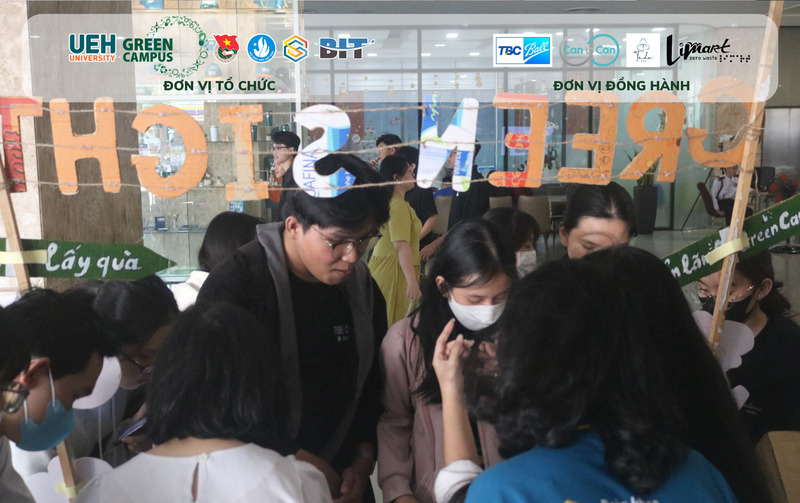 Coming to “Fashion News”, students will have more knowledge and correct perspectives on the dangers that fast fashion brings, thereby starting to move towards sustainable consumption with green fashion, sustainable fashion. To further consolidate knowledge, the Organizing Committee also prepared sets of questions through filters on social networking sites so that students can participate in filming clips, answering and winning attractive gifts.
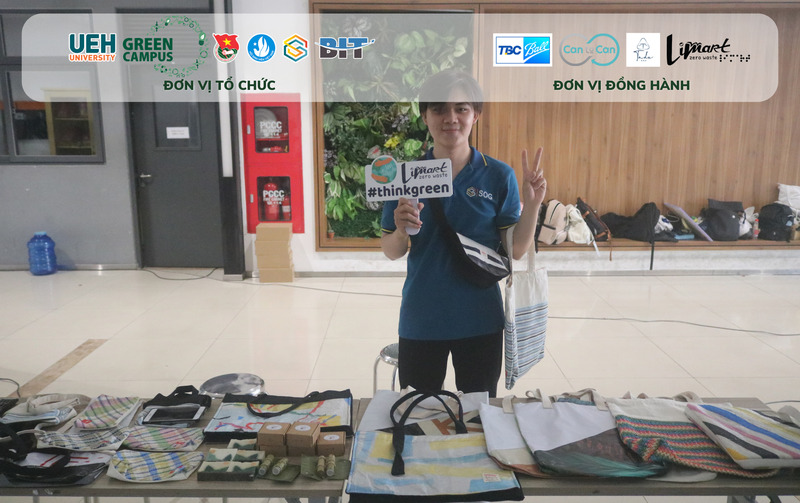
Along with the “Fashion News”, the program also featured the Limat booth with handmade products recycled from old nylon fibers that were extremely sophisticated and delicate, or scented wax and soap activities using green materials, saying no to chemicals to build a green and sustainable consumption style. In addition, there was also a nylon collection activity to provide more raw materials for the unit so that Limat could continue to produce fashionable bags to solve the current extremely painful problem of nylon waste.
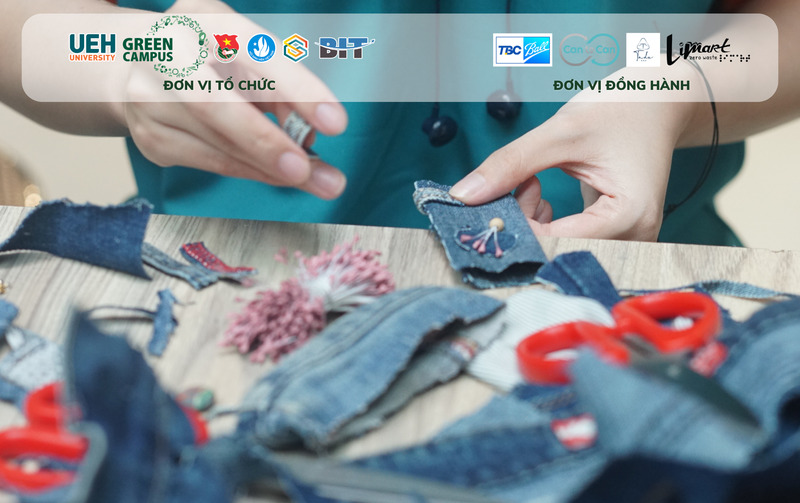
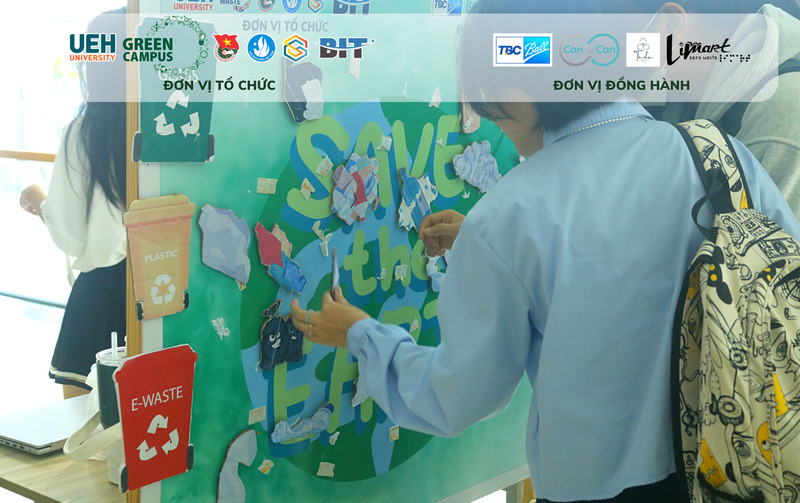
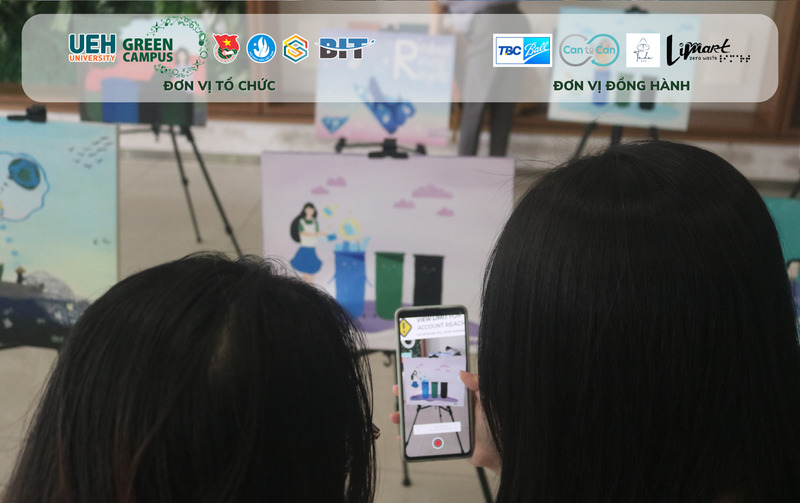
Coming to the Green Earth booth, students can access knowledge about waste and waste classification; practice the habit of disposing of waste according to the correct classification.
3/ UEH Green Campus 2023 Orientation Activities Series - 3R1A Challenge Series - "Gen G"
To contribute to building a comprehensive awareness among students regarding the “Green University Regulations,” the UEH Faculty of Law’s Student Union launched the UEH GREEN CAMPUS 2023 series, titled “Gen G.” By integrating the 3R1A challenge series, “Gen G” aims to foster a healthy environment and encourage students to internalize environmental protection awareness through waste reduction and the practice of the 3R1A culture (REDUCE – REUSE – RECYCLE – ACTION) at UEH. With the slogan “Joining Hands to Create a Green Future,” Gen G (Generation - Greeners) supports the youth in promoting a green environment, healthy living, and guiding students to become global citizens, contributing to the sustainable and multidisciplinary development of UEH.
5/ Install a refillable water bottle system, encourage students to bring their own bottles to use, and reduce plastic waste.
6/ At events, seminars and talks held at UEH, drinking water will be provided in reusable glass bottles or paper cups at refillable water bottles.
7/ Integrating Environmental Knowledge and Green Living into Every Lesson
Providing and disseminating knowledge about the Green Campus initiative and the United Nations' 17 Sustainable Development Goals (SDGs) to students is essential, laying the foundation for raising awareness among the younger generation. Therefore, UEH students have been exposed to environmental, interdisciplinary, and sustainable knowledge from the very start of their university journey. This begins with the first week of orientation and continues through introductory courses such as Sustainable Development, as well as through practical projects in subjects like Digital Marketing, Public Relations, and Co-design. This integration ensures that students understand and value sustainable practices throughout their education and beyond.
UEH students film a report at a paper pressing factory to transport for recycling.
The “Clean Waste Campaign,” carried out by UEH K47 students as part of the Public Relations course, aims to convey the importance of waste classification to students in schools and households, while also encouraging individuals to practice waste sorting. Additionally, the campaign addresses the issue of waste classification by businesses and waste management in the environment. “Clean Waste” seeks to provide deeper insight into the journey of waste—where it goes and the stories of people who are “closely connected” to waste in society. This initiative aims to inspire students both within and outside of UEH and gradually embed waste-sorting practices into daily life.
Moreover, the campaign is supported by the development of a game simulation (gamification) technology, designed to enhance smart education for students with knowledge on Waste Classification and the 3R model (Reduce – Reuse – Recycle), as well as to promote behavioral change.
8/ Contributing Solutions for Issues on the UEH Campus and Scaling Up
Between 2021 and 2025, the Green Campus Committee (LLGC) has outlined six key research topics that require detailed investigation: Behavior Change, Demand Change, Technical Issues, Circular Economy, Efficient Communication, Education Programs, and The Role of Carbon Credits in Achieving Carbon Neutrality. The expected outcomes of these studies are practical solutions that can be applied to address issues within UEH campuses and expanded to other institutions or larger scales. These solutions aim to create a sustainable impact, promoting effective environmental practices and contributing to broader community and institutional adoption.
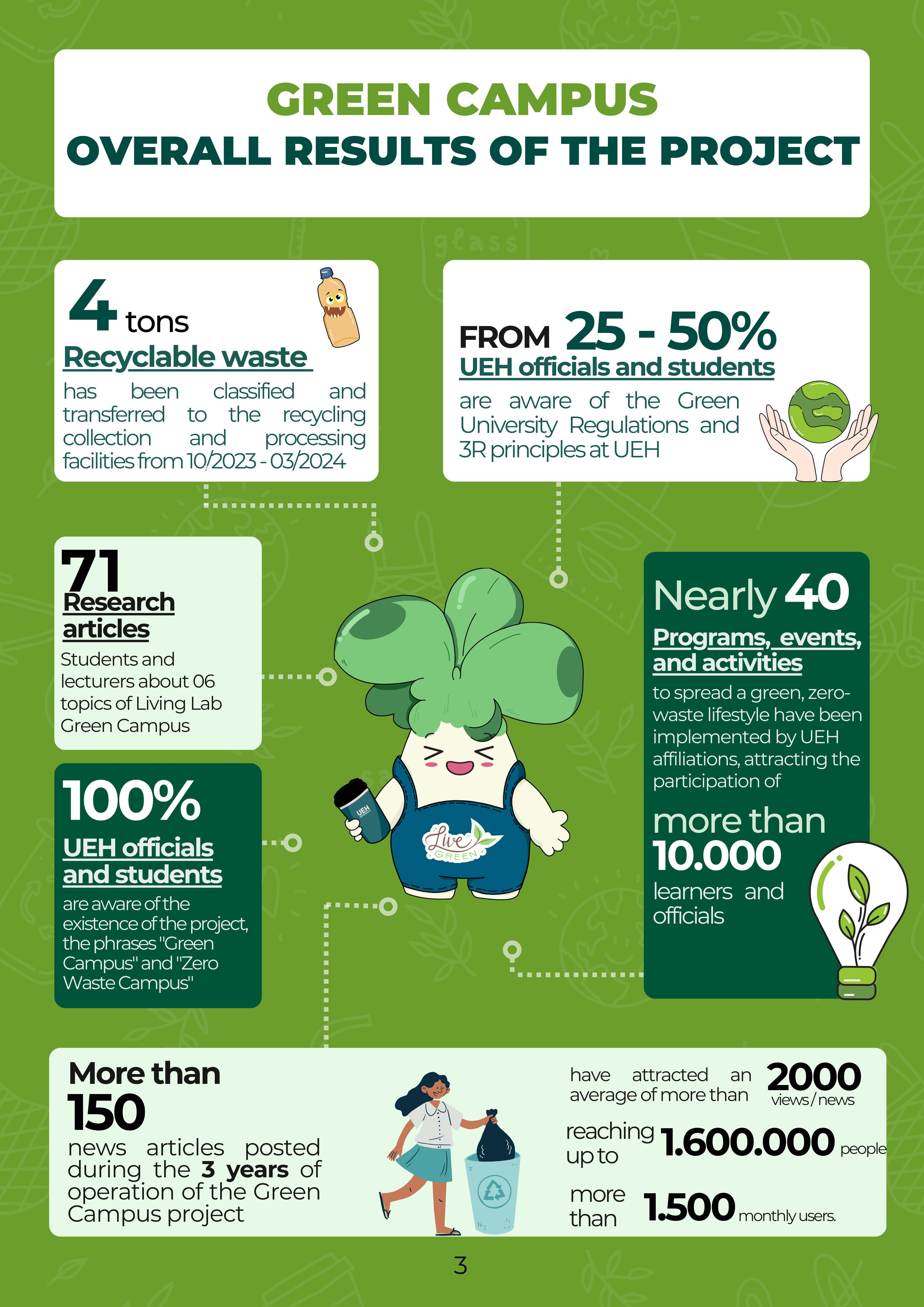
Accordingly, 71 research papers on sustainability topics have been tangible outcomes of this initiative, including:
- 31 studies on behavior change (e.g., waste sorting, practicing 3R);
- 1 study on resource reduction practices;
- 8 studies proposing scientific and technological solutions;
- 4 studies on transforming waste into recyclable resources and circular economy through innovative technologies;
- 6 studies on effective communication and educational programs/campaigns;
- 5 studies on the role of carbon credits in achieving carbon neutrality;
- 16 studies on green living, featured in a series of economic student event commentaries.
Notable award-winning projects include "Proposing a Sustainable Supply Chain Model in the Fashion Industry in Vietnam" (Technical Issue), "Intention to Adopt Electric Vehicles in Vietnam: Applying UTAUT2" (Behavior Change), and "Negative Media Factors Related to Branding and Emotional Impact on Green Purchase Intentions: A Case Study of Generation Z in Ho Chi Minh City" (Efficient Communication and Education Program).
The research and development (R&D) efforts have also produced the “Me – A Green UEHer Citizen” Handbook, enabling UEH students to easily practice and adopt a green lifestyle within the campus and their daily living environment. Additionally, two standout technological innovations have emerged: (i) an application that assists in identifying and sorting waste using machine learning, artificial intelligence, and big data; and (ii) the Green Campus Game, an educational tool that gamifies learning about environmental knowledge, 3R principles, waste sorting, and green living.
9/ Integrating Green Operation Principles into Each Campus
Research models from the project have been implemented throughout the UEH campuses. One such model is the Go Green Station, a waste sorting practice station available in two cluster types (clusters of 3 and 7 bins), which have been installed and designed at various locations across UEH’s seven campuses in Ho Chi Minh City (A, N, V, B, H, E, D) and at UEH Vinh Long. These stations provide clear instructions, facilitating easy waste sorting for UEHers. Additionally, a recycling waste circular model has been initially executed, comprising three levels of sorting: (i) students/staff sorting at the station; (ii) custodians sorting at collection points on each floor; (iii) partners conducting final sorting after collection.
10/ Spreading and Building a Green Living Community for the Environment
The four-day Green Day events, which connected partners in the same field, garnered over 60,000 engagements and participation from more than 3,000 students. These events provided opportunities to gain valuable knowledge related to the project and to experience green living activities such as exchanging waste for gifts and refilling products. Additionally, 24 workshops/seminars/talks and 10 diverse competitions/ programs/ challenges/ campaigns focusing on topics related to the environment, Green Campus, and the Sustainable Development Goals (SDGs) were conducted. These initiatives allowed students to practice green living, apply their knowledge, and collectively contribute to protecting their educational and working environment, aiming for a sustainable future.
These efforts foster the development of a community dedicated to spreading awareness, changing behaviors, and pioneering environmental protection. The initiative emphasizes empowering students to create and lead activities, cultivating a culture of green living and stewardship for the Earth.

The UEH Green Campus journey has spanned three years of continuous effort and dedication. With the positive results achieved thus far, UEH firmly believes that the UEH Green Campus project will not only have a significant impact on UEHers but will also inspire future generations, the community, and society at large in pursuit of sustainable development goals.


