







03/04/2026
Share

Keywords: Green cosmetics; Greenwashing; Perceived green value; Purchase intention; Sustainable consumption; Youth; Brand attitude; Environmental responsibility.
Green consumption is on the rise, but so are the traps of greenwashing. When trust is betrayed by layers of artificial ecological facades, how will young people react? To find the solution to this puzzle, the research topic "The impact of greenwashing and green perceived value on young people's intention to purchase Innisfree green cosmetics in Ho Chi Minh City: Through Intermediate Factors Green Brand Attitude, Green Brand Image, Green Brand Equity, Green Word of Mouth" was conducted by a group of students from the University of Economics Ho Chi Minh City (UEH), delving into how skepticism disrupts brand equity and reshapes the purchasing decisions of the younger generation regarding green cosmetics.
What factors influence young people's intention to buy green cosmetics?
*Greenwashing – when the brand's "green" image is in doubt
Greenwashing occurs when a company promotes its products as environmentally friendly, but in reality, it is not entirely true as communicated. When consumers recognize the inconsistency between the marketing message and the actual actions of the business, their trust in the brand can be affected. This not only undermines the image of a green brand but also makes consumers more cautious when choosing products marketed as environmentally friendly.
*Green value is how consumers evaluate green products
Beside the factor of greenwashing, perceived green value also plays an important role in the decision-making process of consumers. This is how consumers evaluate the environmental benefits and the utility benefits that the product provides. When consumers believe that the product is truly environmentally friendly and brings positive value to health as well as the ecosystem, that is when they will have more positive evaluations of the brand.
*Attitude toward green brands is the foundation of trust
The attitude of consumers toward green brands reflects the level of trust and support they have for the company's environmental commitments. If consumers perceive that the brand is genuinely serious about environmental protection activities, they will have a more positive attitude toward that brand. This attitude plays an important role in promoting the intention to purchase green products.
*The image and value of a green brand are also factors that reinforce trust
The green brand image and green brand value help shape how consumers perceive a brand in the context of sustainable consumption. Once a brand is perceived as environmentally responsible and maintains its credibility in green commitments, consumers will find it easier to trust and be willing to choose products from that brand. These factors therefore play an important role in driving consumers' purchase intentions toward green products.
*Green word-of-mouth creates a ripple effect within the consumer community
Information shared among consumers, especially positive reviews about green products, can strongly influence the purchasing decisions of others. When consumers share positive experiences about a green brand, this information can spread within the community and help reinforce trust in the brand. Thanks to that, green word-of-mouth becomes an important factor in promoting the intention to purchase green products.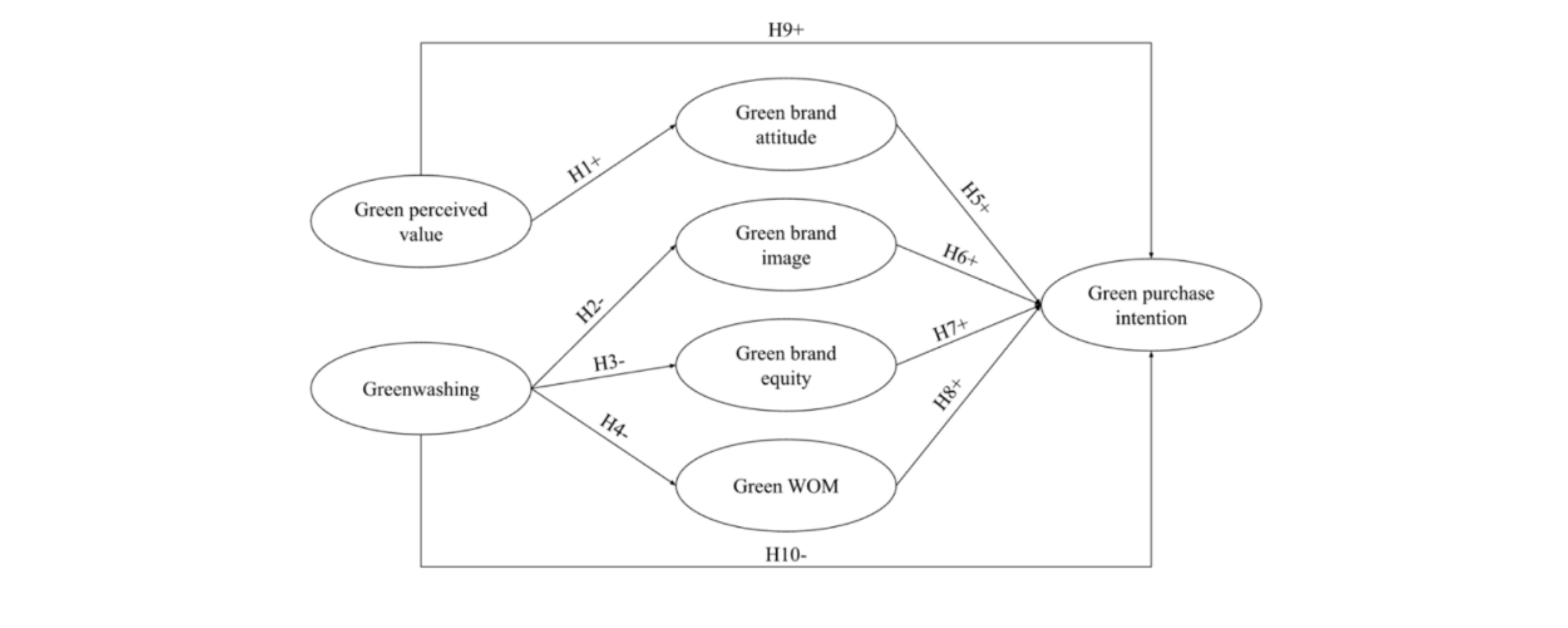
Research Model
Transparency in green marketing – the key to building trust
Thru the research results, it can be seen that in the context of consumers becoming increasingly concerned about the environment, green marketing strategies can provide a competitive advantage for businesses. However, if environmental commitments are not implemented transparently and consistently, businesses may face the risk of being perceived as engaging in "greenwashing," thereby diminishing consumer trust in the brand. Therefore, businesses need to focus on providing clear information about the origin of materials, production processes, and environmental protection activities to help consumers correctly understand the green value of the products.
In addition, businesses should also focus on participating in environmental protection activities and communicating specific actions instead of just concentrating on advertising messages. When green commitments are realized and recognized, that is when the image and value of the green brand will be reinforced. This not only helps businesses build long-term trust with consumers but also contributes to the development of the green product market in the future.
The research paper has indirectly contributed to SDG 9, 12, and 13. View the full research paper “The impact of greenwashing and green perceived value on young people's intention to purchase Innisfree green cosmetics in Ho Chi Minh City: Through Intermediate Factors Green Brand Attitude, Green Brand Image, Green Brand Equity, Green Word of Mouth” HERE
The authors: Nguyen Thi Bich Tram, Hoang Anh Quoc, Le Hoang Yen Tam, Nguyen Van Vu Khang, Doan Thi Dieu Linh - University of Economics Ho Chi Minh City.
This article is part of the Green Research Community series with the message “Research Contribution for UEH Living Lab Green Campus” UEH sincerely invites the community to follow the next Green Research Community newsletter.
|
*To create maximum conditions for the development of the “UEH Green Researcher Community” members of the community will be able to attend scientific research methods classes related to the topics of Living Lab and Green Campus. Additionally, upon meeting the standards, the research team will receive a certificate from the UEH Sustainable University Project Board and financial support for a standard-compliant project. |
More Information:
SDG 9 – Industry, Innovation, and Infrastructure aims to build resilient infrastructure, promote sustainable industrialization, and encourage innovation. This goal goes beyond advancing technology and production; it also includes narrowing infrastructure access gaps between regions, supporting small and medium-sized enterprises, and applying technology to enhance global competitiveness.
SDG 12 – Responsible Consumption and Production focuses on ensuring sustainable production and consumption patterns, thereby reducing pressure on natural resources, minimizing waste, and limiting environmental pollution. This goal emphasizes the importance of effective waste management, optimal use of resources, and promoting changes in consumer behavior at both individual and community levels, particularly through education and awareness.
SDG 13 – Climate Action calls for urgent measures to combat climate change and its adverse impacts by reducing greenhouse gas emissions, enhancing adaptive capacity, and raising public awareness. This goal goes beyond national-level policies and requires changes in individual and community behaviors in daily life, especially in areas directly linked to waste generation and management.
News, photos: UEH Green Campus Project, UEH Youth Union - Student Association, UEH Communications and Partnership Development Department
Voiceover: Thanh Kieu

