






06/03/2026
Share

Keywords: subjective norm, green knowledge, green trust, attitude, online green shopping intention
In the digital age where every shopping "click" happens in just a few seconds, a seemingly small question is becoming increasingly significant: are our daily online choices contributing to a greener future, or inadvertently adding pressure to the environment? As awareness of climate change increases, consumers are beginning to reflect on their own behaviors, especially regarding environmentally friendly products. But what truly drives them to switch to green shopping? Knowledge about the environment, influence from the community, or the belief that "green" products are truly reliable?
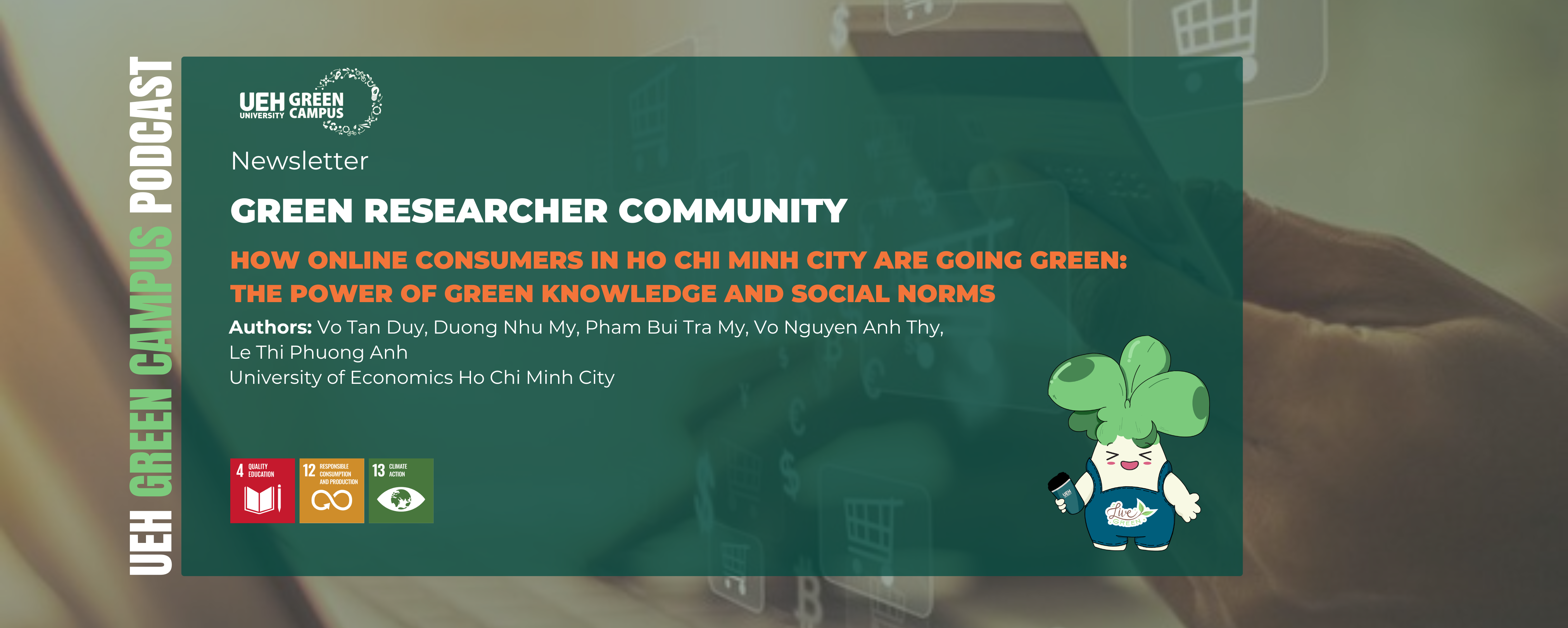
To address that thoughtful journey, a group of students from the University of Economics Ho Chi Minh City conducted a study titled "How online consumers in Ho Chi Minh City are going green: The power of green knowledge and social norms.".
The "invisible touchpoints" guiding consumers toward green choices
*Green knowledge – when understanding becomes a catalyst for change
The more consumers understand the environment, climate change, and the impact of consumption on ecosystems, the more they tend to consider their choices carefully. Green knowledge does not stop at recognizing which products are environmentally friendly, but also includes self-awareness about the consequences of excessive consumption and personal responsibility in protecting resources. When knowledge runs deep enough, green shopping behavior is no longer just "following a trend," but becomes a choice backed by reason and conviction.
*Subjective standards – the weight from family, friends, and the community
Not a few consumers make decisions based on the influence of those around them: a piece of advice from friends, encouragement from colleagues, or simply the feeling that "everyone is moving toward greener choices." The social pressure here does not mean coercion, but rather a sense of consensus and shared values. When purchasing environmentally friendly products is perceived as a positive and responsible act, consumers are more likely to lean toward that decision.
*Green trust – the bridge between message and action
In the online environment, where information can be exaggerated or questioned, green trust becomes a key factor. Consumers are only willing to shop green when they believe that the products truly meet environmental standards, not just labeled "green" for marketing purposes. That trust is built from information transparency, brand reputation, and positive past experiences. When trust is strong enough, the intention to shop green is reinforced even more.
*Attitude toward green products – when choice becomes a positive emotion
Finally, consumers' attitudes toward green products are both personal perceptions and reflections of their values. When they believe that choosing environmentally friendly products brings positive meaning – for themselves, for the community, and for the future – that attitude will transform into behavioral motivation. Research shows that positive attitudes not only directly influence green shopping intentions but also play an intermediary role for other factors such as knowledge and subjective norms.
From understanding to action: how to make the "green journey" spread more strongly?
The research results show that the intention to shop green does not arise solely from social trends or environmental movements, but is formed from a combination of knowledge, beliefs, attitudes, and community influence.
From those results, an important implication is that businesses need to provide product information in a complete, clear, and substantiated manner to enhance consumers' green knowledge. Transparency about the origin, production process, and environmental certification helps buyers understand why the product is considered environmentally friendly, thereby making more confident and proactive decisions.
In addition, reinforcing green trust plays an essential role in the online shopping environment. Consumers only maintain their intention to shop green when they perceive consistency between environmental commitments and actual experiences. Therefore, businesses need to limit "greenwashing," enhance information transparency, and ensure product quality as well as after-sales service.
At the same time, businesses can promote a positive attitude toward green products by conveying the social and environmental values associated with the products, helping consumers feel that their choices contribute to the community. When the emotional factor is appropriately evoked, green shopping behavior will become more natural and sustainable.
Finally, the influence from the community and social media demonstrates the power of social norms in spreading green consumption behavior. Building a community of green product users, encouraging the sharing of experiences, and creating online connection spaces can help reinforce the intention to shop green, making green choices gradually become a common habit among consumers.
The research paper has indirectly contributed to SDG 4, 12, 13. View the full research article “How online consumers in Ho Chi Minh City are going green: The power of green knowledge and social norms” HERE
Authors: Vo Tan Duy, Duong Nhu My, Pham Bui Tra My, Vo Nguyen Anh Thy, Le Thi Phuong Anh – University of Economics Ho Chi Minh City.
This article is part of the Green Research Community series with the message “Research Contribution for UEH Living Lab Green Campus” UEH sincerely invites the community to follow the next Green Research Community newsletter.
|
*To create maximum conditions for the development of the “UEH Green Researcher Community” members of the community will be able to attend scientific research methods classes related to the topics of Living Lab and Green Campus. Additionally, upon meeting the standards, the research team will receive a certificate from the UEH Sustainable University Project Board and financial support for a standard-compliant project. |
More Information:
SDG 4 – Quality Education seeks to guarantee that everyone has access to fair, inclusive, and quality education at all levels. Education goes beyond providing basic knowledge; it opens opportunities for skill development, creative thinking, and social responsibility, thereby helping individuals adapt to global changes and contribute to sustainable development.
SDG 12 – Responsible Consumption and Production focuses on ensuring sustainable production and consumption patterns, thereby reducing pressure on natural resources, minimizing waste, and limiting environmental pollution. This goal emphasizes the importance of effective waste management, optimal use of resources, and promoting changes in consumer behavior at both individual and community levels, particularly through education and awareness.
SDG 13 – Climate Action calls for urgent measures to combat climate change and its adverse impacts by reducing greenhouse gas emissions, enhancing adaptive capacity, and raising public awareness. This goal goes beyond national-level policies and requires changes in individual and community behaviors in daily life, especially in areas directly linked to waste generation and management.
News, photos: UEH Green Campus Project, UEH Youth Union - Student Association, UEH Communications and Partnership Development Department
Voiceover: Thanh Kieu

