






12/04/2026
Share

Keywords: Minimalist living; Sustainable fashion; Green consumer behavior; Gen Z; Sustainable attitudes; Happiness; Controlling consumer desires.
Minimalist living is gradually becoming a lifestyle pursued by Gen Z, but does "buying less" really equate to sustainable consumption? Or sometimes, choosing green fashion brands is just an unintended consequence of reducing consumer demand? From that perspective, a group of students from the University of Economics Ho Chi Minh City (UEH) conducted a study titled "Do young minimalists' choices of sustainable fashion brands happen by chance?" "Analyzing the role of controlling consumer desires," aiming to clarify whether a minimalist lifestyle truly promotes sustainable consumption behavior, or if it only indirectly influences thru attitudes, happiness perception, and the ability to control consumer desires of Gen Z.
Living minimally can lead to sustainable consumption, but it doesn't always stem from environmental awareness
First, a minimalist lifestyle has a positive impact on attitudes toward sustainable living. When individuals reduce their dependence on material possessions and prioritize essential values, they tend to pay more attention to environmental issues and are willing to adjust their consumption behavior toward more responsible practices.
Secondly, a minimalist lifestyle also contributes to enhancing consumers' sense of happiness. Reducing unnecessary consumption helps individuals alleviate material pressure, thereby increasing satisfaction and a sense of comfort in life. This factor plays an important role in shaping consumer behavior toward sustainability.
Thirdly, attitudes toward a sustainable lifestyle and the perception of happiness both positively influence the decision to choose sustainable fashion brands. When consumers are both aware of environmental values and feel positive about their lifestyle, they tend to prioritize brands that align with those values.
Fourth, the ability to control consumer desires plays a regulatory role in the relationship between a minimalist lifestyle and the behavior of choosing sustainable brands. Individuals with good self-control will easily transform minimalist thinking into specific consumption behaviors, while those lacking self-control may still be influenced by external factors and maintain old consumption habits.
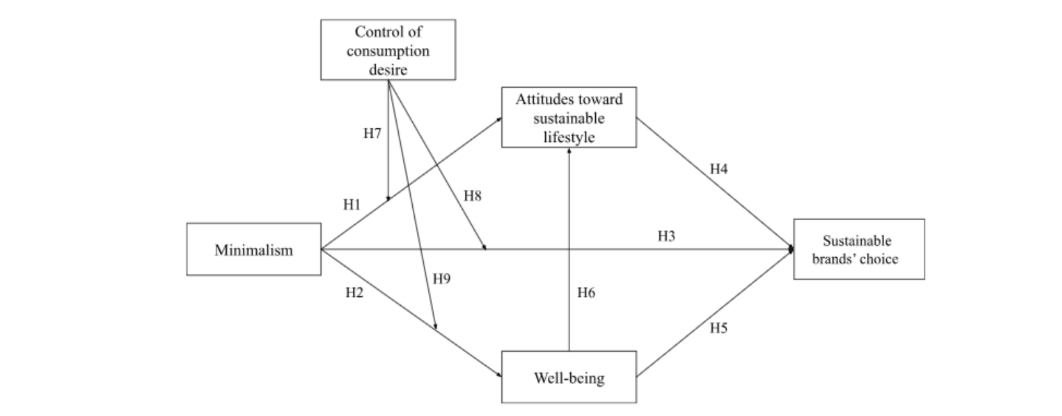 Research Model
Living minimally is not enough for sustainable consumption; conditions are needed to transform it into behavior
From the research results, it can be seen that promoting sustainable fashion consumption does not only depend on the minimalist lifestyle trend but also on how consumers perceive and feel about this lifestyle. A minimalist lifestyle can create a positive foundation, but to transform it into the behavior of choosing sustainable brands, there needs to be reinforcement of attitudes and a sense of happiness during the consumption process.
Therefore, fashion brands should leverage minimalism not just as an esthetic style, but as a value system linked to a sustainable lifestyle. Communication should emphasize the positive experience, sense of satisfaction, and meaning that consumers achieve when choosing the product, rather than just focusing on the "green" aspect.
On the other hand, enhancing the ability to control consumer desires also plays an important role. Strategies such as encouraging selective consumption, extending product lifecycles, or building awareness of long-term utility value can help consumers transform minimalist thinking into practical behavior.
Ultimately, sustainable consumption will no longer be a trend-based choice, but rather a natural outcome when lifestyle, personal perception, and behavioral control are all shaped in a consistent direction.
The research paper has indirectly contributed to SDG 3, 12, and 13. View the full research paper “Whether young minimalists choose sustainable fashion brands merely by accident? Examining the moderating effect of the control of consumption desires” HERE
The authors: Nguyen Tuan Vu, Nguyen Dinh Ngoc Thach, Nguyen Huu Hoang, Pham Thi Truc Linh, Pham Tuan Anh - University of Economics Ho Chi Minh City.
This article is part of the Green Research Community series with the message “Research Contribution for UEH Living Lab Green Campus” UEH sincerely invites the community to follow the next Green Research Community newsletter.
|
*To create maximum conditions for the development of the “UEH Green Researcher Community” members of the community will be able to attend scientific research methods classes related to the topics of Living Lab and Green Campus. Additionally, upon meeting the standards, the research team will receive a certificate from the UEH Sustainable University Project Board and financial support for a standard-compliant project. |
More Information:
SDG 3 – Good Health and Well-being emphasizes the importance of ensuring comprehensive health and improving the quality of life for people of all ages. This includes reducing maternal and child mortality, preventing epidemics, increasing access to essential healthcare services and medicines, as well as encouraging healthy lifestyles. A healthy society depends not only on modern healthcare systems but also on active community participation in creating safe and healthy living environments.
SDG 12 – Responsible Consumption and Production focuses on ensuring sustainable production and consumption patterns, thereby reducing pressure on natural resources, minimizing waste, and limiting environmental pollution. This goal emphasizes the importance of effective waste management, optimal use of resources, and promoting changes in consumer behavior at both individual and community levels, particularly through education and awareness.
SDG 13 – Climate Action calls for urgent measures to combat climate change and its adverse impacts by reducing greenhouse gas emissions, enhancing adaptive capacity, and raising public awareness. This goal goes beyond national-level policies and requires changes in individual and community behaviors in daily life, especially in areas directly linked to waste generation and management.
News, photos: UEH Green Campus Project, UEH Youth Union - Student Association, UEH Communications and Partnership Development Department
Voiceover: Thanh Kieu

