







14/08/2026
Share

Keywords: Plant-based food; Plant-based meat; Purchase intention; Gen Z; Green consumer behavior; Environmental concern; Sustainable diet.
In recent years, plant-based food has increasingly been mentioned as a choice that is "good for health and good for the environment." From veggie burgers, nut milk to plant-based meat, many major brands around the world have started changing their menus to meet the trend of sustainable eating. But amidst the countless calls for a green lifestyle, one question remains: what truly makes young people willing to change their eating habits?
From that question, a group of students from the University of Economics Ho Chi Minh City (UEH) conducted a study titled "Towards environmentally sustainable diets: Factors affecting the purchase of plant-based food substitutes of gen Z in Ho Chi Minh City" aiming to explore what truly drives Gen Z to choose plant-based food—whether it is concern for the environment, influence from those around them, or simply the feeling that this change is easy enough to start.
Plant-based meat or plant-based food products are created from ingredients such as soybeans, mushrooms, peas, or plant proteins to replace animal meat in daily meals. The special thing is that they are designed to have a taste, texture, and eating experience similar to real meat, but are expected to be more environmentally friendly by reducing greenhouse gas emissions and pressure from the livestock industry. From burgers, sausages to plant-based meatballs, these foods are gradually appearing more frequently on the menus of major brands and becoming part of the global sustainable eating trend.

But among the many benefits mentioned, from health to the environment, what truly makes young people willing to choose a plant-based meal instead of their usual dish every day?
First of all, not everyone who chooses plant-based foods does so because they want to be "healthy," but sometimes it's because they are starting to care more about the environment. When stories about climate change, pollution, or green living become more and more prevalent, young people gradually start to question their everyday choices, including their eating habits. A plant-based burger or a meal with less meat may not change the world immediately, but it gives the feeling that one is starting with something small. And sometimes, that very feeling becomes the reason why young people want to try a new option.
Secondly, what to eat seems very personal, but in reality, it is quite influenced by those around us. It could be a close friend starting to eat "healthy," a video about green living scrolling thru TikTok, or simply the increasing number of people sharing about sustainable diets on social media. When a choice is seen often enough, it gradually becomes more familiar. Trying a plant-based dish at that point is no longer too unfamiliar, but rather like "giving it a try" because they see others doing the same.
Thirdly, sometimes young people don't reject plant-based foods; they just haven't found them easy enough to start with. If a dish is easier to find, more affordable, or appears in familiar places like convenience stores, food delivery apps, or eateries near schools, the likelihood of choosing it would definitely be higher. Because between "knowing it's good" and actually spending money to buy it, there always needs to be a sense of convenience and proximity to turn intention into action.
And there's something quite interesting: knowing a lot doesn't necessarily make people buy more. Many young people understand that plant-based foods are good for health and more environmentally friendly. But understanding alone is sometimes not enough. When a trend is still quite new, people often need more than just a bit of information; it could be real experiences, curiosity, a pleasant feeling, or simply finding it suitable for their lives.
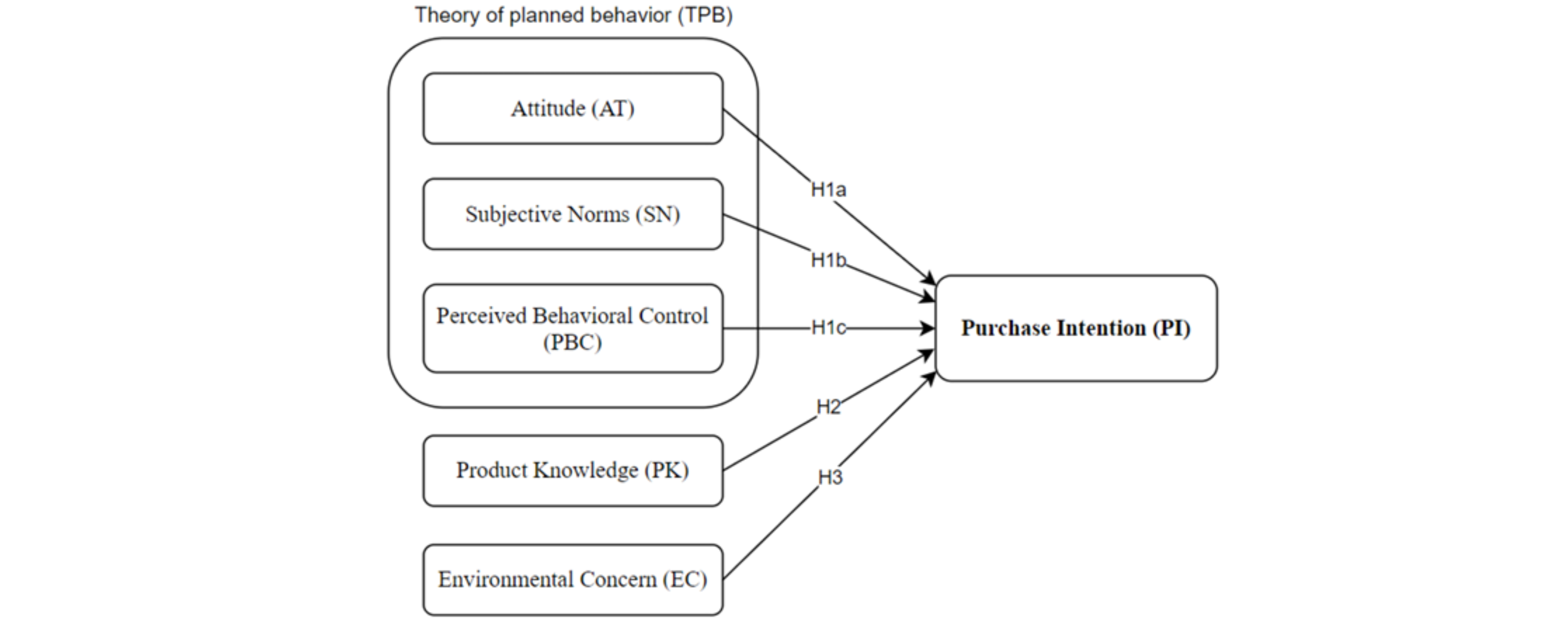
Research Model
Not just talking about the benefits, how can plant-based foods become a more familiar choice?
If we want young people to be willing to try and maintain more sustainable eating habits, perhaps simply saying that plant-based foods are "good for health" or "good for the environment" is not enough. What is more important is how those values are conveyed in a way that is relatable to the daily lives of Gen Z.
Instead of just focusing on promoting products, food businesses or dining services can start by telling more relatable stories about the environment and the impact of daily food choices. When young people understand that a small change in their meals can contribute to reducing emissions or creating a more sustainable lifestyle, the desire to try will come more naturally rather than being "persuaded."
In addition, a good choice also needs to be easy enough to start. Plant-based foods could become more familiar if they appeared more often in familiar places like restaurants, convenience stores, or food delivery apps at more accessible prices. Because sometimes, the biggest barrier is not that young people don't want to change, but that there aren't enough convenient conditions to start.
Ultimately, instead of letting plant-based food be just a trend mentioned on social media, building green living communities, sharing genuine experiences, or relatable stories from young people themselves can become the catalyst to help this choice gradually become a more natural part of daily life.
The research paper has indirectly contributed to SDG 3, 12, 13. View the full research paper “Towards environmentally sustainable diets: Factors affecting the purchase of plant-based food substitutes of gen Z in Ho Chi Minh City” HERE
The authors: Vo Huynh Bao Nguyen, Vo Minh Quan, Le Nguyen Tuan Duy, Ho Duc Tuan - University of Economics Ho Chi Minh City.
This article is part of the Green Research Community series with the message “Research Contribution for UEH Living Lab Green Campus” UEH sincerely invites the community to follow the next Green Research Community newsletter.
|
*To create maximum conditions for the development of the “UEH Green Researcher Community” members of the community will be able to attend scientific research methods classes related to the topics of Living Lab and Green Campus. Additionally, upon meeting the standards, the research team will receive a certificate from the UEH Sustainable University Project Board and financial support for a standard-compliant project. |
More Information:
SDG 3 – Good Health and Well-being emphasizes the importance of ensuring comprehensive health and improving the quality of life for people of all ages. This includes reducing maternal and child mortality, preventing epidemics, increasing access to essential healthcare services and medicines, as well as encouraging healthy lifestyles. A healthy society depends not only on modern healthcare systems but also on active community participation in creating safe and healthy living environments.
SDG 12 – Responsible Consumption and Production focuses on ensuring sustainable production and consumption patterns, thereby reducing pressure on natural resources, minimizing waste, and limiting environmental pollution. This goal emphasizes the importance of effective waste management, optimal use of resources, and promoting changes in consumer behavior at both individual and community levels, particularly through education and awareness.
SDG 13 – Climate Action calls for urgent measures to combat climate change and its adverse impacts by reducing greenhouse gas emissions, enhancing adaptive capacity, and raising public awareness. This goal goes beyond national-level policies and requires changes in individual and community behaviors in daily life, especially in areas directly linked to waste generation and management.
News, photos: UEH Green Campus Project, UEH Youth Union - Student Association, UEH Communications and Partnership Development Department
Voiceover: Thanh Kieu

