






03/03/2026
Share

Keywords: electric motorcycles, GenZ, greenwashing, trust in green brands, green word-of-mouth, green purchase intention, Vietnam.
Amid the wave of electric motorcycles spreading green across Vietnamese urban areas, not every "environmentally friendly" message is truly green as it is portrayed. When flashy advertisements overshadow true value, consumer trust, especially among Gen Z, has begun to waver, leading to changes in how they consider, share, and make purchasing decisions. So, how is "greenwashing" affecting the intention to buy electric motorcycles? Do green brand trust and green word-of-mouth still have enough power to persuade young people in this context?
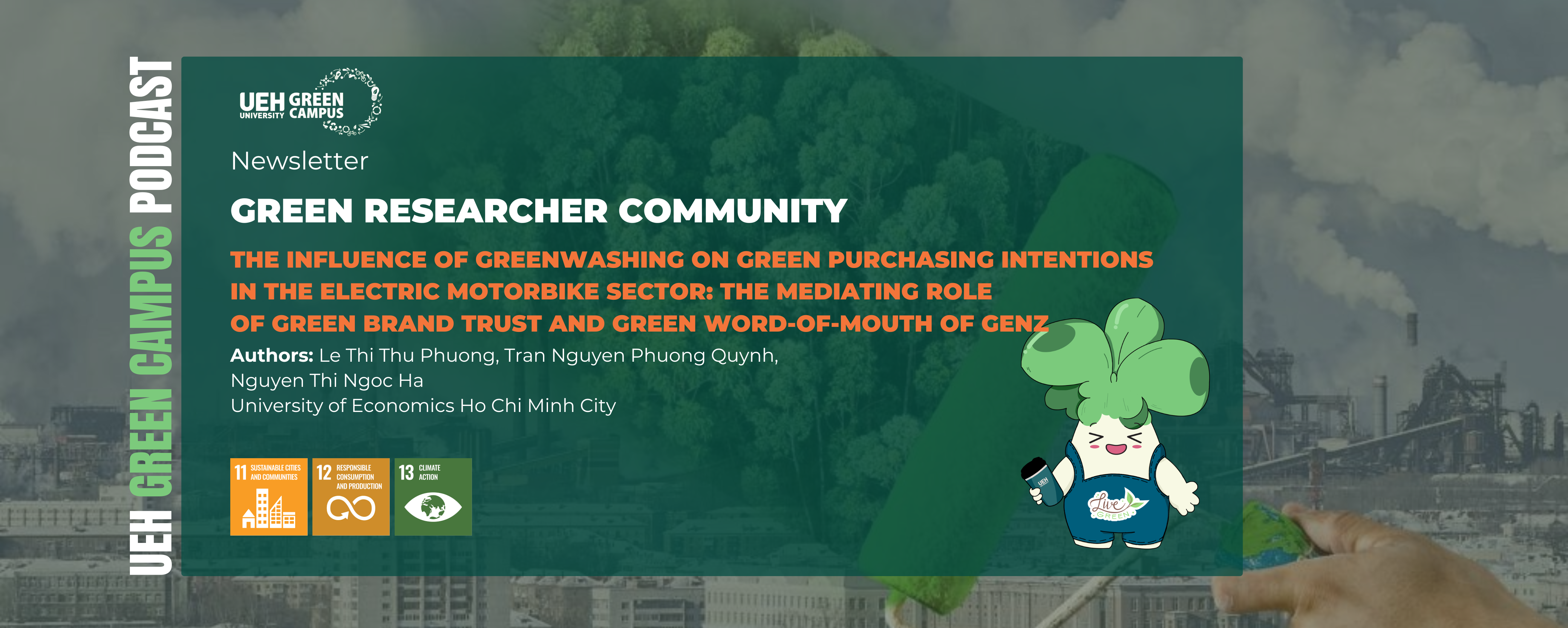
From those questions, a group of students from the University of Economics Ho Chi Minh City (UEH) conducted a study titled “The influence of greenwashing on green purchasing intentions in the electric motorbike sector: the mediating role of green brand trust and green word-of-mouth of GenZ,” opening a new perspective on green consumer behavior in a rapidly developing market.
When green trust is challenged: what is happening in the minds of Gen Z?
*When greenwashing shakes the perception of authenticity
For Gen Z, electric motorcycles are not just a means of transportation but also a choice that reflects environmental responsibility. However, when environmental messages are exaggerated or lack transparency, a sense of doubt begins to emerge. Gen Z is not quick to dismiss products, but they pause to observe, compare, and question whether the mentioned "green" values truly exist.
*The moment brand trust becomes a decisive anchor
If a brand proves consistency between words and actions, trust gradually forms and becomes a motivating factor encouraging Gen Z to consider shopping. On the contrary, even a small sign of greenwashing is enough to make them step back, because for this generation, trust is not something that can be easily compromised.
*Green word-of-mouth: where the brand story continues to be told
Product experiences do not stop with the users; they continue to spread thru conversations, social media, and communities. When electric motorcycles are perceived as reliable in terms of environmental value, the story shared is more positive. But if consumers detect signs of greenwashing, the message spreads as a warning, directly affecting the choices of those who are still considering.
*Purchase intention – the result of a balance between reason and belief
Gen Z's decisions, therefore, are not solely based on price or usability. It is the result of comparing experiences, perceptions of brand honesty, and the reliability of word-of-mouth stories. When these three layers of perception converge, the intention to purchase an electric motorcycle becomes clearer, or conversely, is postponed to await more convincing evidence.
When research steps into real life: suggestions for making the green consumption story more authentic
From the research results, it can be seen that greenwashing not only undermines trust but also creates a gap in Gen Z's journey to adopting electric motorcycles. This sends a clear message to businesses. If they want to accompany young people for the long term, brands need to start with transparency. Each environmental claim must be accompanied by concrete evidence, from the production process to the actual impact. When words and actions meet, green trust has the opportunity to form and develop sustainably.
Not only should it stop at product communication, but businesses also need to build a consistent experience throughout the usage lifecycle. When customers perceive environmental benefits at a specific level, green word-of-mouth will become a natural bridge between the product and the user community. At that point, the story of electric motorcycles is not just advertising, but an experience confirmed by reality.
From the perspective of policy and market development orientation, the research also suggests that encouraging green consumption cannot rely solely on slogans. There needs to be mechanisms to help consumers access reliable information, while also encouraging businesses to make substantial investments in sustainable solutions. When the policy environment creates space for honesty and responsibility, greenwashing will have no ground to exist.
Ultimately, Gen Z's behavior shows a positive signal. They do not turn their backs on green products; they only demand higher sincerity from brands. And it is precisely at that moment that green consumption is not just a personal choice, but also becomes a driving force for the market to change toward a more sustainable and responsible direction.
The research paper has indirectly contributed to SDG 11, 12, 13. See the full research article "The impact of 'greenwashing' on Gen Z's intention to buy electric motorcycles: The mediating role of green brand trust and green word-of-mouth" HERE
Authors: Le Thi Thu Phuong, Tran Nguyen Phuong Quynh, Nguyen Thi Ngoc Ha – University of Economics Ho Chi Minh City.
This article is part of the Green Research Community series with the message “Research Contribution for UEH Living Lab Green Campus” UEH sincerely invites the community to follow the next Green Research Community newsletter.
|
*To create maximum conditions for the development of the “UEH Green Researcher Community” members of the community will be able to attend scientific research methods classes related to the topics of Living Lab and Green Campus. Additionally, upon meeting the standards, the research team will receive a certificate from the UEH Sustainable University Project Board and financial support for a standard-compliant project. |
More Information:
SDG 11 – Sustainable Cities and Communities seeks to develop urban areas and communities that are resilient, safe, and sustainable by improving living environments, managing waste effectively, and ensuring access to basic services for all citizens. A sustainable city is not only about physical infrastructure but also about raising awareness and shaping residents’ behavior to protect their shared environment.
SDG 12 – Responsible Consumption and Production focuses on ensuring sustainable production and consumption patterns, thereby reducing pressure on natural resources, minimizing waste, and limiting environmental pollution. This goal emphasizes the importance of effective waste management, optimal use of resources, and promoting changes in consumer behavior at both individual and community levels, particularly through education and awareness.
SDG 13 – Climate Action calls for urgent measures to combat climate change and its adverse impacts by reducing greenhouse gas emissions, enhancing adaptive capacity, and raising public awareness. This goal goes beyond national-level policies and requires changes in individual and community behaviors in daily life, especially in areas directly linked to waste generation and management.
News, photos: UEH Green Campus Project, UEH Youth Union - Student Association, UEH Communications and Partnership Development Department
Voiceover: Thanh Kieu

