






28/05/2026
Share

Keywords: Ethical consumer behavior; Eco-friendly plastic; Green consumption; Environmental concern; Social concern; Students.
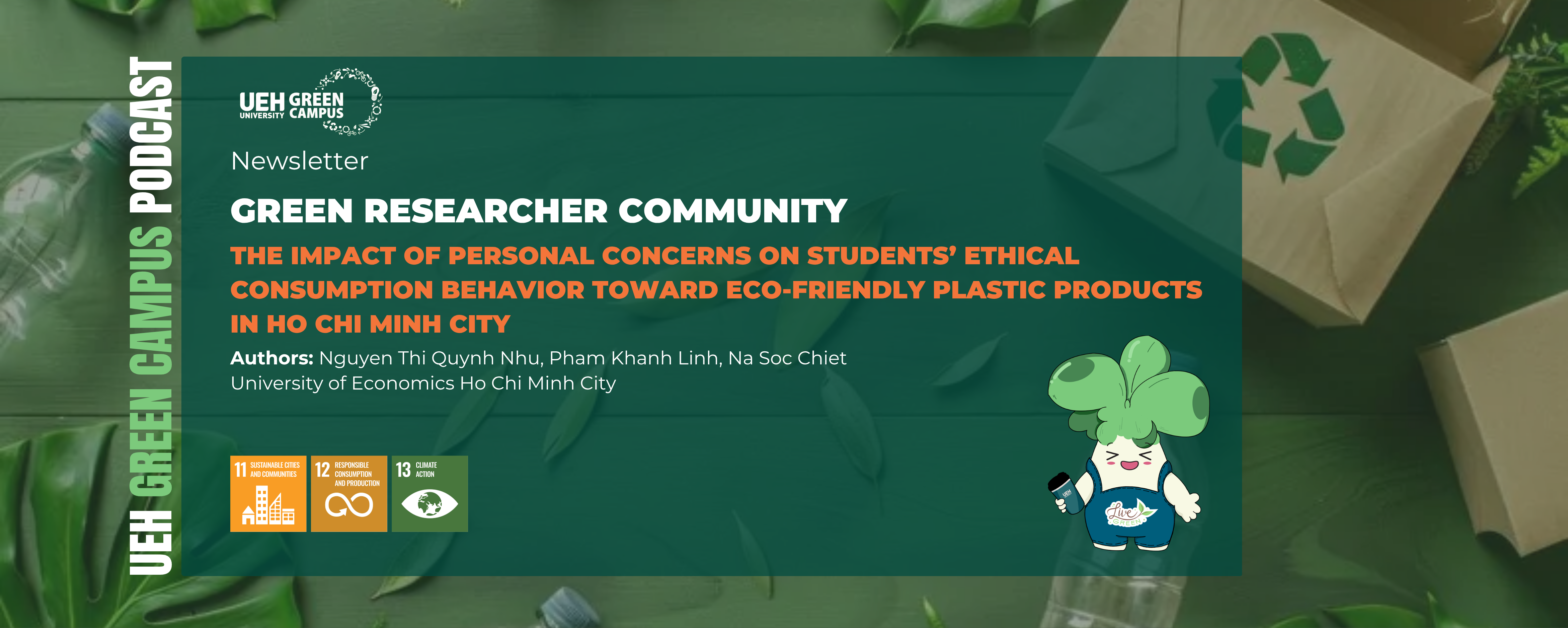
Plastic waste is an urgent challenge, yet environmental awareness does not necessarily translate into actual green consumption behavior. In order to find the motivation to bridge this gap, a group of students from the University of Economics Ho Chi Minh City (UEH) conducted a study titled "The impact of personal concerns on students’ ethical consumption behavior toward eco-friendly plastic products in Ho Chi Minh City." Thru the evaluation of environmental, social, and civic concerns, the study clarifies the factors that truly drive young people to make sustainable purchasing decisions.
What lenses are truly acting as catalysts, transforming intentions into behaviors of choosing sustainable products among students?
The research results show that many students are clearly aware of the negative impact of plastic waste on the environment. However, awareness alone is not enough to bring about changes in consumer behavior. Many people are willing to say that they support a green lifestyle, but when faced with real choices, they still prioritize convenience, low prices, and familiar habits. This shows that the gap between "concern" and "action" still clearly exists in the consumption behavior of young people.
At the same time, social concerns significantly influence the ethical consumption behavior of students. The use of environmentally friendly products not only stems from a responsibility toward nature but also relates to how young people want to be perceived in their surrounding social environment. As green consumption gradually becomes a lifestyle that the community cares about and encourages, young people are also more inclined to participate in order to resonate with their friends and society.
Another noteworthy point of the study is that the factor of "political concern" also positively influences the intention and behavior of green consumption. This shows that environmentally friendly consumption is no longer merely a shopping behavior, but is gradually becoming a way for young people to express their civic responsibility and personal views on social issues. When they believe that the environment needs to be protected and society needs to change toward a more sustainable direction, their consumption choices also begin to reflect those values.
Not only that, but the intention of ethical consumption also has a strong influence on actual consumer behavior. When students believe that their choices can have a positive impact on the environment and the community, they are more willing to change their behavior, even accepting to pay more for environmentally friendly products. This shows that green consumption is no longer just about product functionality, but also tied to the sense of responsibility and personal values that young people want to pursue.
Transforming green consumption from "something that should be done" to "something young people want to do" is the key to creating lasting change
Research shows that to promote green consumption behavior, merely communicating the harm of plastic waste is not enough. Young people today are not only concerned with whether a product is "environmentally friendly," but also want to feel that their choices have social significance and truly reflect the values they pursue.
Therefore, businesses and organizations should not only focus on promoting green products as an environmental protection solution, but also create experiences that make users feel they are truly making a positive impact. When green consumption becomes a part of lifestyle, personal responsibility, and community connection, this behavior is more likely to be sustained in the long term rather than just being a temporary choice.
In addition, the research also highlights the important role of the social environment in promoting ethical consumption behavior. As green living values gradually become the new norm within the student community, the use of environmentally friendly products will no longer be a "special" choice, but may become a familiar behavior in daily life.
The research paper has indirectly contributed to SDG 11, 12, and 13. View the full research paper “The impact of personal concerns on students’ ethical consumption behavior toward eco-friendly plastic products in Ho Chi Minh City” HERE
The authors: Nguyen Thi Quynh Nhu, Pham Khanh Linh, Na Soc Chiet - University of Economics Ho Chi Minh City.
This article is part of the Green Research Community series with the message “Research Contribution for UEH Living Lab Green Campus” UEH sincerely invites the community to follow the next Green Research Community newsletter.
|
*To create maximum conditions for the development of the “UEH Green Researcher Community” members of the community will be able to attend scientific research methods classes related to the topics of Living Lab and Green Campus. Additionally, upon meeting the standards, the research team will receive a certificate from the UEH Sustainable University Project Board and financial support for a standard-compliant project. |
More Information:
SDG 11 – Sustainable Cities and Communities seeks to develop urban areas and communities that are resilient, safe, and sustainable by improving living environments, managing waste effectively, and ensuring access to basic services for all citizens. A sustainable city is not only about physical infrastructure but also about raising awareness and shaping residents’ behavior to protect their shared environment.
SDG 12 – Responsible Consumption and Production focuses on ensuring sustainable production and consumption patterns, thereby reducing pressure on natural resources, minimizing waste, and limiting environmental pollution. This goal emphasizes the importance of effective waste management, optimal use of resources, and promoting changes in consumer behavior at both individual and community levels, particularly through education and awareness.
SDG 13 – Climate Action calls for urgent measures to combat climate change and its adverse impacts by reducing greenhouse gas emissions, enhancing adaptive capacity, and raising public awareness. This goal goes beyond national-level policies and requires changes in individual and community behaviors in daily life, especially in areas directly linked to waste generation and management.
News, photos: UEH Green Campus Project, UEH Youth Union - Student Association, UEH Communications and Partnership Development Department
Voiceover: Thanh Kieu

