







25/06/2026
Share

Keywords: Microcredit; Food expenditure; Rural households; Vietnam; Poverty reduction; Household welfare; Microfinance; Food security.
In many rural areas of Vietnam, a small loan is sometimes not just money, but also an opportunity to expand livestock farming, invest in seasonal crops, or start a small business to improve the family's income. But do these microcredit loans really improve people's lives, starting with the most basic thing, their daily meals? Or in the short term, the pressure to repay the debt forces families to tighten their spending even more?
Based on data analysis from the period 2008 - 2016, the thesis "Impact of microcredit on food consumption: Situation in Vietnam" by a group of students from the University of Economics Ho Chi Minh City (UEH) has drawn an important conclusion: Microfinance has a direct impact on increasing the food expenditure of rural households in Vietnam. This finding provides clear empirical evidence, reflecting the potential of microcredit in poverty alleviation and the comprehensive improvement of people's lives.
Before delving into the research results, it is perhaps necessary to understand why microcredit is considered an important tool for the rural sector. Unlike traditional bank loans, which often require collateral or complex procedures, microcredit consists of small loans for low-income households or those who have difficulty accessing formal capital. However, it is noteworthy that this study does not consider all loans to be the same, but rather focuses on income-generating loans, such as investments in livestock, agriculture, or small family businesses. In other words, the group wants to answer a very practical question: if people borrow money to do business, will their lives gradually improve?
Instead of measuring effectiveness by income or assets like many previous studies, the authors chose a closer perspective: food expenditure. Because for many rural households, having a more sufficient and higher quality diet often clearly reflects whether their living standards have improved or not. If the loan helps the household generate more stable income, they can spend more on food, improve nutrition, and enhance their quality of life. But on the flip side, in the initial phase when they just take out a loan, many households might have to prioritize using the money for production investment, which means their daily meals might not change immediately. This also makes the story of microcredit much more interesting than just looking at the increase or decrease in income.
So, does microcredit really help rural households eat better?
*The impact of microcredit does not come immediately as many people expect
A notable finding of the article is that in the initial stage, the loan can even lead to a slight reduction in food expenditure. This is quite understandable, as when they first access capital, many households often prioritize using the money to invest in livestock, purchase seeds, expand production, or rotate their businesses rather than immediately improving their daily spending.
*When the investment starts generating more stable income, microcredit again shows a positive long-term impact on food expenditure
In other words, after a period of business operations, households tend to spend more on food, thereby improving the quality of meals and living standards. This shows that microcredit is like an "investment for the future," requiring time to yield results rather than bringing immediate change.
*Loans are not the only factor affecting the quality of life of households
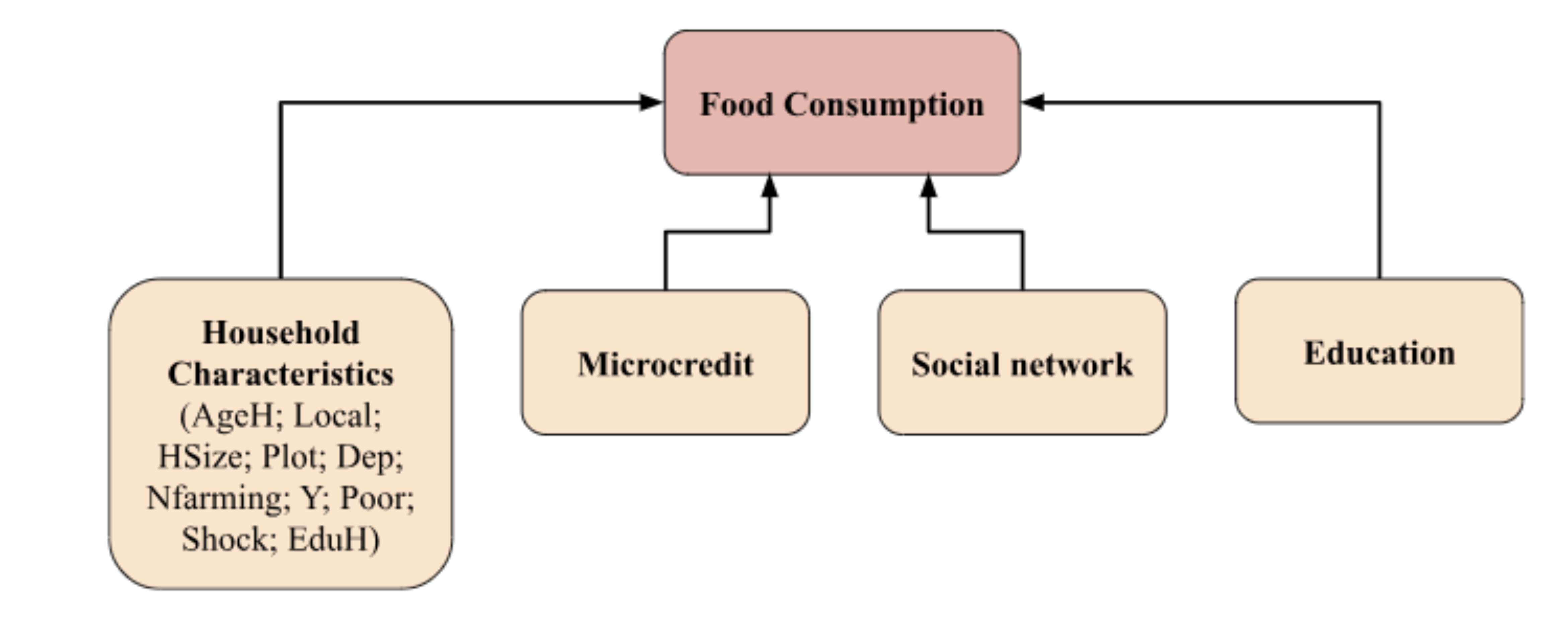
Households with higher education levels, more diverse income sources, or better social networks tend to have more positive food expenditure. This shows that to improve the lives of rural people, loans are necessary but not sufficient; they also need to be accompanied by knowledge, opportunities, and community support.
So how can small loans really create big changes?
From the findings of the research, it can be seen that microcredit will be difficult to be effective if it only stops at "lending and leaving it at that." Because the positive impact on people's lives usually does not come immediately, but requires time for them to invest, rotate capital, and create more stable income. This also shows that credit programs need to be designed more flexibly in terms of loan duration, interest rates, and accessibility conditions, so that people have enough time to turn the loan into a real business opportunity.
But just the loan capital might not be enough. For many rural households, being guided on production methods, managing expenses, or connecting their products to the market is just as important as the money they receive. A small loan can make a much bigger difference if accompanied by knowledge and timely support.
In addition, expanding access to credit for poor households or vulnerable groups in rural areas is also considered essential. Because sometimes, just the right amount of capital at the right time can help a family restart their business, improve their income, and gradually enhance their quality of life, starting from their daily meals.
The research paper has indirectly contributed to SDG 1, 2, and 8. View the full research paper “Impact of microcredit on food consumption: Situation in Vietnam” HERE
The authors: Nguyen Thi Thao, Tran Thanh Truc, Nguyen Hoang Phuc Thien, Trinh Bich Tuyen - University of Economics Ho Chi Minh City.
This article is part of the Green Research Community series with the message “Research Contribution for UEH Living Lab Green Campus” UEH sincerely invites the community to follow the next Green Research Community newsletter.
|
*To create maximum conditions for the development of the “UEH Green Researcher Community” members of the community will be able to attend scientific research methods classes related to the topics of Living Lab and Green Campus. Additionally, upon meeting the standards, the research team will receive a certificate from the UEH Sustainable University Project Board and financial support for a standard-compliant project. |
More Information:
SDG 1 – No Poverty focuses on ending all forms of poverty everywhere, ensuring that everyone has access to basic needs such as food, clean water, housing, and essential social services. Poverty eradication goes beyond financial assistance; it also involves creating sustainable job opportunities, strengthening resilience to natural disasters and crises, and building a foundation that enables individuals to escape poverty in the long term.
SDG 2 – Zero Hunger and Sustainable Agriculture aims to ensure that everyone has sufficient, safe, and nutritious food while promoting sustainable agricultural systems that can adapt to climate change and minimize disaster risks. This goal not only addresses agricultural output but also includes improving farmers’ livelihoods, protecting biodiversity, and enhancing global food security.
SDG 8 – Decent Work and Economic Growth focuses on building an inclusive economy that generates quality, fair, and sustainable jobs for all. This is not only about driving GDP growth but also about improving working conditions, expanding opportunities for youth and women, encouraging innovation, and developing businesses that integrate social responsibility.
News, photos: UEH Green Campus Project, UEH Youth Union - Student Association, UEH Communications and Partnership Development Department
Voiceover: Thanh Kieu

