






19/12/2025
Share

Keywords: GenZ generation, green cosmetics, eco-labels, consumer behavior, consumer attitudes, green purchase intention
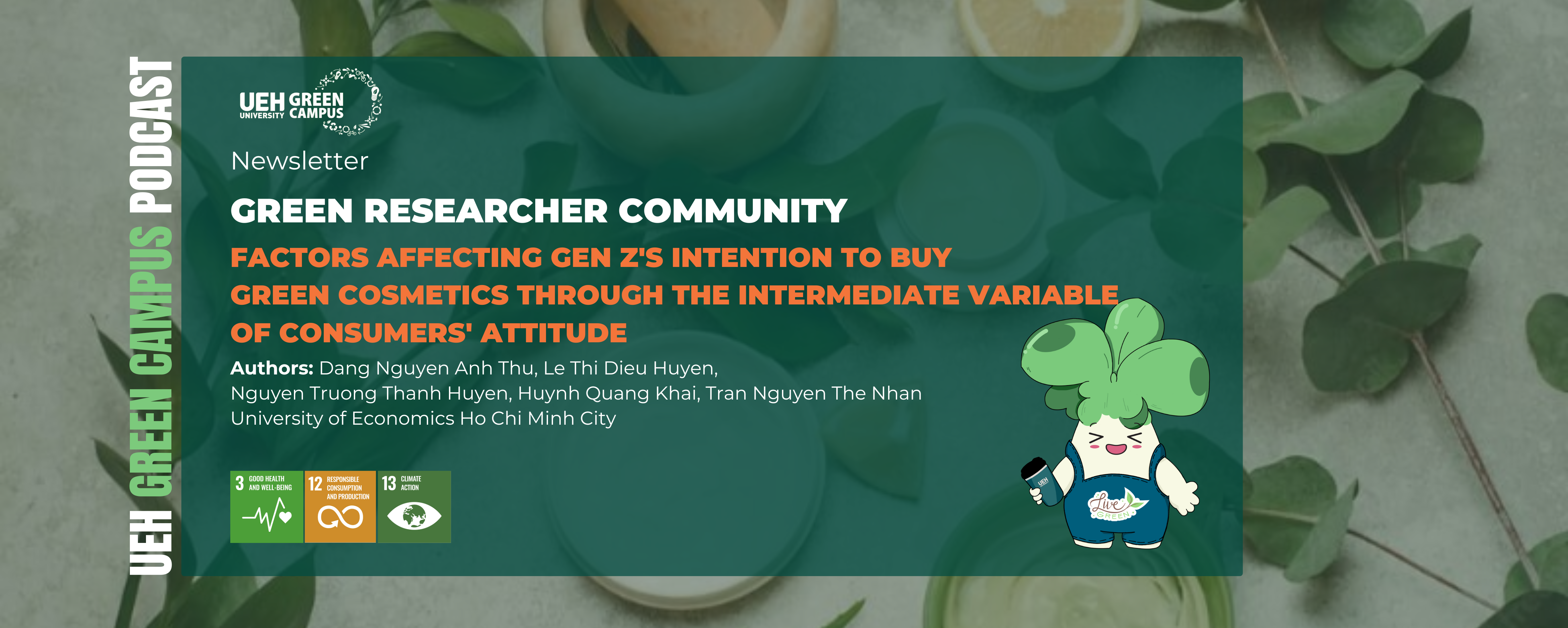
Green cosmetics are gradually becoming a familiar choice in the market, especially among Gen Z – a group of young consumers who are interested in sustainable lifestyles and environmental issues. However, among the many products labeled "green," not all are convincing enough for Gen Z to be willing to buy and use. This decision is influenced by many factors, ranging from personal perception, emotions, and beliefs to how businesses build their image and communicate about their products. Based on this reality, a group of students from the University of Economics Ho Chi Minh City (UEH) conducted research to investigate the factors influencing Gen Z's intention to purchase green cosmetics in Vietnam.
In reality, whether Gen Z intends to buy green cosmetics depends not only on their level of environmental concern, but also on how they perceive products, brands, and the information they receive during the shopping process. Personal experiences, emotions, beliefs in "green" practices, as well as the influence of media and the surrounding social environment, are intertwined and simultaneously create either motivation or barriers to purchasing decisions. Therefore, to understand Gen Z's green consumption behavior, it's necessary to look at the specific factors that make up their intention to purchase green cosmetics, rather than just focusing on general environmental awareness.
When green cosmetics enter Gen Z's purchasing decisions
*Environmental awareness and how Gen Z views green cosmetics
For Gen Z, green cosmetics is no longer a foreign concept. Frequent exposure to information about pollution, climate change, and sustainable lifestyles has led many young people to become more concerned about the environmental impact of the products they use daily. Understanding that cosmetics not only affect the skin but are also related to ingredients, production processes, and environmental waste, Gen Z tends to seriously consider "green" options. This awareness is the initial foundation for forming the intention to purchase green cosmetics.
*Attitudes and emotions of Gen Z toward green cosmetics
It's not just about understanding; emotions play a crucial role in purchasing decisions. Green cosmetics are often associated with images of safety, gentleness, and responsibility, which creates a positive feeling for users. When choosing a product that makes them feel secure and "true to their values," Gen Z is more likely to lean toward green cosmetics. This positive attitude is what transforms the intention to buy from a fleeting thot into a deliberate choice.
*Belief in the brand's "green" credentials and reliability
Gen Z is also a rather skeptical consumer group. A product advertized as "green" may not be immediately trusted without clear and consistent information. Trust is only built when a brand demonstrates its commitment thru ingredients, manufacturing processes, and transparent communication. When Gen Z feels a brand is seriously "going green," they'll be willing to trust and consider buying that product.
*Influence from media and the surrounding social environment
Gen Z's decision to buy cosmetics is also heavily influenced by the social environment, especially social media. Reviews and shared experiences from friends, influencers, or online communities contribute to shaping how Gen Z perceives green cosmetics. When a product is frequently mentioned with positive and trustworthy images, purchase intent is strongly reinforced. Conversely, negative or skeptical information about "greenwashing" can deter Gen Z.

Source: Collected
When the intention to buy is no longer just a thought: When will Gen Z take action?
The research results show that young people are not lacking interest in sustainable fashion, but to turn that interest into regular shopping behavior, the market still needs more favorable conditions. First of all, sustainable fashion needs to become more accessible in everyday life. When products have reasonable prices, clear information, and are easily found on familiar shopping channels, young people will feel that choosing sustainable fashion is within their reach, rather than a difficult or compromising decision.
Beside, increasing product knowledge plays an important role in building trust among young consumers. When they clearly understand how sustainable products differ from conventional ones, what benefits they bring to the environment and to the users themselves, positive attitudes will gradually form and be maintained. This requires businesses to communicate transparently, understandably, and consistently, rather than just relying on slogan-like messages.
Additionally, brand image and sustainable identity marks are also factors that help young people make decisions faster. Clear environmental commitments, along with credible eco-labels, help reduce skepticism and create a sense of reassurance when shopping. When trust is built strong enough, choosing sustainable fashion will no longer be a lengthy consideration, but will become a familiar option.
Finally, sustainable consumption among young people does not happen in isolation. The influence of friends, community, and social media shares can create a positive effect, making green shopping behavior more popular and acceptable. When sustainable fashion is seen as a normal choice in the community, the gap between awareness and action will gradually narrow.
The research paper has indirectly contributed to SDG 3 – Good Health and Well-being, SDG 12 – Responsible Consumption and Production, and SDG 13 – Climate Action. View the full research paper Factors Affecting Gen Z's Intention To Buy Green Cosmetics Through The Intermediate Variable Of Consumers' Attitude HERE
Authors: Dang Nguyen Anh Thu, Le Thi Dieu Huyen, Nguyen Truong Thanh Huyen, Huynh Quang Khai. Tran Nguyen The Nhan - University of Economics Ho Chi Minh City.
This article is part of the Green Research Community series with the message "Research Contribution for UEH Living Lab Green Campus" UEH sincerely invites the community to follow the next Green Research Community newsletter.
|
*To create maximum conditions for the development of the "UEH Green Researcher Community," members of the community will be able to attend scientific research methods classes related to the topics of Living Lab and Green Campus. Additionally, upon meeting the standards, the research team will receive a certificate from the UEH Sustainable University Project Board and financial support for a standard-compliant project. |
More Information:
SDG 3 – Good Health and Well-being emphasizes the importance of ensuring comprehensive health and improving the quality of life for people of all ages. This includes reducing maternal and child mortality, preventing epidemics, increasing access to essential healthcare services and medicines, as well as encouraging healthy lifestyles. A healthy society depends not only on modern healthcare systems but also on active community participation in creating safe and healthy living environments.
SDG 12 – Responsible Consumption and Production focuses on ensuring sustainable production and consumption patterns, thereby reducing pressure on natural resources, minimizing waste, and limiting environmental pollution. This goal emphasizes the importance of effective waste management, optimal use of resources, and promoting changes in consumer behavior at both individual and community levels, particularly through education and awareness.
SDG 13 – Climate Action calls for urgent measures to combat climate change and its adverse impacts by reducing greenhouse gas emissions, enhancing adaptive capacity, and raising public awareness. This goal goes beyond national-level policies and requires changes in individual and community behaviors in daily life, especially in areas directly linked to waste generation and management.
News, photos: UEH Green Campus Project, UEH Youth Union - Student Association, UEH Communications and Partnership Development Department
Voiceover: Thanh Kieu

