






05/12/2025
Share

Keywords: Waste classification, Source separation of waste, Mobile application, Artificial intelligence, AI, Ho Chi Minh City.
Every day, Ho Chi Minh City generates over 9,700 tons of waste, making source separation more urgent than ever. AI-powered waste sorting applications are therefore expected to provide convenient and effective solutions, but no matter how advanced the technology, it will be difficult to succeed without community acceptance. Based on this reality, a group of students from the University of Economics Ho Chi Minh City (UEH) conducted research to understand how people access and use AI-powered waste sorting applications, thereby contributing to raising awareness and promoting green living habits in urban life today.
The rapid development of Ho Chi Minh City has led to a sharp increase in household waste, making the shift toward a circular economy and source separation of waste an urgent need. Anticipating this trend, in July 2023, the University of Economics Ho Chi Minh City (UEH) introduced an AI-powered waste sorting application to help people identify waste more easily and promote green living habits. However, reality shows that technology is only truly effective when there is synchronization and acceptance from the community. This very gap prompted the research team to undertake the project, exploring the role of AI in source separation of waste and its potential applications in daily life.
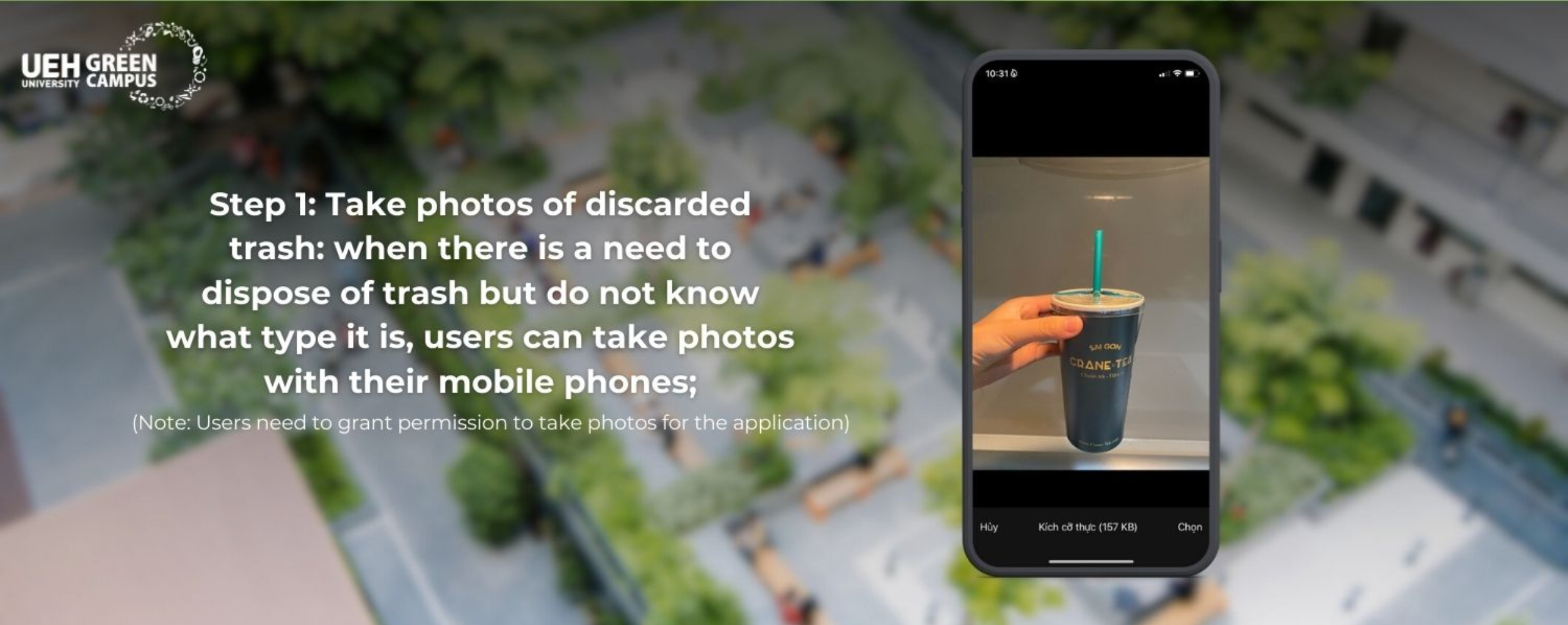
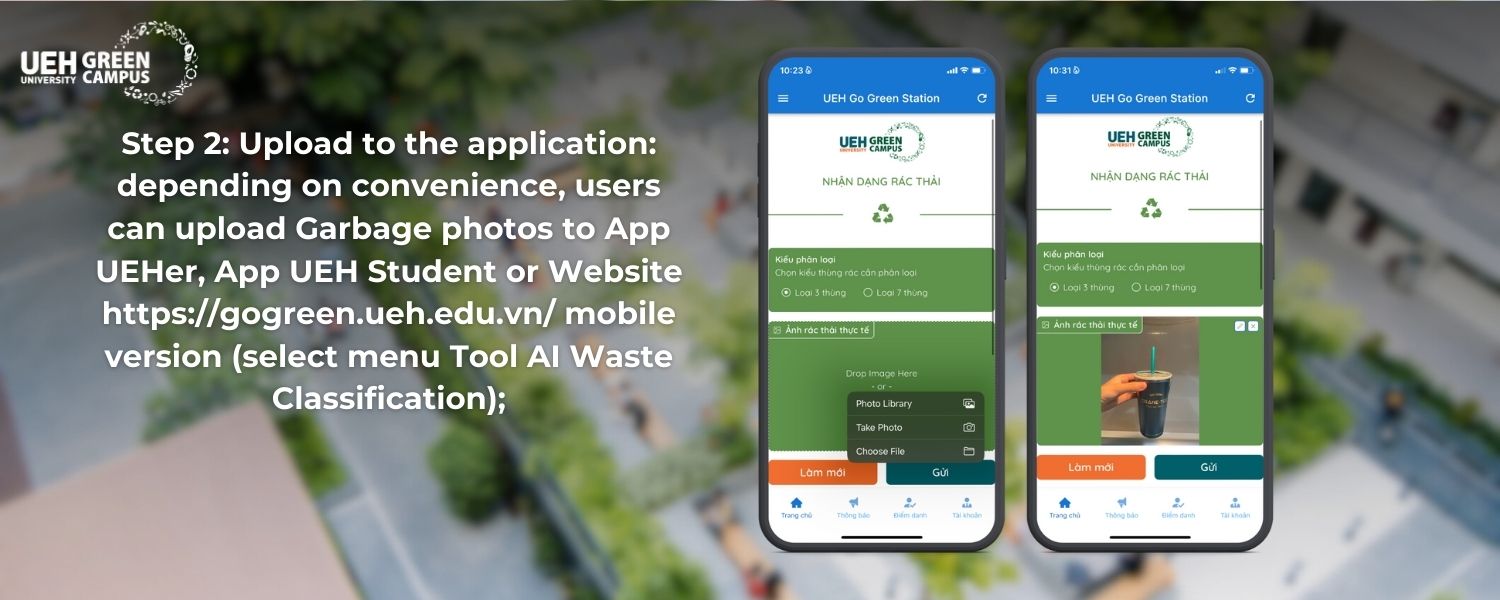
Factors influencing the use of UEH's AI waste sorting application
*An application is considered useful when it turns a task that was previously troublesome into something you can do comfortably
A technology only truly enters everyday life when users clearly see the value it brings. With the AI waste sorting app, the feeling of "less effort" is the most important touchpoint. As the sorting process becomes faster, more accurate, and contributes to a higher rate of proper recycling, users will naturally view the app as an essential daily tool. Numerous international studies show that smart recycling systems significantly improve waste processing efficiency compared to manual operations, fostering the belief that technology can truly alleviate the burden of daily life.
*Users will stay longer when an app makes them feel: "Oh, it turns out I can do this without trying too hard."
Users only stay engaged when an app is friendly enough that they don't have to "relearn" how to use it. With AI technology, this is even more important: with just a few recognition steps, visual guidance, and a clear interface, users can operate immediately. As technology becomes as light and compact as an everyday habit, the psychological barrier to the new will disappear. Sometimes, simplicity is the most compelling reason for green behavior to be sustained long-term within the student community.
*When a small action is ignited by enthusiasm, users will return not out of obligation, but because they want to do it again.
Beside convenience, the feeling of excitement is also what keeps users engaged. When waste sorting is "gamified" with bonus points, rankings, or green challenges, users are not just doing a mandatory task, but are participating in a fun and rewarding experience. It's these small joys that create a positive feedback loop, encouraging students to return to the app every day and gradually form sustainable habits.
*When everyone truly cares about the environment, they naturally seek out simple yet meaningful ways to act for the planet.
Behind every technology lies the user's personal values. When students are genuinely concerned about the environment, they tend to seek practical ways to reduce negative impacts on the planet – including proper waste sorting. Therefore, in addition to perfecting the application, communication, education, and dissemination efforts for a green lifestyle still play a core role. When awareness is sown in the right place, technology simply becomes a tool to make that behavior easier to perform.
*When the intention is strong enough, action will automatically find a way to happen.
The research results show that those who truly want to use the AI waste sorting app are also the people who sort waste more frequently and correctly. This intention is strongest when there's a real sense of usefulness, making classification easier and faster. Interesting elements in the experience also contribute to user retention, especially when they feel happy and comfortable interacting with the technology. The more environmentally conscious people are, the easier it is for them to translate awareness into action, and ease of use continues to play a supporting role in encouraging them to experiment with new technologies. Overall, an application that is both useful, user-friendly, and engaging will have a greater chance of becoming a green habit within the student community.
So, what can we do to ensure technology truly aligns with the community's green habits?
First, we can start by raising awareness about the benefits of waste sorting and the supportive role of technology. When people understand why this small action is important and how AI makes sorting easier, the intention to use the app will form more naturally. Intimate stories, lively media activities, or campaigns promoting sustainable lifestyles can all inspire and help each individual see the meaning in their actions.
Additionally, it's important to focus on designing a simple, easy-to-use interface with accurate feedback. An easy-to-understand application from the first time it's opened will reduce the feeling of reluctance to try new technologies. When all functions are clear, user-friendly, and have fewer unnecessary steps, users will feel more comfortable using them, and will naturally maintain waste sorting behavior.
Finally, making the experience enjoyable is also a worthwhile consideration. Small bonus points, green challenges, or subtle forms of recognition can bring a sense of fun, making users want to come back more. When each time you use the app brings a little excitement, the habit of sorting waste will be more sustainable and become a familiar part of daily life.
The research paper has indirectly contributed to SDGs 11, 12, and 13. See the full research article "When AI Contributes to Greening Life: Practices from the Source-Separated Waste Sorting Application in Ho Chi Minh City" HERE.
Authors: Nguyen Kim Cuong, Ho Thi Trang Bach, Le Tuan Kiet, Tran Phuong Mai, Trinh Thi Thanh Huyen - University of Economics Ho Chi Minh City
This article is part of the Green Research Community series with the message "Research Contribution for UEH Living Lab Green Campus" UEH sincerely invites the community to follow the next Green Research Community newsletter.
*To create maximum conditions for the development of the "UEH Green Researcher Community," members of the community will be able to attend scientific research methods classes related to the topics of Living Lab and Green Campus. Additionally, upon meeting the standards, the research team will receive a certificate from the UEH Sustainable University Project Board and financial support for a standard-compliant project.
More Information:
SDG 11 – Sustainable Cities and Communities seeks to develop urban areas and communities that are resilient, safe, and sustainable by improving living environments, managing waste effectively, and ensuring access to basic services for all citizens. A sustainable city is not only about physical infrastructure but also about raising awareness and shaping residents’ behavior to protect their shared environment.
SDG 12 – Responsible Consumption and Production focuses on ensuring sustainable production and consumption patterns, thereby reducing pressure on natural resources, minimizing waste, and limiting environmental pollution. This goal emphasizes the importance of effective waste management, optimal use of resources, and promoting changes in consumer behavior at both individual and community levels, particularly through education and awareness.
SDG 13 – Climate Action calls for urgent measures to combat climate change and its adverse impacts by reducing greenhouse gas emissions, enhancing adaptive capacity, and raising public awareness. This goal goes beyond national-level policies and requires changes in individual and community behaviors in daily life, especially in areas directly linked to waste generation and management.
News, photos: UEH Green Campus Project, UEH Youth Union - Student Association, UEH Communications and Partnership Development Department
Voiceover: Thanh Kieu

