






23/01/2026
Share

Keywords: Gamification, green campus, behavioral motivation, student engagement, school environment
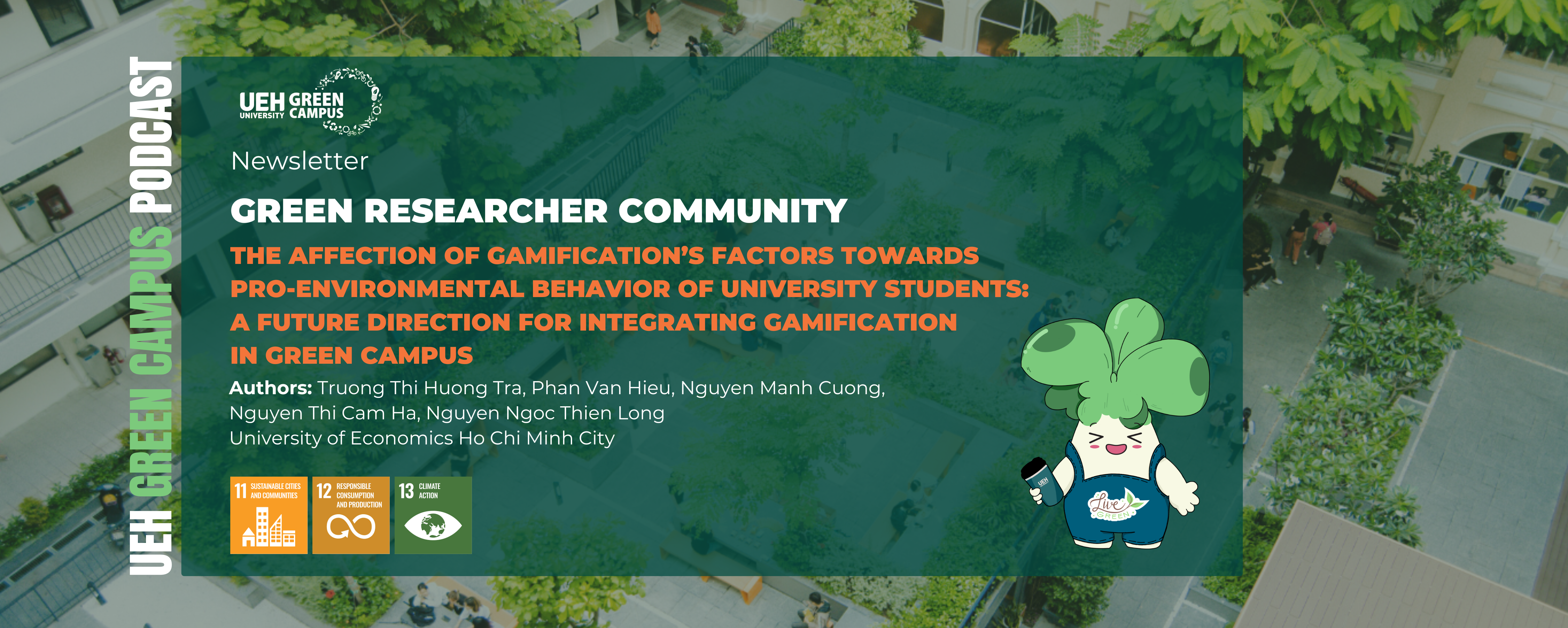
As the journey to build a "Green University" doesn't stop at awareness but needs to be nurtured by daily action, the question arises: how can students truly take the initiative to live green? From that concern, a group of students from the University of Economics Ho Chi Minh City (UEH) chose gamification as a new approach to explore the potential of turning environmental knowledge into sustainable behavior for today's young people.
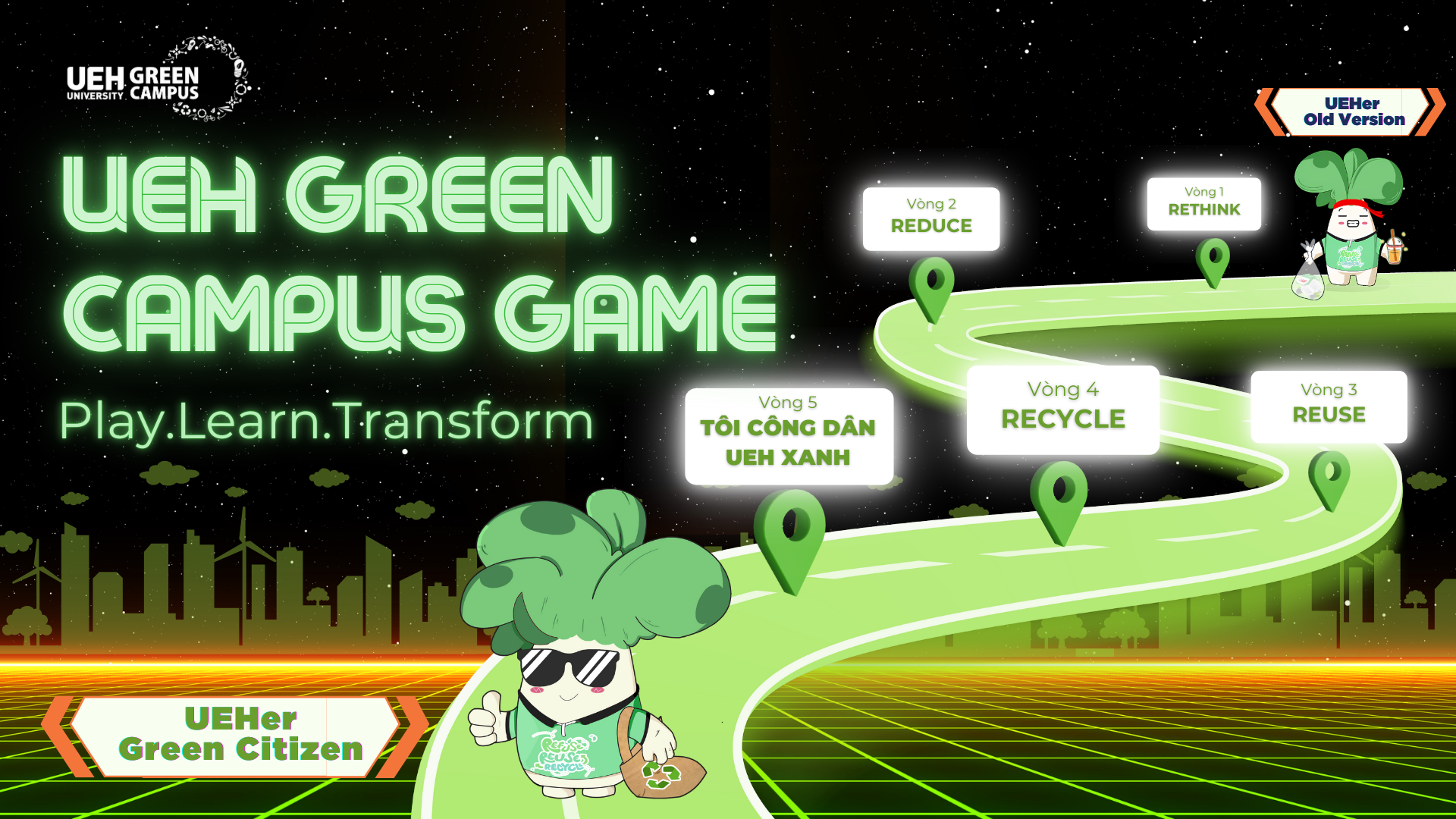
In this study, gamification is not simply understood as turning activities into games, but rather as a way to incorporate game elements such as challenges, quests, rewards, feedback, or experience simulations into environmentally related activities in student life. When these elements are designed effectively, they not only create a sense of excitement and positive competition but also help students feel like they are truly participating in a journey that is purposeful, progressive, and meaningful. From that point on, gamification became a tool to support sustainable behavior change, rather than just raising awareness or promoting green messages.
Gamification elements motivate students' green behavior
Green behavior is not only driven by cognitive motivations, but also by emotions, experiences, and a sense of "being involved" in a journey with a specific goal.
*Environmental Challenges – When Green Behavior Becomes a Goal to Conquer
Challenges like "a week without plastic bags," "recording daily recycling amounts," or "walking or cycling instead of using a motorbike" give students a sense that they are participating in a mission with clear milestones. Completing the challenge not only brings a sense of personal accomplishment but also makes environmentally friendly behavior more enjoyable and relatable to the rhythm of student life.
*Feedback and recognition – motivation to sustain behavior over time
One of the key elements of gamification is the system of feedback, recognition, and encouragement. When students see the results of their contributions thru leaderboards, scores, badges, or achievement notifications, they tend to maintain the behavior longer and more seriously. It's not just about rewards; the feeling of "making a real impact" is what makes green behavior meaningful.
*Group Assignments – From Individual Behavior to Community
Motivation Group-designed activities help students feel a sense of connection and shared responsibility. When completing energy-saving challenges, sorting trash, or participating in green campaigns with friends, the community factor acts as a positive driving force. Environmental behavior is therefore no longer something "each person does on their own," but becomes a collective and emotional experience.
*Simulation and experience – helping students "see" the impact of behavior
Factors that simulate situations or visualize results, such as reduced waste, emissions saved, or cumulative impact over time, help students better understand the meaning behind their actions. When the impact is seen concretely, the sense of environmental responsibility also deepens.
When green behavior doesn't stop at a movement, but becomes a meaningful journey
First, gamification should be seen as a tool for behavioral education, not just a movement activity. Integrating gamification into programs, campaigns, or extracurricular activities can help students become more actively involved, rather than passively receiving environmental messages. Designs like task systems, progress tracking, contribution recognition, or environmental impact simulations will help students clearly see the meaning of their actions, thereby fostering intrinsic motivation rather than coping behaviors.
Next, for organizations implementing activities related to Green University, the community factor needs to be placed at the center. Team-based tasks, collective leaderboards, or competitive activities between classes, departments, or clubs can create a stronger ripple effect of motivation compared to individual advocacy programs. When students feel a sense of belonging to a collective that shares environmental responsibility, green behavior is not only maintained by individual awareness but also by the cohesion and camaraderie of the student community.
For environmental activity designers, the study also suggests that feedback and recognition of achievements play a very important role in maintaining behavior. Building a system of points, badges, certifications, or contribution recognition is not only symbolic but also helps students feel that their behavior is "seen" and valued. When the feeling of contribution is made concrete, students tend to continue green behavior for a longer period.
Ultimately, gamification only truly works when it's designed to be connected to students' real-life experiences, rather than simply applying game elements mechanically. Activities closely related to academic and daily life on campus will help students realize that environmentally friendly behavior is not something distant, but rather very small choices made every day. But if accumulated, it can create significant change in the shared space.
The research paper has indirectly contributed to SDGs 11, 12, and 13. View the full research paper “The affection of gamification’s factors towards pro-environmental behavior of university students: A future direction for integrating gamification in green campus” HERE
Authors: Truong Thi Huong Tra, Phan Van Hieu, Nguyen Manh Cuong, Nguyen Thi Cam Ha, Nguyen Ngoc Thien Long - University of Economics Ho Chi Minh City.
This article is part of the Green Research Community series with the message “Research Contribution for UEH Living Lab Green Campus” UEH sincerely invites the community to follow the next Green Research Community newsletter.
|
*To create maximum conditions for the development of the “UEH Green Researcher Community” members of the community will be able to attend scientific research methods classes related to the topics of Living Lab and Green Campus. Additionally, upon meeting the standards, the research team will receive a certificate from the UEH Sustainable University Project Board and financial support for a standard-compliant project. |
More Information:
SDG 11 – Sustainable Cities and Communities seeks to develop urban areas and communities that are resilient, safe, and sustainable by improving living environments, managing waste effectively, and ensuring access to basic services for all citizens. A sustainable city is not only about physical infrastructure but also about raising awareness and shaping residents’ behavior to protect their shared environment.
SDG 12 – Responsible Consumption and Production focuses on ensuring sustainable production and consumption patterns, thereby reducing pressure on natural resources, minimizing waste, and limiting environmental pollution. This goal emphasizes the importance of effective waste management, optimal use of resources, and promoting changes in consumer behavior at both individual and community levels, particularly through education and awareness.
SDG 13 – Climate Action calls for urgent measures to combat climate change and its adverse impacts by reducing greenhouse gas emissions, enhancing adaptive capacity, and raising public awareness. This goal goes beyond national-level policies and requires changes in individual and community behaviors in daily life, especially in areas directly linked to waste generation and management.
News, photos: UEH Green Campus Project, UEH Youth Union - Student Association, UEH Communications and Partnership Development Department
Voiceover: Thanh Kieu

