




21/09/2026
Share

Some things are called “waste” simply because we have not yet seen where their next journey may lead. A used shirt can be passed on to someone who needs it, a nylon bag can become a source of material for a new product, old paper can return to the production cycle, and used batteries can be properly treated. This article explores the stories and journeys behind four types of waste collected during the recent “UEH Recycle Day - UEH x Limloop” Recycling Day.
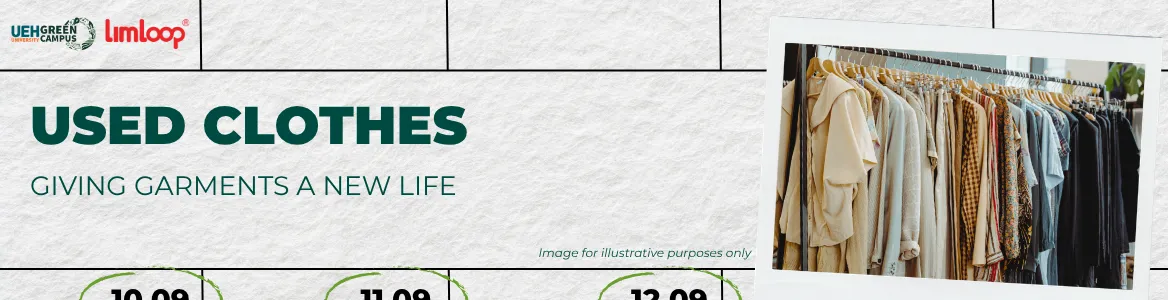
Each year, landfills around the world receive approximately 92 million tons of clothing and textile waste. Meanwhile, only around 12% of textile waste is recycled, while clothing that is actually processed into new clothing accounts for only approximately 1%. One of the reasons for this low recycling rate is the composition of clothing. Many garments today are made from blended fibers, such as cotton combined with polyester, making it difficult to separate individual fibers for recycling. When sent to landfills, natural fibers may decompose and generate methane, while synthetic fibers take much longer to break down and can also contribute to the generation of microplastics.
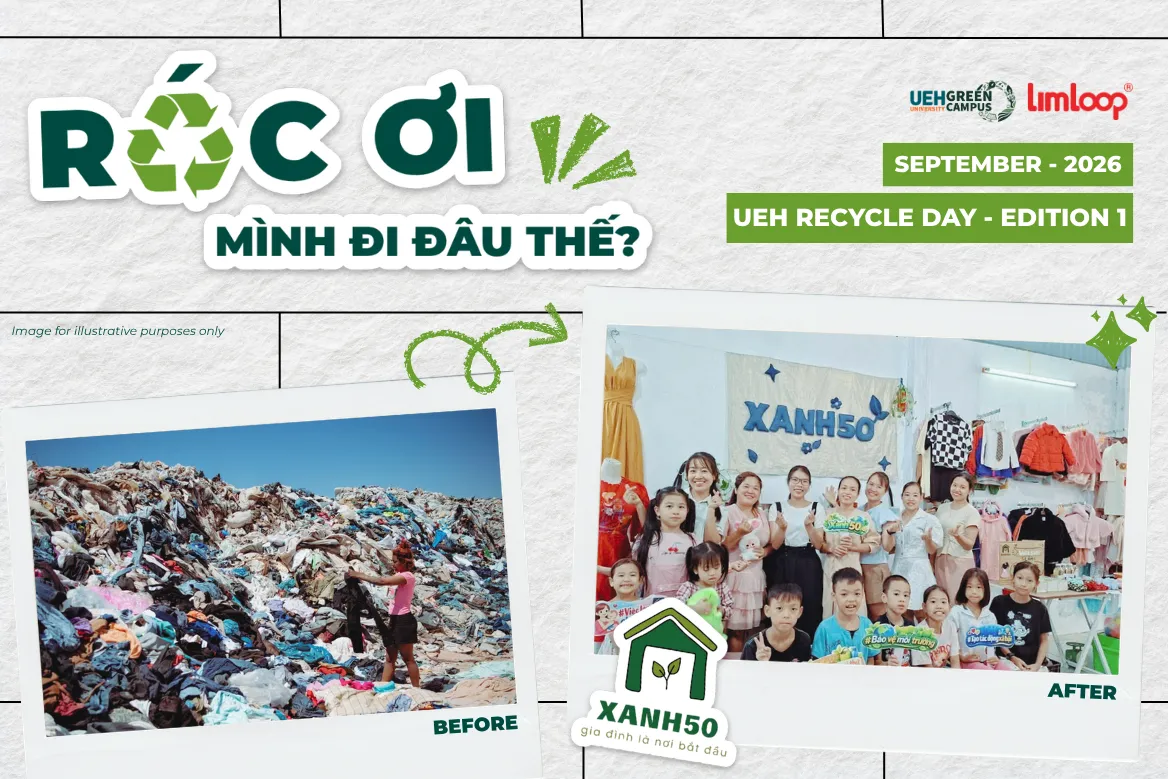
However, not every piece of clothing leaving our wardrobes is collected and processed appropriately. At “UEH Recycle Day - UEH x Limloop”, clothes that remain usable are transferred to Xanh 50, where they are collected, sorted, and passed on to new users. This helps extend the use of essential items while supporting people facing difficult circumstances. In this way, the “next life” of a garment does not necessarily have to begin with a new piece of clothing. Sometimes, it simply begins by reaching someone who needs it and continuing to create value in a different context.
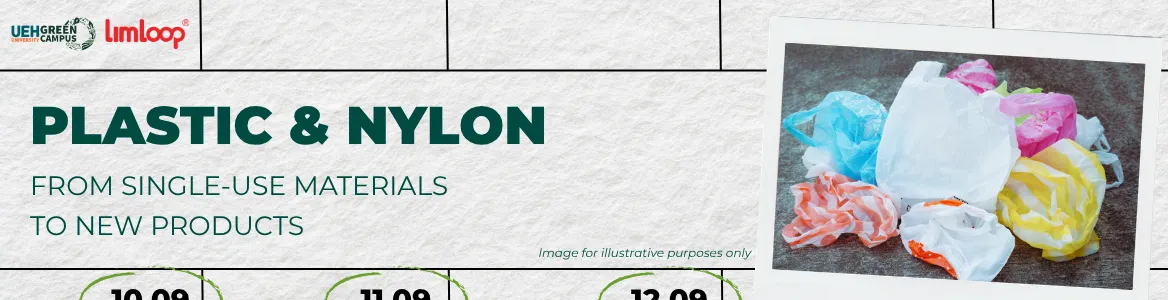
Every year, Vietnam generates approximately 3.9 million tons of plastic waste, accounting for around 5-7% of total municipal solid waste. Among these, flexible plastic packaging and nylon bags are common types of waste but are not easy to process. Due to their thin and lightweight nature, as well as their tendency to retain food, grease, and other contaminants, plastic packaging and nylon bags can be difficult to collect and may become entangled in sorting equipment. Therefore, these materials need to be kept clean, dried, and cleared of contaminants before collection and recycling. Plastic packaging and nylon bags can then be sorted, cut into small pieces, washed, heated, melted, and molded into recycled plastic pellets. Depending on the quality of the input materials, these recycled pellets can be further used to produce packaging, household products, plastic pipes, or other new products and materials.
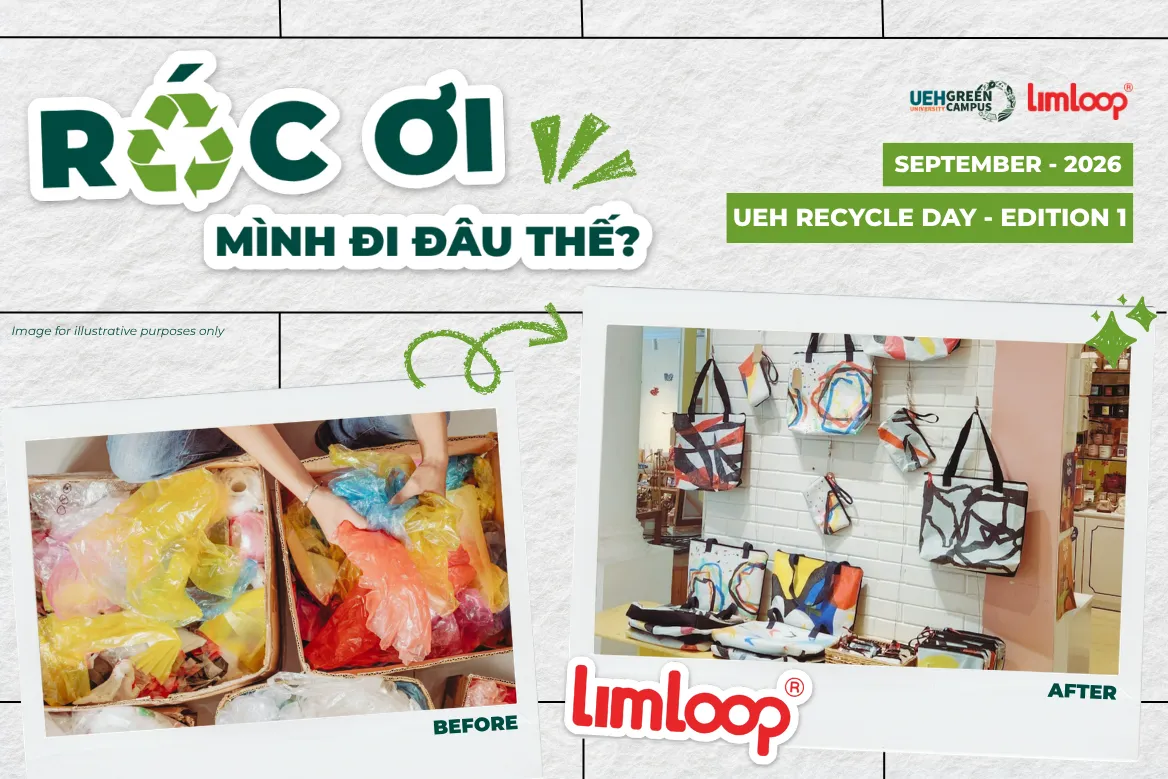
As a partner of UEH Recycle Day 2026, Limloop receives suitable plastic packaging and nylon bags and transforms them into woven or heat-pressed materials. These materials are then incorporated into the design and production of fashion products and accessories, including bags, wallets, cup holders, and a variety of other practical products. Notably, this process is carried out by Limloop’s team of deaf artisans, helping not only to extend the lifecycle of materials once considered single-use, but also to create employment opportunities, develop craftsmanship, and promote equal opportunities for people with hearing impairments to participate in and contribute to the community. From a nylon bag that may seem to have only one use, a new lifecycle can be created - carrying both environmental and social value.
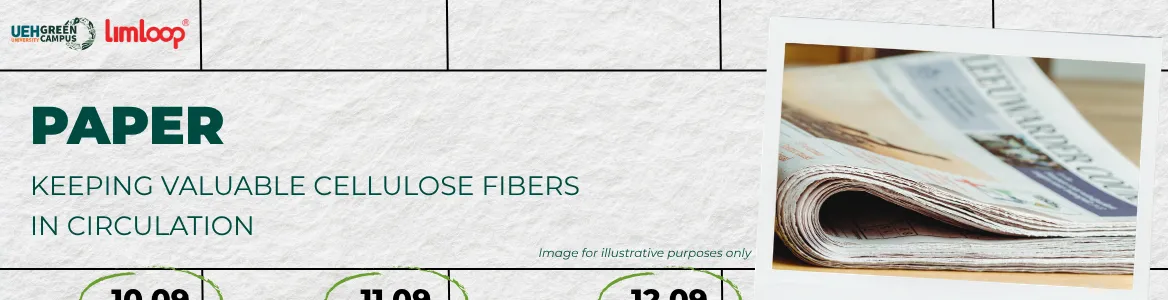
A sheet of paper is made up of millions of interwoven cellulose fibers. This structure allows paper to be broken down, processed, and transformed into new products relatively easily. However, paper cannot be recycled indefinitely. After each processing cycle, cellulose fibers become shorter and weaker, meaning that paper can generally undergo approximately 5-7 recycling cycles before its quality is no longer sufficient for production requirements. During each cycle, paper is mixed with water and pulped, then screened to remove staples, adhesives, plastic films, and other contaminants. The pulp is subsequently pressed, rolled, and dried to become raw material for new products. As a result, an old document can become a cardboard box, while an old box can continue its journey as wrapping paper. Although the form changes, valuable cellulose fibers are retained and given an opportunity to continue their lifecycle.
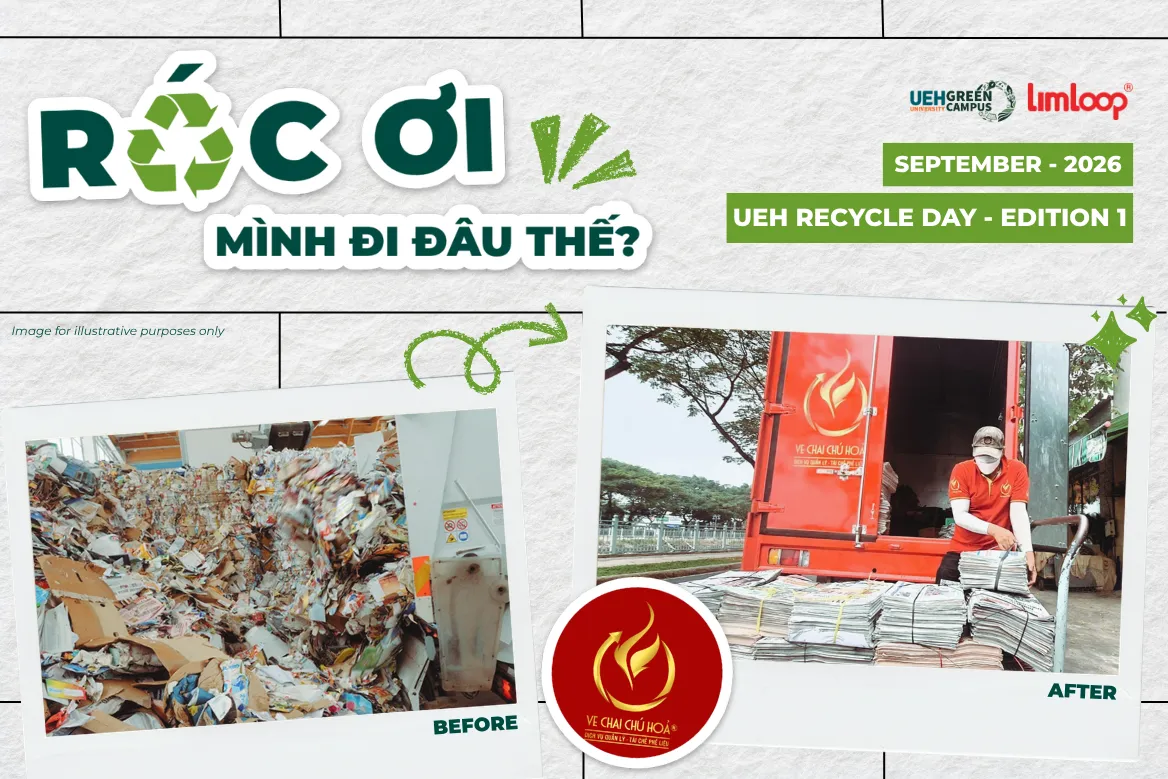
At “UEH Recycle Day 2026 - UEH x Limloop”, collected paper is connected with appropriate recycling and processing facilities through collection partner Ve Chai Chú Hỏa, continuing its journey toward becoming new products.
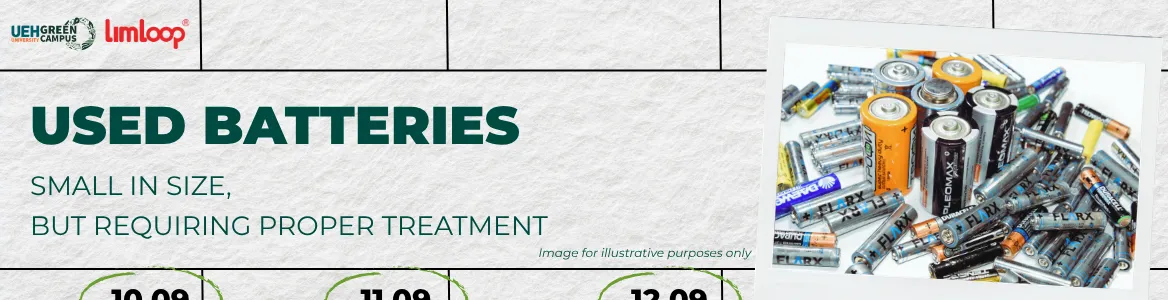
Although a battery may be small, it contains a mixture of chemicals and metals such as zinc, manganese, nickel, lithium, lead, or mercury. Therefore, used batteries need to be collected separately and delivered to qualified facilities for appropriate treatment. At these facilities, batteries are sorted according to their respective chemical systems to determine suitable treatment methods. They may then be crushed under controlled conditions, allowing components such as metals, plastics, and internal materials to be separated. Today, technologies such as hydrometallurgy and pyrometallurgy have been developed to recover valuable metals from batteries. Components that cannot be recycled are treated or separately managed to minimize the risk of their release into the environment.
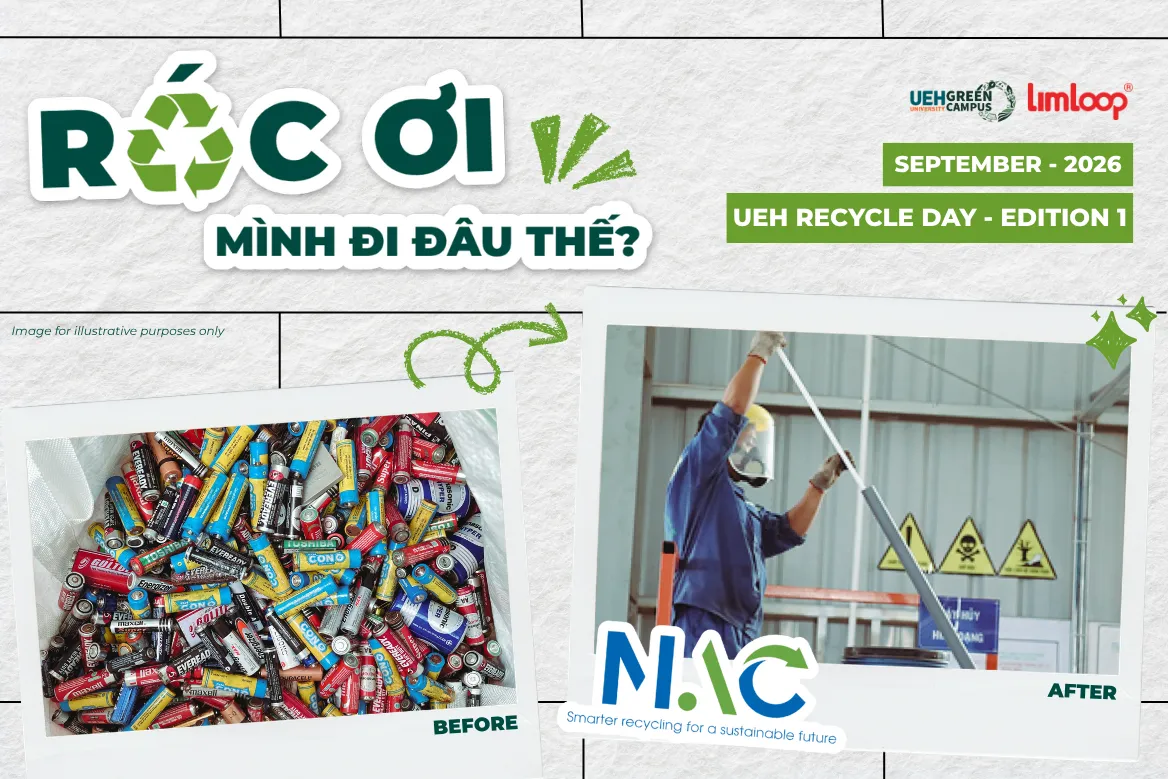
At “UEH Recycle Day 2026 - UEH x Limloop”, used batteries are transferred to Mộc An Châu, a company specializing in the collection, recycling, and treatment of industrial and hazardous waste. This journey demonstrates that even a small battery is far from being a simple type of waste. Sometimes, the most important action we can take is simply not to place it in a regular household waste bin.
A lifecycle does not necessarily end when an item can no longer be used for its original purpose. When properly sorted and delivered to the right destination, materials that seem to have completed their purpose can continue to create value in another form. UEH Recycle Day - Edition 1 opened a journey of this kind, made possible through the collective efforts of the UEH community and participating partners. From small individual actions, a broader change is being nurtured every day, creating new opportunities for connection and action in future editions of UEH Recycle Day.
Learn more about the partners of UEH Recycle Day 2026:
1. Limloop - Social Impact Enterprise: https://limloop.com/
2. Xanh 50 Community: https://www.facebook.com/Xanh50dong/
3. Ve Chai Chú Hỏa: https://www.facebook.com/vechaichuhoa
4. Mộc An Châu Environmental Company: https://maccorp.com.vn/vi
Additional Information:
UEH Recycle Day is a community initiative under the UEH Green Campus Project, organized periodically with the support of partners and the UEH community to promote waste sorting, collection, and recycling practices. Each edition of Recycle Day serves as a platform where the community comes together to take action, partners join hands, and green values are carried forward, contributing to making circular economy practices an integral part of campus life.
News and photos: UEH Green Campus Project