






15/06/2026
Share

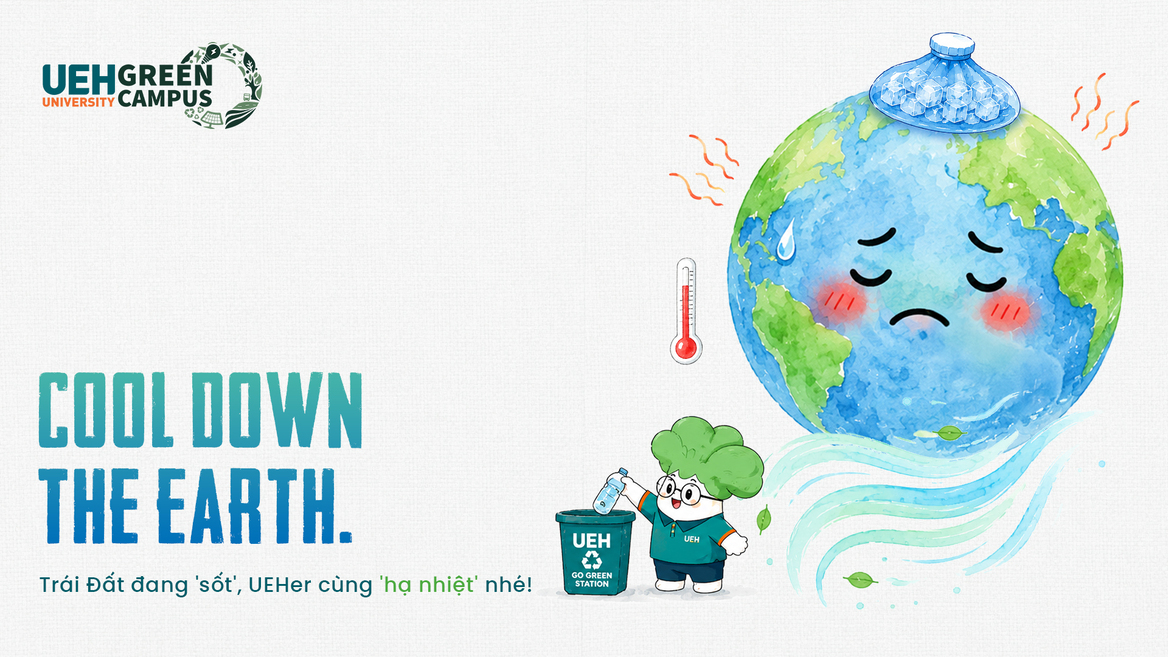
Climate change has moved well beyond the realm of long-term forecasts to become a systemic crisis. Humanity is no longer simply facing a mechanical rise in temperatures; we are witnessing the breakdown of core ecological cycles. The breaching of planetary boundaries is presenting unprecedented challenges, compelling us to fundamentally rethink how we operate and interact with the natural world.
"Urgent Signals" from Global Reports
According to the latest reports from the United Nations Environment Program (UNEP) and the World Meteorological Organization (WMO), the global climate system is undergoing unprecedented disruptions. The 1.5 degrees Celsius warming threshold above pre-industrial levels - the survival safety line established by the Intergovernmental Panel on Climate Change (IPCC) - is now under serious threat as global average temperatures continue to break records.
International experts warn that the ocean, which absorbs more than 90% of the Earth's excess heat, is experiencing extreme marine heatwaves, triggering widespread coral bleaching and posing a grave threat to global food security. On land, disruptions to atmospheric circulation are fueling devastating disasters: from large-scale wildfires incinerating millions of hectares of vegetation to super typhoons and prolonged droughts that fracture global supply chains.
As one of the country's most vulnerable to climate change, Vietnam is bearing the consequences directly. The Mekong Delta faces saltwater intrusion and rising sea levels that threaten the livelihoods of millions. Meanwhile, major cities such as Ho Chi Minh City are increasingly experiencing intense, prolonged heat waves, compounded by abnormal tidal surges that inundate critical infrastructure.
"Urgent Signals" from Global Reports
According to the latest reports from the United Nations Environment Program (UNEP) and the World Meteorological Organization (WMO), the global climate system is undergoing unprecedented disruptions. The 1.5 degrees Celsius warming threshold above pre-industrial levels - the survival safety line established by the Intergovernmental Panel on Climate Change (IPCC) - is now under serious threat as global average temperatures continue to break records.
International experts warn that the ocean, which absorbs more than 90% of the Earth's excess heat, is experiencing extreme marine heatwaves, triggering widespread coral bleaching and posing a grave threat to global food security. On land, disruptions to atmospheric circulation are fueling devastating disasters: from large-scale wildfires incinerating millions of hectares of vegetation to super typhoons and prolonged droughts that fracture global supply chains.
As one of the country's most vulnerable to climate change, Vietnam is bearing the consequences directly. The Mekong Delta faces saltwater intrusion and rising sea levels that threaten the livelihoods of millions. Meanwhile, major cities such as Ho Chi Minh City are increasingly experiencing intense, prolonged heat waves, compounded by abnormal tidal surges that inundate critical infrastructure.
Proactively Assessing Impact through Greenhouse Gas Inventory
In the face of this climate crisis, the University of Economics Ho Chi Minh City (UEH) is not stopping at awareness-raising; it is actively quantifying its environmental impact. Establishing a credible emissions reduction roadmap begins with accurately measuring the carbon footprint of the entire system.
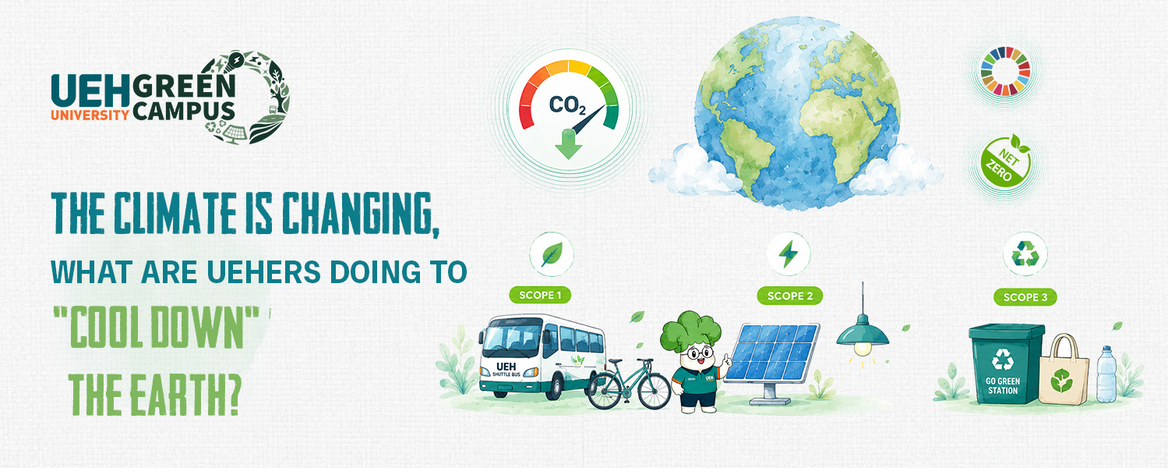
At UEH, this work is being progressively implemented through a carbon emissions monitoring and inventory process. The university is currently focused on collecting data on energy consumption and operational activities across its entire system. In the period ahead, this data is expected to be calculated, converted to carbon dioxide equivalent (CO2e), and categorized into three scopes: Scope 1, Scope 2, and Scope 3. Once complete, this database will not only serve as the foundation for the university's energy optimization strategy but will also be transparently integrated into UEH's annual report on all 17 Sustainable Development Goals (SDGs).
UEH's Evidence-Based Emissions Reduction Strategy
Building on the UEH Green Campus project roadmap, UEH is progressively implementing a comprehensive carbon management and emissions reduction strategy across all three scopes, with tangible results that directly contribute to sustainable development goals:
- Scope 1 - Direct Emissions Reduction: UEH is focused on transitioning its internal fleet and encouraging students and staff to use the UEH Shuttle Bus or zero-emission vehicles (ZEVs). Through operational optimization to reduce dependence on fossil fuels, the university's Living Lab ecosystem has implemented 58 green initiatives and developed 47 practical solutions through research projects in support of environmental protection;
- Scope 2 - Indirect Emissions Reduction from Purchased Energy: UEH continues to optimize its air conditioning, lighting, and high-energy-consumption systems. The most impactful milestone has been the installation and operation of rooftop solar energy systems at campuses A, B, N1, and N2. This energy transition effort has generated 470,000 kWh of clean electricity, helping the university reduce approximately 1.27 million tonnes of CO2 emissions.
- Scope 3 - Emissions Reduction across the Value Chain and Waste Management: UEH is rigorously applying its green procurement policy and enforcing firm regulations to eliminate single-use plastics. The rollout of the UEH Go Green Station system is expected to reduce the volume of waste sent to landfill by 65%. To date, 8.2 tonnes of waste have been successfully sorted and recycled. Community engagement has yielded positive results, with students collecting 1,996 plastic bottles through a recycling challenge. Internal surveys also indicate encouraging trends, with 94.5% of students fully supportive of the single-use plastic restriction policy and 77.9% maintaining regular habits of waste sorting and proper disposal.
The journey toward emissions reduction and planetary cooling cannot happen without the student community. Every decision to switch off a light when leaving a room, every flight of stairs taken instead of an elevator, every choice to ride the UEH Shuttle Bus - each action by a UEHer directly lowers the university's overall emissions footprint.
The Earth has no draft version, and climate change will not wait for us to be ready. Now is the time for every green citizen at UEH to turn classroom knowledge into real action.
#WorldEnvironmentDay2026 #WorldOceansDay2026 #VietnamSeaAndIslandsWeek #NowForClimate
News and photos: UEH Green Campus Project
