






20/06/2026
Share

Keywords: Off-farm employment; Household welfare; Rural households; Clean energy; Food expenditure; Household income; Vietnam; Rural living standards.
In many rural areas of Vietnam, farming remains the main source of livelihood for millions of households. But as the weather becomes increasingly erratic, agricultural prices fluctuate, and seasonal risks are ever-present, relying solely on farming is sometimes no longer a safe enough choice to ensure a livelihood. Therefore, more and more farmers are seeking additional non-agricultural jobs, from working as laborers, construction workers, small traders to service workers, to increase their income and reduce the economic pressure on their families. But do those "off-farm" jobs really help improve the lives of rural households, not just in terms of income but also in their meals and daily quality of life?
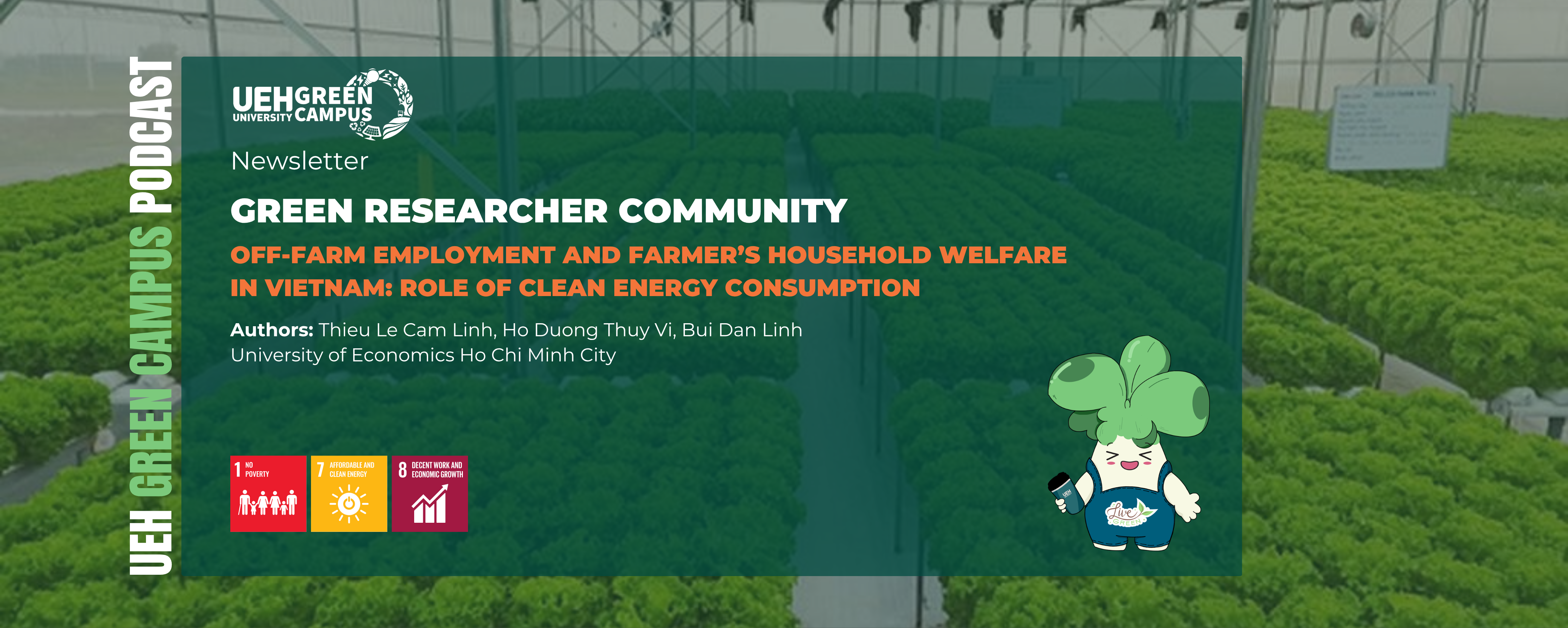
From that question, a group of students from the University of Economics Ho Chi Minh City (UEH) conducted a study titled "Off-farm employment and farmer’s household welfare in Vietnam: Role of clean energy consumption," aiming to investigate whether non-agricultural employment contributes to improving the welfare of rural households in Vietnam.
Before delving into the noteworthy findings, it might be necessary to better understand what "off-farm employment" means. Simply put, these are jobs that generate income but are not directly related to farming or animal husbandry, such as working as laborers, small traders, drivers, service providers, construction workers, or seasonal laborers. For many families in rural areas, this is not just a way to earn extra money but also serves as a "backup plan" when the harvest fails, agricultural prices fluctuate, or natural disasters occur unexpectedly.
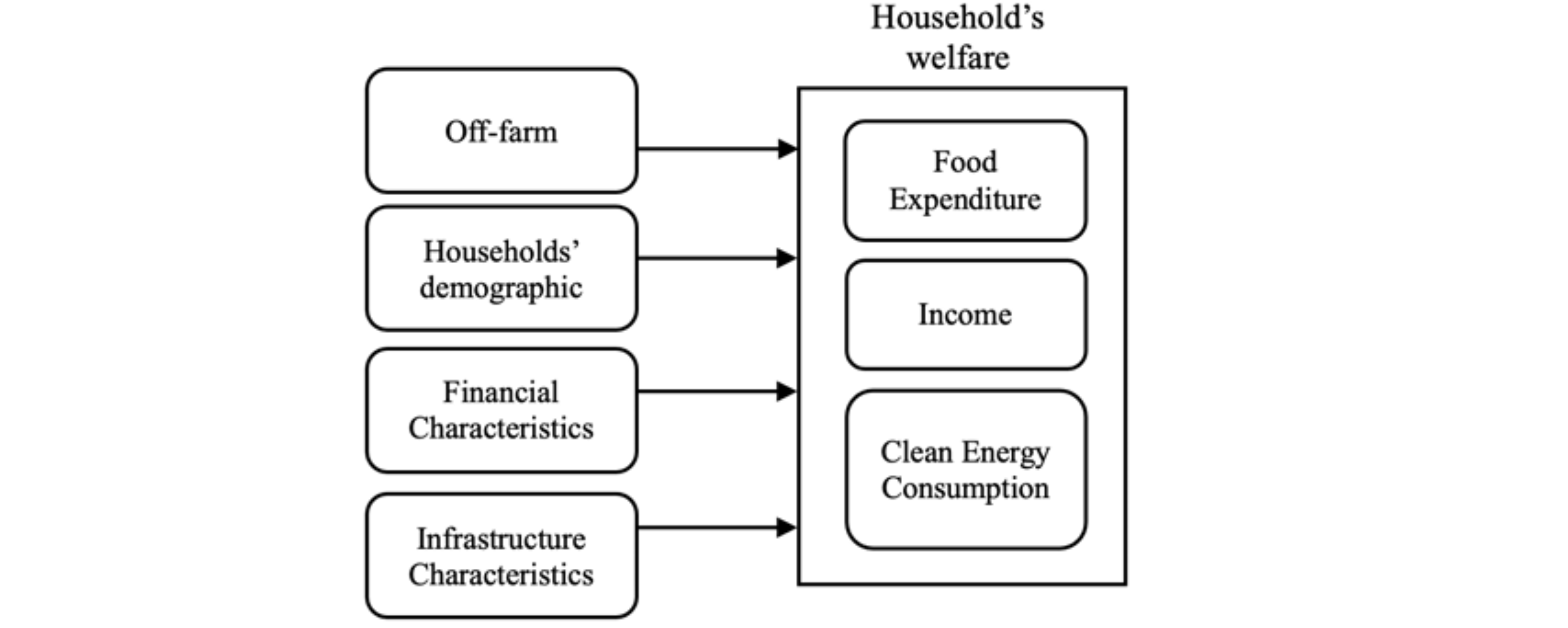
But the story doesn't just stop at making more money. The interesting part is: if one person in the family takes on an additional non-agricultural job, does it really make life better in various ways? It's not just about the increase in income, but also whether the meals are more complete, or whether the family can switch from using wood or coal stoves to gas or electric ones for cooking. In other words, instead of just looking at the wallet, the perspective here is broader, closer to everyday life.
Therefore, the connection established is not simply "having non-agricultural jobs will lead to more money," but rather a chain of changes in family life. Better income can lead to better food expenditure, while also opening up access to cleaner and safer living options. This is also the reason why the next section will delve into each connection to see what changes non-agricultural employment truly brings to the lives of rural Vietnamese people.
So, does non-agricultural employment really improve the lives of rural households?
First, the answer seems to be yes, at least in terms of income. Households with members engaged in non-agricultural work often have significantly higher incomes compared to those that solely rely on agricultural production. This is quite understandable, as when income is no longer entirely dependent on weather or seasons, families will have an additional, more stable financial "pillar" to alleviate economic pressure.
Secondly, the increase in income seems to also bring about a change in the quality of daily meals. When economic conditions improve, households tend to spend more on food, which means meals can be more complete and diverse instead of just focusing on basic needs. It is noteworthy that this impact not only reflects "eating more," but also shows the potential for improving the nutrition and health of the entire family.
Thirdly, a rather interesting finding is that non-agricultural employment is also related to how households use energy in their daily lives. Households with additional income from non-agricultural work tend to switch to using cleaner energy sources such as gas or electricity instead of continuing to rely on traditional firewood or coal. This may seem small, but in reality, it significantly impacts health, quality of life, and even the living environment in the long term.
However, not all families benefit equally. Households with higher education levels, savings, or living near urban areas tend to better seize opportunities from non-agricultural employment. Conversely, shocks such as natural disasters or living conditions far from the center can still significantly reduce the benefits that non-agricultural jobs bring. That shows that to improve the quality of life in rural areas, simply creating more jobs may not be enough.
Is creating more non-agricultural jobs enough to improve rural life?
From what has been indicated, it can be seen that non-agricultural employment brings many positive changes, but for those benefits to be truly sustainable, more is needed than just creating more jobs. One of the important things is to expand job access opportunities for rural people, especially thru vocational training, connecting labor markets, and facilitating the movement of workers to areas with more job opportunities. When people have additional career options beyond farming, the ability to stabilize income and reduce economic risks is also higher.
In addition, the quality of life in rural areas is not only about income but also about very familiar things like meals or daily living conditions. Therefore, encouraging the use of clean energy such as gas, electricity, or renewable energy in cooking is also considered a noteworthy direction. When access to clean energy becomes easier, people not only reduce their dependence on firewood and coal but can also improve their health and long-term quality of life.
Additionally, an interesting point is that when income increases, the story should not stop at "earning more money," but rather at how to help people live better with that income. This requires support in terms of information, family financial management skills, as well as policies to stabilize food prices and maintain supply in rural areas. Because in the end, a better life is not only measured by the amount of money earned, but also by whether people have more sufficient food, live healthier, and are less vulnerable to the fluctuations of life.
The research paper has indirectly contributed to SDG 1, 7, and 8. See the full research article "Off-farm employment and farmer’s household welfare in Vietnam: Role of clean energy consumption" HERE.
The authors: Thieu Le Cam Linh, Ho Duong Thuy Vi, Bui Dan Linh - University of Economics Ho Chi Minh City.
This article is part of the Green Research Community series with the message “Research Contribution for UEH Living Lab Green Campus” UEH sincerely invites the community to follow the next Green Research Community newsletter.
|
*To create maximum conditions for the development of the “UEH Green Researcher Community” members of the community will be able to attend scientific research methods classes related to the topics of Living Lab and Green Campus. Additionally, upon meeting the standards, the research team will receive a certificate from the UEH Sustainable University Project Board and financial support for a standard-compliant project. |
More Information:
SDG 1 – No Poverty focuses on ending all forms of poverty everywhere, ensuring that everyone has access to basic needs such as food, clean water, housing, and essential social services. Poverty eradication goes beyond financial assistance; it also involves creating sustainable job opportunities, strengthening resilience to natural disasters and crises, and building a foundation that enables individuals to escape poverty in the long term.
SDG 7 – Affordable and Clean Energy emphasizes ensuring that everyone has access to reliable, modern, affordable, and environmentally friendly energy. Beyond simply expanding electricity systems, this goal promotes the use of renewable energy, improves energy efficiency, and reduces the negative environmental impacts of traditional energy exploitation.
SDG 8 – Decent Work and Economic Growth focuses on building an inclusive economy that generates quality, fair, and sustainable jobs for all. This is not only about driving GDP growth but also about improving working conditions, expanding opportunities for youth and women, encouraging innovation, and developing businesses that integrate social responsibility.
News, photos: UEH Green Campus Project, UEH Youth Union - Student Association, UEH Communications and Partnership Development Department
Voiceover: Thanh Kieu

