





23/11/2026
Share

Keywords: Green finance; sustainable industrialization; green innovation; renewable energy; OECD.
Amid growing climate change concerns and increasing demands for emission reductions, countries are facing the challenge of maintaining economic growth while transitioning toward more sustainable development models. This is especially relevant for developed industrial economies, where funding for green projects and the capacity to adopt environmentally friendly technologies are becoming increasingly important to the transition process. A research team from the University of Economics Ho Chi Minh City (UEH) conducted the study titled “Investigating the impact of green finance on sustainable industrialization in oecd countries: Exploring the moderating role of green innovation,” which examines the impact of green finance on sustainable industrialization and considers the role of green innovation in this relationship.
OECD countries face the dual challenge of sustaining industrial growth while reducing negative environmental impacts. Green finance can provide resources for clean energy projects and environmentally friendly production activities, while green innovation enables businesses to improve technology and use energy more efficiently. However, the transition still faces constraints related to costs, technology, and unequal access to funding across economic sectors. Therefore, examining the relationship between green finance, green innovation, and sustainable industrialization is important for gaining a clearer understanding of this transition.
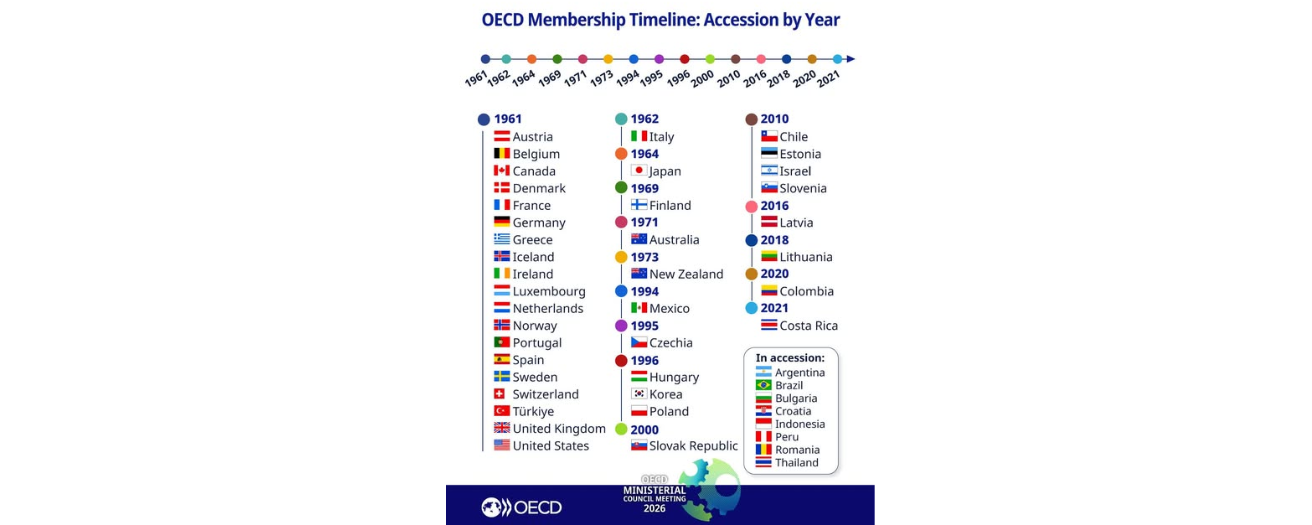
List of OECD Countries
Source: Collected
How does green finance operate within an “ecosystem”?
Simply put, green finance refers to capital flows directed toward activities that create positive environmental impacts, such as renewable energy, clean technologies, or resource-efficient production. However, it is not simply a matter of banks lending money to companies for green projects. The model presented by the authors shows that this process requires coordination among four stakeholders. Governments create incentives through policies and preferential schemes; financial institutions provide green financial services; businesses transform capital into green production activities; and consumers drive the market through their choices and purchases of sustainable products.
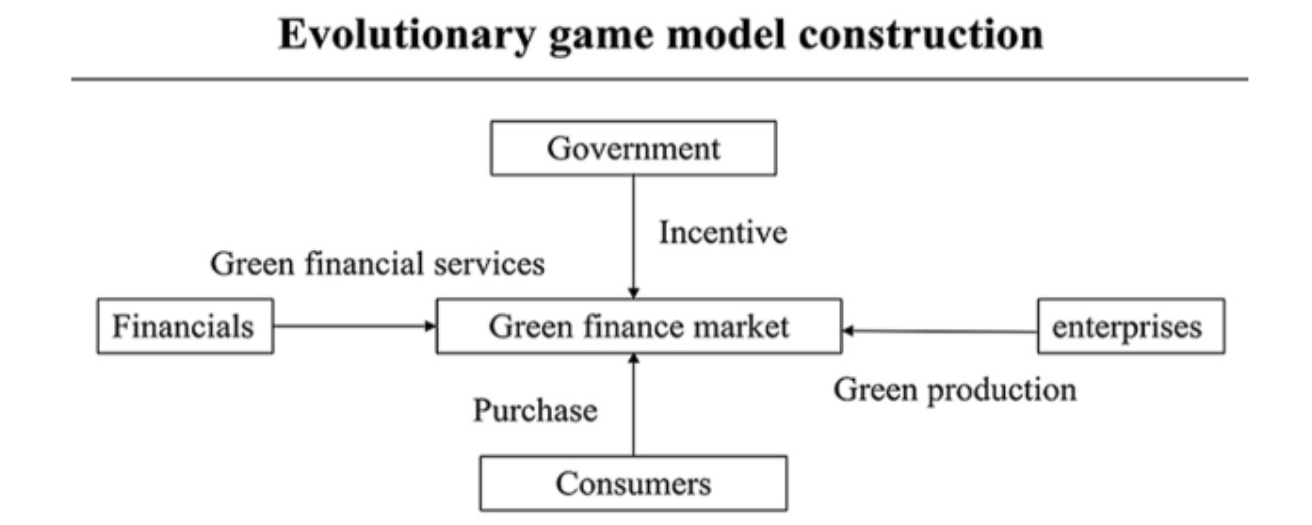
In other words, green finance is where policy, capital, production, and market demand come together. Without clear incentives, green capital may struggle to reach the right places. Without sufficient capacity for innovation, businesses may find it difficult to turn capital into meaningful change. And if green products are not embraced by the market, the transition will be difficult to sustain in the long term. Therefore, the study does not only ask whether green finance supports sustainable industrialization. It also highlights something more important: green innovation can help transform capital into technology, clean energy, and concrete changes in production activities.
The findings show that green finance can drive sustainable industrialization. When businesses gain access to appropriate funding, they have better conditions to invest in clean energy, environmentally friendly technologies, and production processes with fewer negative impacts.
However, financial capital alone does not automatically create a green industry. A notable finding of the study is that green innovation amplifies the effectiveness of green finance. If green finance is the resource, then green innovation is the capability that transforms that resource into practical changes: more efficient energy use, cleaner technologies, and improved production methods. This shows that a green project should not be evaluated solely by the scale of its investment. Its long-term value also depends on whether a business has sufficient technological capacity, a capable workforce, and the determination to use that capital effectively.
Above all, the effectiveness of the green transition is not the same across all sectors. In manufacturing, the effects of green finance and green innovation are more positive. This sector can directly transform capital into machinery, technology, clean energy, and new operating processes. Meanwhile, agriculture and services still face their own short-term barriers. This reminds us that the green transition cannot follow a one-size-fits-all approach. Each sector needs to be considered according to its technological characteristics, funding needs, and implementation capacity.
Policy implications
Based on these findings, the study offers several implications for the green transition. Governments should continue expanding access to green finance through tax, credit, and public-budget policies, especially for projects using clean technologies and renewable energy. Policies to attract foreign direct investment, or FDI, should also focus on technology transfer capacity and support for sustainable industrialization.
For businesses, green capital should be combined with investments in technology, research and development, and human resources. Strengthening technological capacity will help businesses use capital more effectively and create meaningful changes in their production activities.
Financial institutions can also expand products such as green bonds, green credit, and green insurance, while incorporating environmental and social factors into their risk-assessment processes. This can help allocate capital more effectively to projects that are capable of generating sustainable value.
Finally, differences across sectors show that green-transition policies need to be designed to suit each industry. The limitations faced by agriculture and services suggest that these sectors may need tailored support in funding, technology, and implementation capacity, rather than a single policy applied across the entire economy.
The study has indirectly contributed to SDGs 9, 16, and 17. Read the full study “Investigating the impact of green finance on sustainable industrialization in oecd countries: Exploring the moderating role of green innovation” HERE
The authors: Trang Le Minh Hau, Nguyen Trong Bang - University of Economics Ho Chi Minh City.
This article is part of the Green Research Community series with the message “Research Contribution for UEH Living Lab Green Campus” UEH sincerely invites the community to follow the next Green Research Community newsletter.
|
*To create maximum conditions for the development of the “UEH Green Researcher Community” members of the community will be able to attend scientific research methods classes related to the topics of Living Lab and Green Campus. Additionally, upon meeting the standards, the research team will receive a certificate from the UEH Sustainable University Project Board and financial support for a standard-compliant project. |
More Information:
SDG 9 – Industry, Innovation, and Infrastructure aims to build resilient infrastructure, promote sustainable industrialization, and encourage innovation. This goal goes beyond advancing technology and production; it also includes narrowing infrastructure access gaps between regions, supporting small and medium-sized enterprises, and applying technology to enhance global competitiveness.
SDG 16 – Peace, Justice, and Strong Institutions centers on building peaceful societies, reducing violence and conflict, and ensuring equal access to justice for all. It also promotes transparent, accountable, and effective institutions that build public trust, thereby strengthening the foundation for sustainable development.
SDG 17 – Partnerships for the Goals highlights the role of international cooperation in successfully achieving the Sustainable Development Goals. This goes beyond financial support or technology transfer; it involves coordination in policy, trade, science, and knowledge among nations, regions, and global organizations. Strong partnerships will be the key to transforming shared goals into tangible actions.
News, photos: UEH Green Campus Project, UEH Youth Union - Student Association, UEH Communications and Partnership Development Department

