







14/05/2026
Share

Keywords: Gender diversity on boards; ESG; Sustainable development; Women in leadership; Critical Mass Theory; Corporate governance; Gender equality.
In the context of environmental, social, and governance (ESG) activities increasingly becoming an important measure for the sustainable development of businesses, the story of women's presence on boards of directors is receiving more attention than ever. Not only limited to gender equality, many studies suggest that women in leadership positions can bring different perspectives to governance, especially regarding environmental, social, and stakeholder responsibility issues.
Thru the lens of a group of students from the University of Economics Ho Chi Minh City (UEH) with the research "Board Gender Diversity and ESG Performance: The Existence of Critical Mass Theory," we have come to realize that gender diversity on the board of directors not only significantly impacts the ESG performance of non-financial enterprises in Asia but also verifies whether the number of female board members makes a significant difference to ESG.

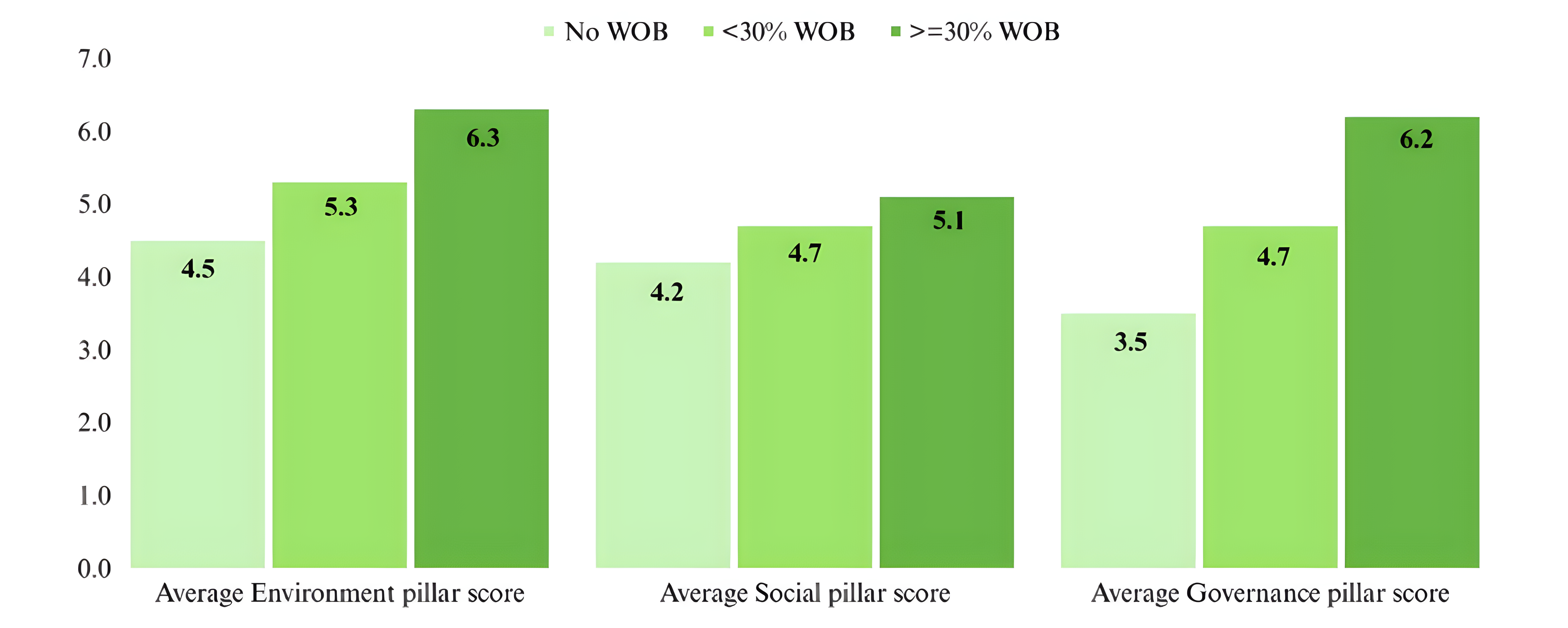
According to MSCI ESG Research (2022), companies with a higher percentage of women on their boards of directors tend to score better on ESG across all three aspects: environmental, social, and governance. In particular, the group of companies with 30% or more female members on the board of directors achieved significantly higher scores compared to the group with no or very few women in governance. This shows that the presence of women in leadership not only has representative significance but also directly influences the direction of sustainable development and how businesses address ESG issues in practice.
So, what makes the presence of women on the board of directors potentially impactful for a company's ESG?
First, it's not just about "gender diversity," but also about the change in how businesses make decisions. Companies with more female board members often achieve higher ESG performance. According to the group of authors, female leaders tend to pay more attention to environmental issues, social responsibility, and the long-term benefits of the business rather than just focusing on short-term financial results. It is this difference in management perspective that leads companies to place greater emphasis on sustainable development strategies and ESG-related decisions.
Secondly, women's voices only truly have an impact when they reach a "sufficient critical mass." One of the most notable findings of the study is that the impact of women on ESG becomes more pronounced when a company has three or more female board members. This is explained by the "Critical Mass Theory," which means that when the number of women is still too few, their voices are more likely to be seen as representative rather than having a real impact on the decision-making process. Only when a "critical mass" is reached do the perspectives and viewpoints of female leaders begin to create significant changes in corporate governance strategies.
Thirdly, not all companies with female leaders are the same. Although ESG is receiving increasing attention, the proportion of women on boards of directors in Asian companies remains relatively low. Research data shows that women make up only about 10% of board members in the surveyed sample. This shows that many businesses have not yet truly created a gender-balanced governance environment at the highest leadership level. At the same time, the research results also suggest that expanding governance participation opportunities for women may not only signify gender equality but also contribute to enhancing governance quality and long-term ESG effectiveness.
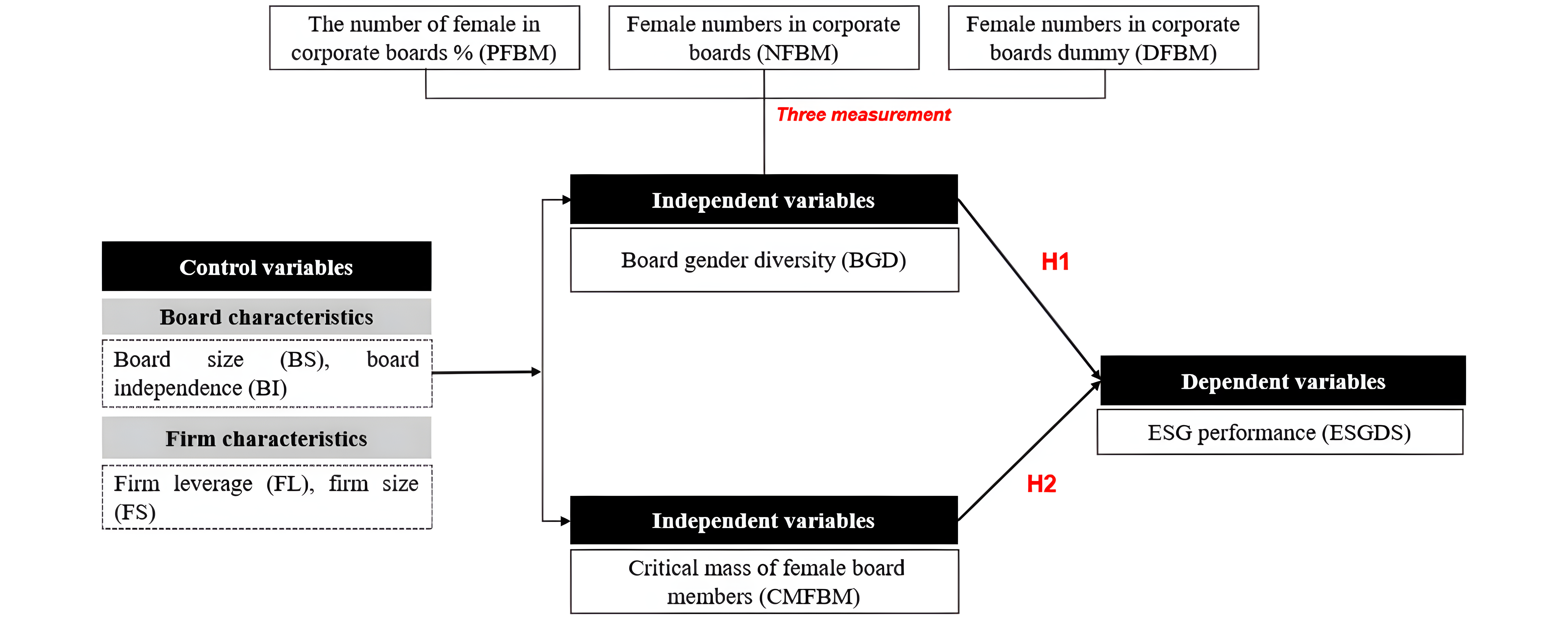
Research Model
Sustainable businesses need more than just a "representative seat" for women
From this research, the authors believe that companies should not view gender diversity on the board of directors merely as a formal goal or a means to meet ESG standards. Instead, increasing the substantial participation of women in leadership can help businesses improve governance quality and enhance long-term ESG effectiveness.
The study also emphasizes that for women's voices to have a significant impact in the decision-making process, businesses need to create a governance environment that is sufficiently open and balanced, rather than just having one or two female members as representatives. The results of the "Critical Mass Theory" show that when there are three or more female members on the board of directors, the positive impact on ESG becomes significantly stronger.
Additionally, the authors believe that promoting gender equality in corporate governance in Asia still faces many challenges due to cultural differences, social biases, and women's access to leadership positions. Therefore, coordination among businesses, policymakers, and society is needed to create conditions for women to participate more in senior management positions, thereby moving toward a more sustainable and balanced development model in the long term.
The research has indirectly contributed to SDG 5, 8, and 16. View the full research paper “Board Gender Diversity and ESG Performance: The Existence of Critical Mass Theory” HERE
The authors: Nguyen Tran Ngoc Minh, Mai Anh Thu, Le Duc Phat - University of Economics.
This article is part of the Green Research Community series with the message “Research Contribution for UEH Living Lab Green Campus” UEH sincerely invites the community to follow the next Green Research Community newsletter.
|
*To create maximum conditions for the development of the “UEH Green Researcher Community” members of the community will be able to attend scientific research methods classes related to the topics of Living Lab and Green Campus. Additionally, upon meeting the standards, the research team will receive a certificate from the UEH Sustainable University Project Board and financial support for a standard-compliant project. |
More Information:
SDG 5 – Gender Equality focuses on eliminating all forms of discrimination, violence, and injustice against women and girls, while promoting equal opportunities in education, employment, and leadership. Gender equality not only benefits women but also serves as a foundation for building a just society, fostering economic growth, and strengthening community cohesion.
SDG 8 – Decent Work and Economic Growth focuses on building an inclusive economy that generates quality, fair, and sustainable jobs for all. This is not only about driving GDP growth but also about improving working conditions, expanding opportunities for youth and women, encouraging innovation, and developing businesses that integrate social responsibility.
SDG 16 – Peace, Justice, and Strong Institutions centers on building peaceful societies, reducing violence and conflict, and ensuring equal access to justice for all. It also promotes transparent, accountable, and effective institutions that build public trust, thereby strengthening the foundation for sustainable development.
News, photos: UEH Green Campus Project, UEH Youth Union - Student Association, UEH Communications and Partnership Development Department
Voiceover: Thanh Kieu

