




10/08/2026
Share

Nature can be considered the foundation of life, yet forests are shrinking, land is gradually degrading, and biodiversity continues to be threatened by climate change and human activities. In pursuit of Sustainable Development Goal 15 (SDG 15 - Life on Land), UEH not only promotes education, research, and environmental initiatives, but also spreads the responsibility of conserving terrestrial ecosystems and biodiversity. In this week’s Green Monday Series, let us explore SDG 15 and UEH’s efforts to protect life on land.
Forests currently cover about 31% of the Earth’s land area and provide habitat for more than 80% of terrestrial animals, plants, and insects. However, biodiversity is declining at a rate unprecedented in human history. Approximately 20% of the world’s land has been degraded, increasing the risk of species extinction, contributing to greenhouse gas emissions, and making ecosystems more vulnerable to climate change and natural disasters. Although many countries have expanded protected areas and strengthened long-term forest management, deforestation remains a serious concern. Around 1 million animal and plant species are facing the risk of extinction, while freshwater species and plants are under growing pressure from pollution, overexploitation, habitat loss, and climate change.
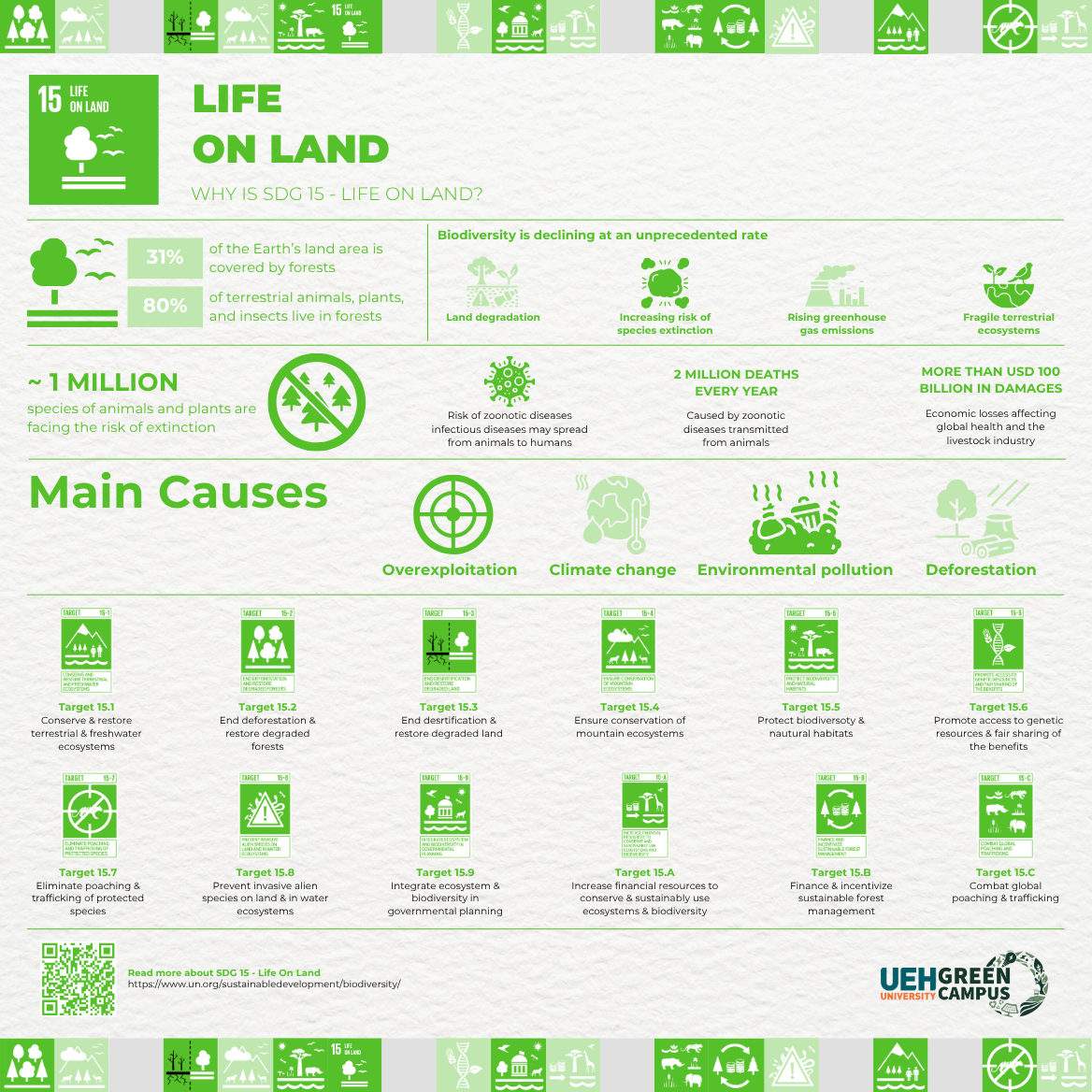
The decline of nature is not only an environmental issue but also directly affects human health and livelihoods. The expansion of intensive farming, rising demand for animal protein, wildlife exploitation, and the climate crisis have increased the risk of zoonotic diseases, as highlighted by COVID-19. Every year, about 2 million people die from diseases transmitted from animals, particularly in low- and middle-income countries. These outbreaks also cause severe damage to the livestock sector and push hundreds of millions of farming households into poverty. Over the past two decades, zoonotic diseases have caused more than USD 100 billion in economic losses worldwide, demonstrating that protecting ecosystems and biodiversity is also an investment in public health, food security, and the sustainable development of humanity.
In pursuing SDG 15, UEH approaches the conservation of terrestrial ecosystems not merely as an environmental activity but as part of a broader sustainable development strategy integrated with education, research, operations, and community engagement. Through the Green University Regulations, UEH has implemented mandatory regulations on tree protection, expanded green spaces, and promoted land use practices that do not reduce biodiversity. These commitments have been translated into ecosystem restoration actions, including a forest restoration program at Tràm Chim National Park, contributing to wetland recovery and the protection of endangered wildlife. UEH also strengthens collaboration with local communities and external partners through agroforestry projects in Sóc Trăng, research on improving soil health and conserving agricultural biodiversity, and policy forums such as the National Land Conference 2024 to develop sustainable land management solutions for the Mekong Delta.
In addition, UEH promotes SDG 15 through education, research, and pollution control across its operations. UEH has actively organized scientific conferences, seminars, and community programs on sustainable agriculture, ecotourism, and ecosystem education, helping spread knowledge about land, forest, and biodiversity conservation among students and the wider community. UEH also supports research and communication for species listed in the IUCN Red List, encouraging academic projects aimed at conserving threatened species such as the red-crowned crane. In its operations, UEH has implemented 100% waste management in accordance with regulations, operated water treatment systems that meet national standards, reduced single-use plastics at events, replaced cleaning chemicals with environmentally friendly products, and prioritized the use of native plant species. From campus to community, from policy to practice, UEH is gradually contributing to ecosystem restoration, biodiversity protection, and the creation of a future in which humans and nature coexist harmoniously.
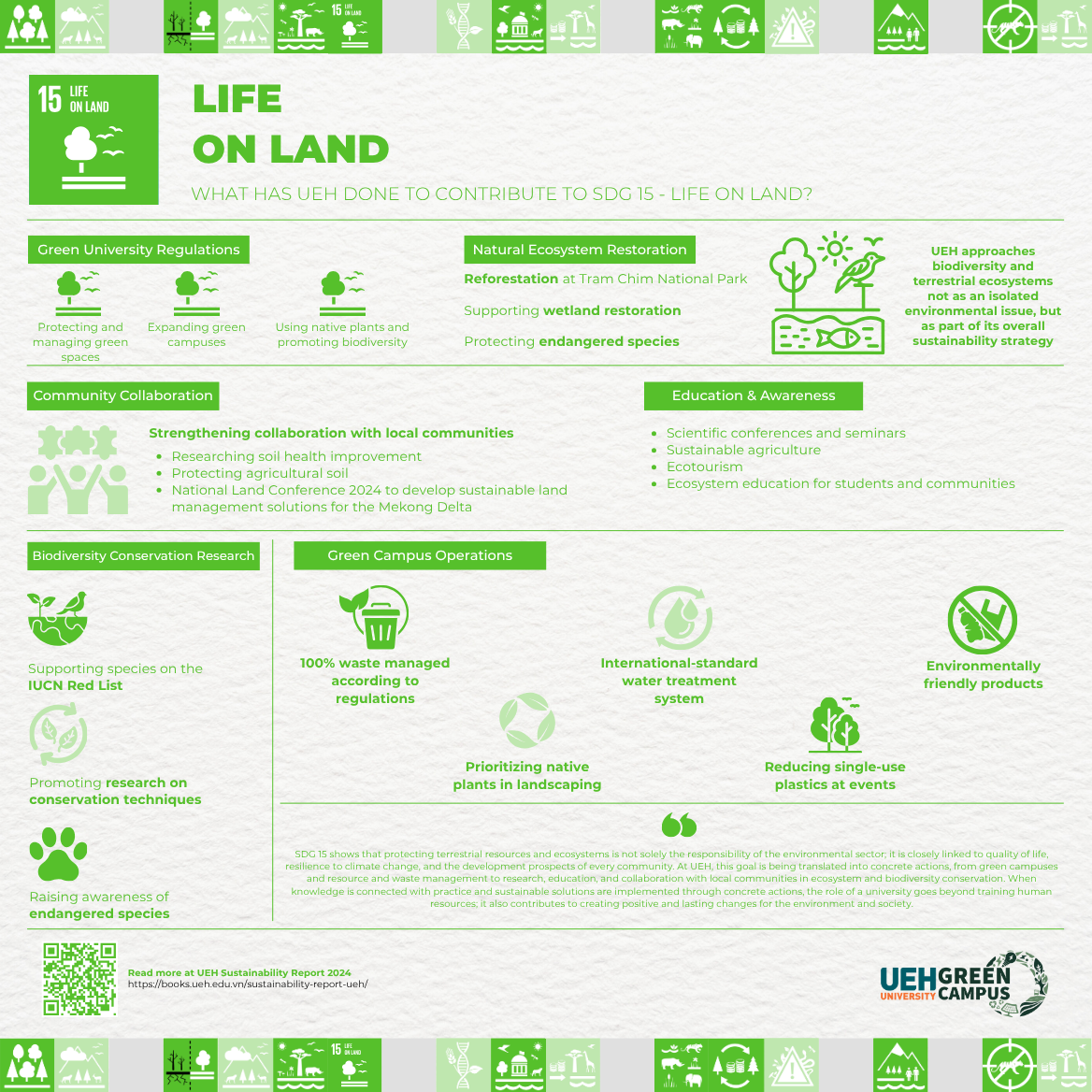
Infographic of UEH's contributions to SDG 15 - Life on Land
SDG 15 shows that protecting terrestrial resources and ecosystems is not solely the responsibility of the environmental sector; it is closely linked to quality of life, resilience to climate change, and the development prospects of every community. At UEH, this goal is being translated into concrete actions, from green campuses and resource and waste management to research, education, and collaboration with local communities in ecosystem and biodiversity conservation. When knowledge is connected with practice and sustainable solutions are implemented through concrete actions, the role of a university goes beyond training human resources; it also contributes to creating positive and lasting changes for the environment and society.
|
What can we do to contribute to SDG 15?
|
This article was prepared with reference to:
1. UEH Sustainability Report 2024: https://books.ueh.edu.vn/sustainability-report-ueh/
2. SDG 15 - Life on Land: https://www.un.org/sustainabledevelopment/biodiversity/
Additional Information:
UEH Green Campus - Green Monday Series is a communication activity series under the UEH Green Campus Project, posted every Monday to start the week with positive energy and encourage a green lifestyle by providing knowledge, updating news, sharing inspiring stories about environmental protection and sustainable development.
News and photos: UEH Green Campus Project