






15/06/2026
Share

Is the energy transition merely a macro-level problem reserved for nations or large corporations? In reality, according to strategic reports from the International Renewable Energy Agency (IRENA), in the face of climate change, adopting clean energy is a shared goal requiring the collaboration of organizations of all sizes. In response to Global Wind Day (June 15) and the United Nations' Affordable and Clean Energy goal (SDG 7), University of Economics Ho Chi Minh City (UEH) is gradually optimizing energy consumption across its campuses, proving that sustainable solutions can be effectively implemented and managed right from the classroom.

The Nature of Renewable Energy from an Atmospheric Science Perspective
According to the standardized definition by the International Renewable Energy Agency (IRENA), renewable energy is derived from continuous natural processes with an infinite capacity for self-replenishment, typically including sunlight, wind, tides, and geothermal heat.
Within the ecological structure, these energy sources do not exist in isolation. According to technical analysis documents from the World Meteorological Organization (WMO), wind and solar energy share a close physical connection. Wind is essentially a byproduct of the uneven absorption of solar radiation across different surfaces (land and ocean), which creates disparities in temperature and atmospheric pressure. The movement of air masses from high-pressure to low-pressure areas generates the kinetic energy of wind.
Consequently, WMO research indicates that the application of wind turbines or photovoltaic systems shares a common essence: harnessing natural resources to reduce reliance on fossil fuels, thereby helping to control greenhouse gas (GHG) concentrations in the atmosphere.
The Wind Power Landscape in Vietnam: Leveraging Geographical Advantages in the Energy Transition
Boasting a long coastline and ideal wind speeds, Vietnam's technical wind power potential is estimated to be enormous, reaching up to 513,360 MW. However, as of 2023, the installed capacity has only reached approximately 5,888 MW, accounting for about 6% of the national power capacity. The gap between potential and actual exploitation reveals massive room for growth, which is being materialized through strategic shifts in three key ecological regions:
- South Central Coast (Large-scale renewable energy hub): Ninh Thuan and Binh Thuan are not only pioneering provinces but are genuinely shaping up to be the clean energy "capitals" of the country. Notably, offshore spaces are being awakened with proposals for mega-projects like La Gan in Binh Thuan, which has an expected total capacity of 3,500 MW—estimated to supply energy for about seven million households;
- Mekong Delta (Tidal and nearshore exploitation strategy): Capitalizing on the unique coastal mudflat topography, provinces like Tien Giang, Tra Vinh, and Bac Lieu are robustly developing nearshore wind projects. A series of key projects have commenced operations, such as Tan Phu Dong 1 (100 MW), Dong Hai 1 (100 MW), and the Bac Lieu 1&2 cluster (99.2 MW). This seaward shift is driven by efficiency considerations: while onshore turbine capacity factors hover around 35%, offshore turbines can reach up to 50% thanks to stronger and more stable winds;
- Central Highlands (Optimizing inland spaces): Complementing coastal projects, the Central Highlands leverages its high-altitude terrain and vast land bank to develop onshore wind farms. A prime example is the Ea Nam project cluster in Dak Lak, operational since 2021 with an impressive capacity of 400 MW. These projects not only solve the puzzle of diversifying supply sources but also alleviate pressure on the regional power transmission grid.

Reference: Assessment of Vietnam's offshore wind energy technical potential
Global Energy Strategy and Empirical Evidence at UEH
To materialize the roadmap of reaching Net Zero emissions by 2050 under the Paris Agreement on climate change, the global economic system is accelerating its transition to low-carbon consumption models. The United Nations' guiding framework on Sustainable Development Goals emphasizes that ensuring access to Affordable and Clean Energy (SDG 7) is a prerequisite for maintaining macroeconomic stability and social development.
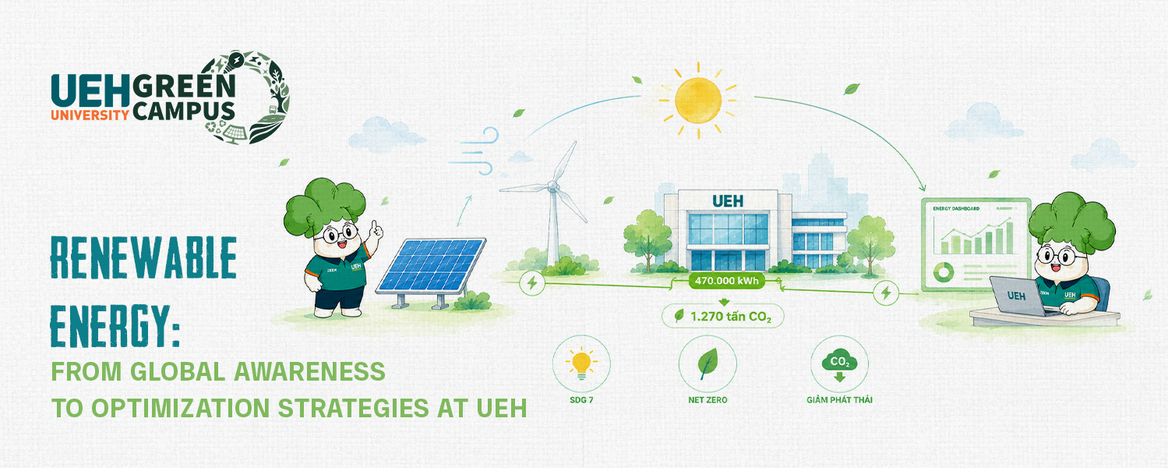
Integrating into this broader trend, UEH has materialized this goal through its Living Lab model. According to extracted data from UEH’s internal energy management report, rooftop solar power systems at campuses A, B, N1, and N2 have recorded an output of 470,000 kWh of clean electricity.
This alternative energy source directly helps the university cut an estimated 1,270 tons of CO2 equivalent in indirect emissions from energy consumption (Scope 2). This serves as empirical data demonstrating UEH's efforts in translating the strategic objectives of SDG 7 into concrete action indicators within the campus environment.
Individual Responsibility within the Internal Energy Management Framework
The effectiveness of technological solutions can only be truly optimized when operated in sync with the community's resource consumption culture. Based on recommendations from the UEH Green Campus Project task force, every individual is a vital link in the energy-saving process by practicing the following principles:
- Optimizing natural resources: Proactively utilize natural lighting and ventilation in open spaces before resorting to artificial climate control systems;
- Managing electrical appliances: Strictly adhere to the rule of turning off lighting systems, fans, and projection equipment when not in use or upon leaving study and workspaces;
- Reducing system loads: Opt to use the stairs for short distances to help manage the energy consumption pressure on the internal elevator system.
Discipline and self-awareness in adjusting individual resource consumption behaviors are core elements in maintaining the sustainability of operational infrastructure, contributing practically to the university's collective climate change response strategy.
#GlobalWindDay #UEHGreenCampus #RenewableEnergy #SDG7 #NowForClimate #NetZero
News and photos: UEH Green Campus Project
