






30/06/2026
Share

Where do we position our role in the effort to protect the ocean? In reality, marine conservation does not stop at individual plastic waste reduction campaigns. Faced with the complex changes of global ecology, protecting the ocean has now become an interdisciplinary strategic governance challenge, requiring systemic solutions based on technology and data.
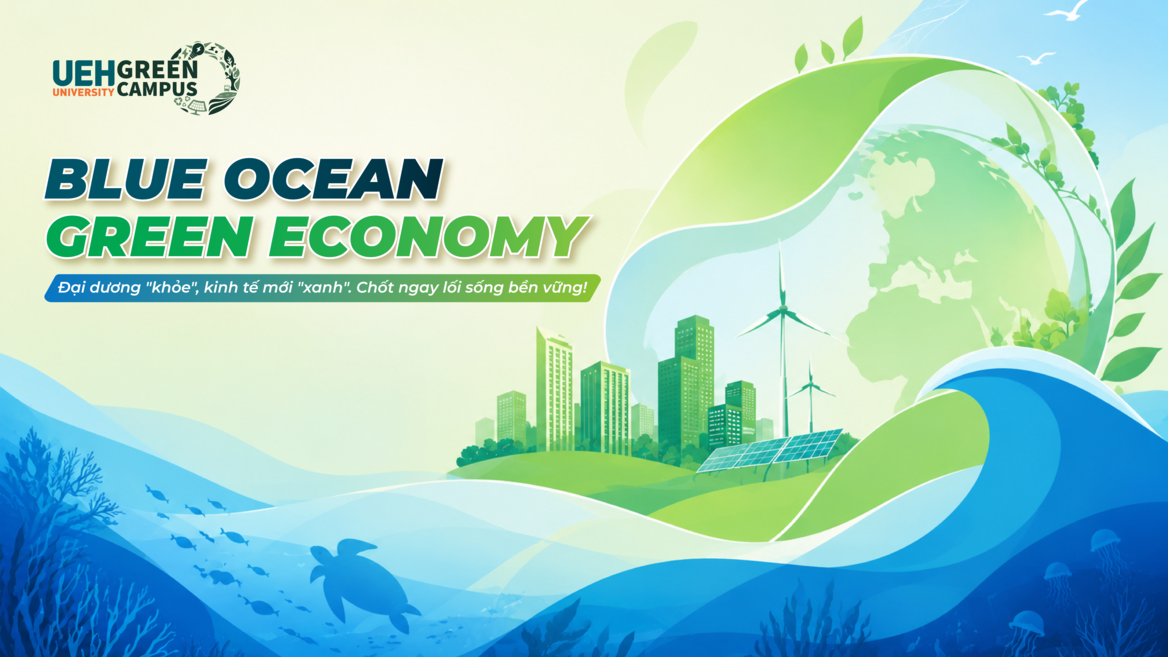
The Inevitable Shift to the Blue Economy
According to a report by the Organization for Economic Co-operation and Development (OECD), ocean-related economic sectors contribute approximately 1.5 trillion USD annually to global GDP. In Vietnam, with over 3,260 km of coastline, the marine economy has always been a pillar shaping the nation's development. However, overexploitation, microplastic pollution, and risks from illegal, unreported, and unregulated (IUU) fishing are pushing marine ecosystems to their limits.
To resolve the conflict between growth and conservation, Resolution 36-NQ/TW of the Party Central Committee set forth the strategy for the sustainable development of Vietnam's marine economy, directing a robust shift toward the Blue Economy model. This transition demands high-quality human resources capable of integrating digital technology into marine spatial planning and ecological impact assessments.
The Ministry of Education and Training's Orientation on Ocean Technology
Adhering to Official Dispatch No. 3151/BGDĐT-KHCNMT of the Ministry of Education and Training on promoting the integration of content related to climate change response and marine ecosystem conservation, the University of Economics Ho Chi Minh City (UEH) is gradually shaping its Ocean Technology research capabilities.
In the lecture halls, environmental governance thinking is quantified through the application of Artificial Intelligence (AI), the Internet of Things (IoT), and Big Data. Students are encouraged to solve practical problems: applying algorithms to analyze coral reef recovery rates or using data monitoring systems to track the risks of microplastic leakage from urban logistics chains into the sea. Collecting and processing raw data helps learners develop sharp problem-solving mindsets, contributing scientific foundations to conservation efforts.
Expanding Research Space through the Strategy to Build UEH NEXUS Nha Trang Campus
The geographical distance of an urban-centered university is being gradually eliminated through the 2026 strategic orientation: Putting the UEH Global Hub space in Nha Trang (UEH NEXUS Nha Trang) into operation.
This facility is positioned not merely as a training space but also as a coastal Living Lab. It focuses on in-depth research on marine spatial planning, seaport logistics, and the sustainable marine economy. This infrastructure provides a field environment for students to observe ecological restoration models while incubating green startup projects aimed at the rational exploitation of local aquatic resources.
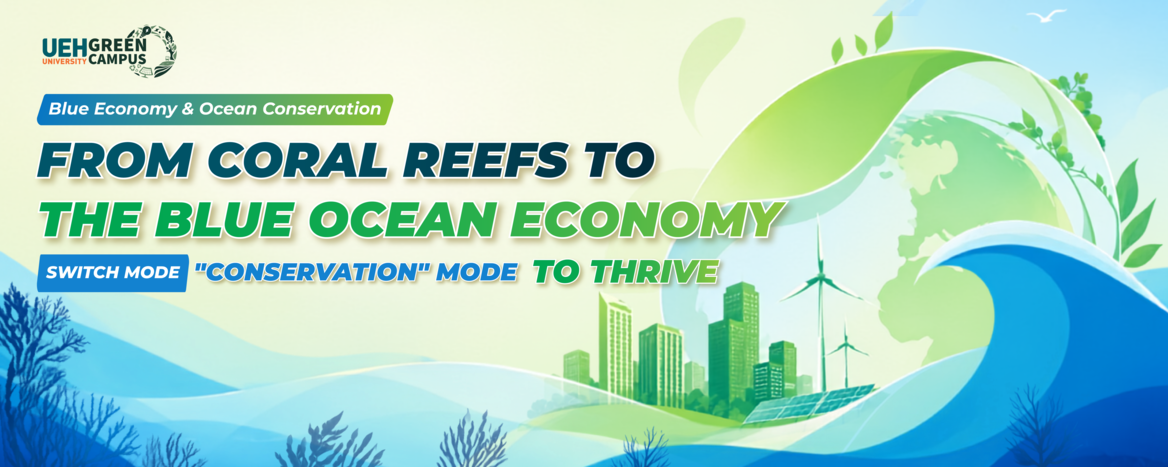
Conservation Begins with the Supply Chain on Land
All efforts to protect the ocean will be meaningless without responsibility from the mainland. Understanding this, the effort to protect biodiversity (SDG 14) is materialized by UEH right within its internal operating procedures through an Ethical Purchasing Policy.
The university establishes strict standards in its internal food supply chain: prioritizing seafood suppliers with transparent traceability systems and strictly rejecting products derived from destructive exploitation or violating IUU regulations. Although the initial impact scope lies within the campus ecosystem, this standard affirms the organization's serious commitment to utilizing consumer-orienting power to spread conservation awareness to its entire partner network and tens of thousands of learners.
Protecting the ocean is not a static slogan. Through data research capabilities, marine spatial planning orientation, and discipline in the supply chain, UEH is steadily equipping future generations with a comprehensive governance mindset, ready to accompany the nation's Blue Economy strategy.
News and photos: UEH Green Campus Project
