






17/06/2026
Share

Are land degradation and drought issues confined only to remote deserts? In reality, under the impact of global climate change, these ecological risks are emerging right in key economic zones. The World Day to Combat Desertification and Drought (June 17), established by the United Nations, serves not only as a warning but also to emphasize the importance of resource management solutions.
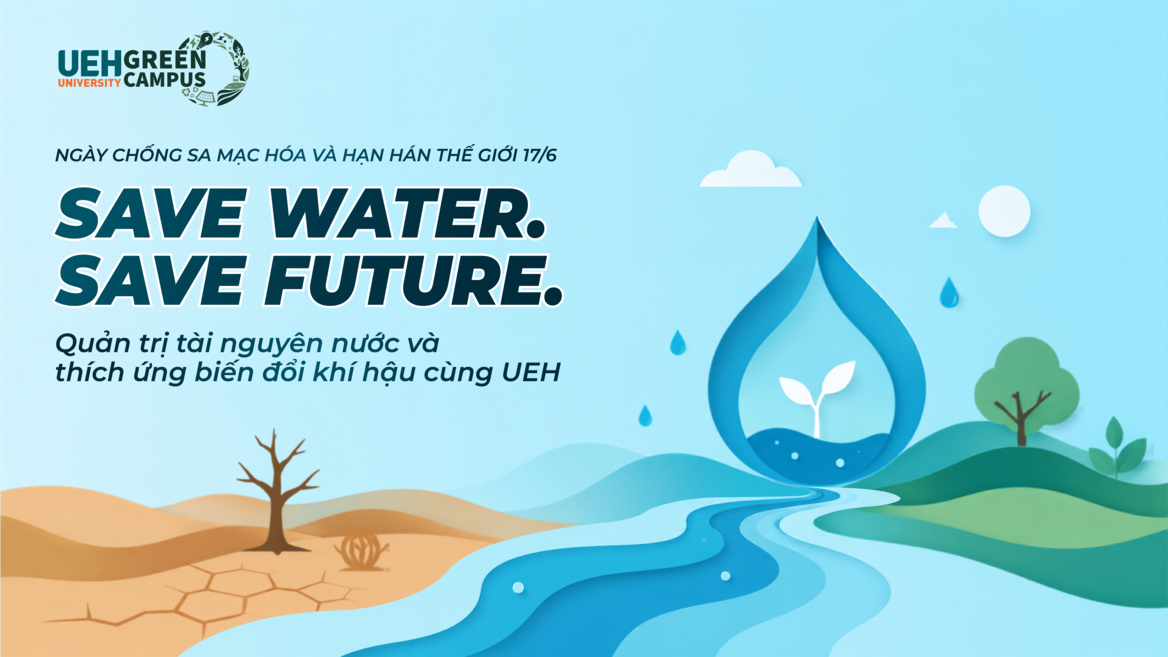
In 2026, the Secretariat of the UN Convention to Combat Desertification (UNCCD) launched the World Day to Combat Desertification and Drought with the theme “Rangelands: Recognize. Respect. Restore,” highlighting the critical role of land, rangelands, forests, water sources, and natural ecosystems in ecological security, food security, and humanity's sustainable development. Echoing this message, University of Economics Ho Chi Minh City (UEH) is gradually contributing to enhancing adaptive capacity in the Mekong Delta and promoting water conservation awareness right within its campuses.
Historical Milestone in the Fight Against Land Degradation (June 17)
June 17, 1994, marked a significant step in global environmental protection efforts when the UNCCD was officially adopted in Paris. To commemorate this event and raise public awareness, the UN General Assembly designated June 17 annually as the World Day to Combat Desertification and Drought.
This event was established to convey a scientific message: land degradation is not entirely an uncontrollable natural risk. Through synchronized resource management solutions, ecological planning, and cooperation from the national to the individual level, we can adapt to, control, and gradually restore ecosystem quality.
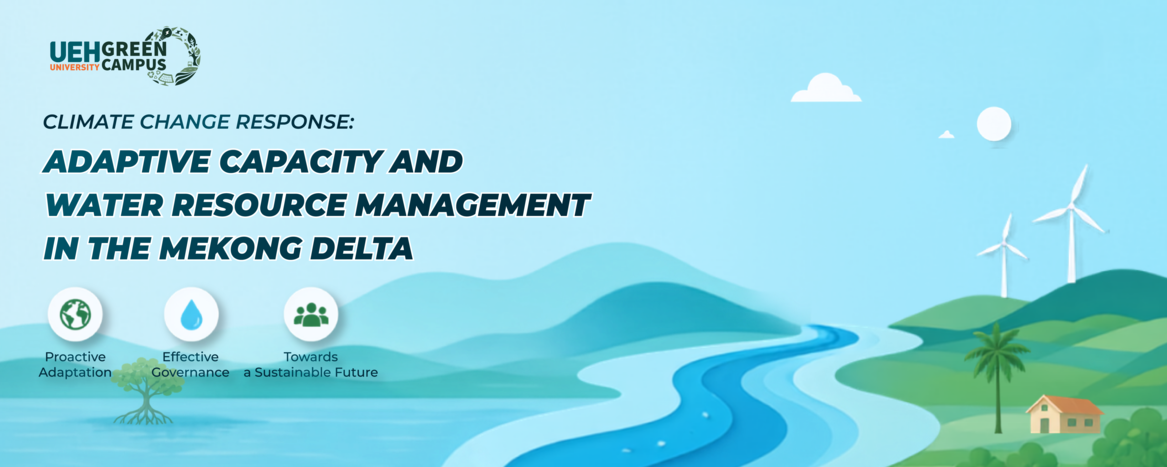
Identifying Ecological Risks and "Desertification" Challenges in the Mekong Delta
When mentioning "desertification" or "land degradation," we often picture arid, mountainous regions. However, declining soil quality and water depletion are posing direct challenges to the Mekong Delta in the forms of drought, saltwater intrusion, and soil acidification.
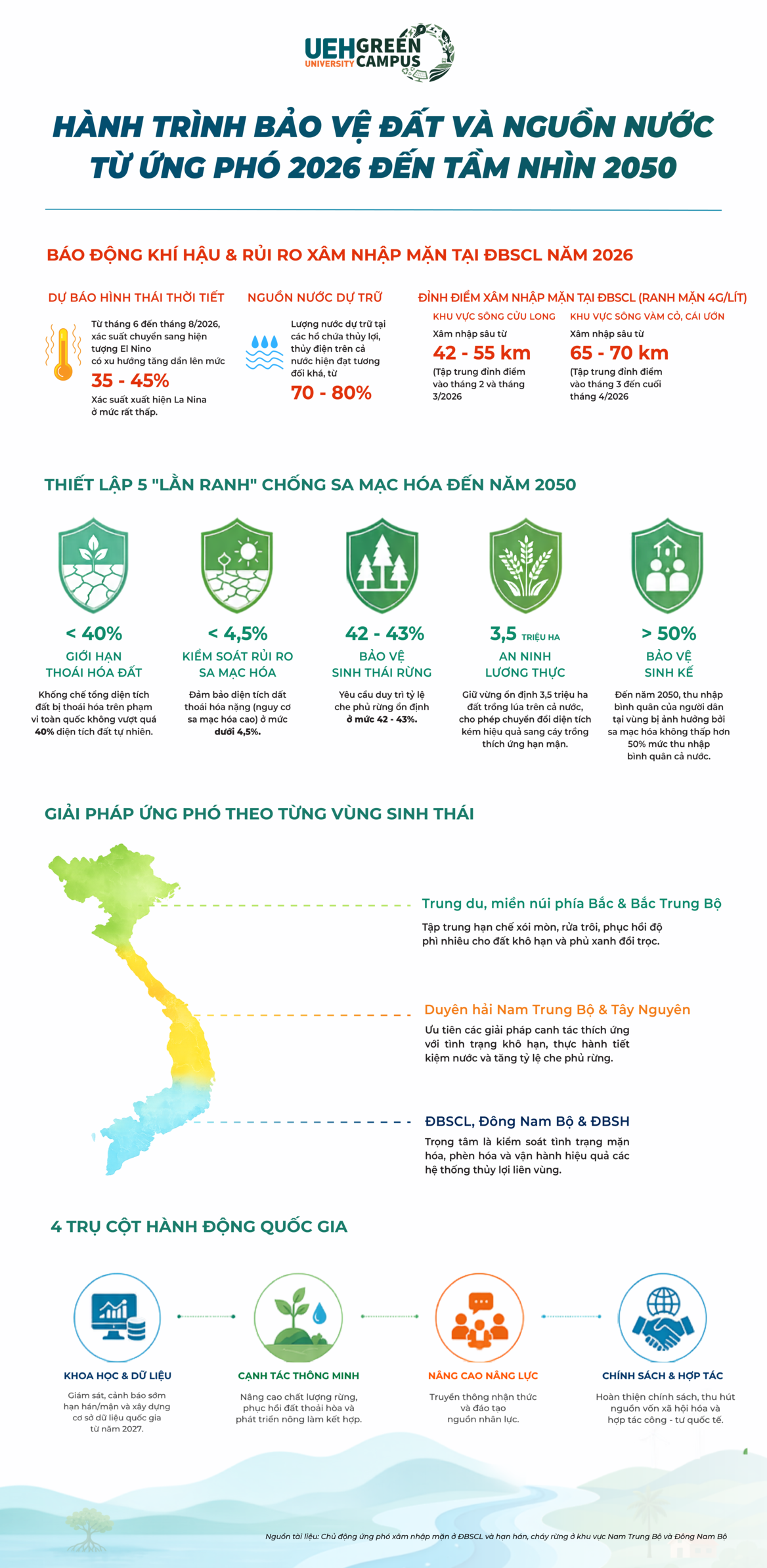
Facing this alarming reality, Vietnam has established a safety "boundary": by 2050, the total area of degraded land nationwide must not exceed 40% of the total natural land area, with severely degraded land (at high risk of desertification) kept below 4.5%.
In the Mekong Delta, prolonged drought combined with saltwater intrusion not only alters the ecological structure but also severely threatens food security, creating a difficult puzzle in safeguarding the nation's 3.5 million hectares of rice cultivation. Furthermore, this is a vital challenge to agricultural livelihoods. Coping with land degradation here is tightly linked to local economic development goals, striving to ensure that by 2050, the per capita income of people in desertification-affected areas is not lower than 50% of the national average.
Knowledge Transfer: Enhancing Local Adaptive Capacity
To cope with climate risks, solutions lie not only in technology but also in improving community management capacity. Leveraging its strength in applied research, UEH is steadily bringing sustainable management knowledge to affected areas.
Through the Vinh Long Campus and the Health and Agricultural Policy Research Institute (HAPRI), the university has deployed free knowledge-sharing and training programs for local farmers and cooperatives. The content focuses on sustainable farming and agricultural land management methods. These activities help equip the community with skills to maintain soil quality, optimize water resources, and gradually transition economic models to adapt to changing environmental conditions.
Raising Water Conservation Awareness Among Students
Alongside community outreach strategies, efforts to protect terrestrial ecosystems (SDG 15) and manage water resources (SDG 6) are also materialized through internal projects driven by students themselves. UEH students are demonstrating social responsibility through practical educational communication campaigns:
- "Save Water, Save Future" Project (Social Work Team): Focuses on analyzing the importance of clean water and orienting responsible consumption habits within the student community;
- "The Blue’s Call" Program (Student Support Group - SSG): Encourages and spreads practical solutions for water conservation in daily life;
- "Conserve Water, Sow Life" Campaign (Faculty of Law in collaboration with Dormitory 43-45 Nguyen Chi Thanh): Promotes water-saving principles directly in residential spaces, integrating them into student living regulations.
Protecting ecological life and water security does not require far-fetched resources; it begins with changing daily habits. Practical actions like tightly turning off faucets when not in use, proactively reporting leaks, and using water in measured quantities are direct contributions to the community's sustainable development.
#DesertificationAndDroughtDay #SaveWaterSaveFuture #TheBluesCall #UEHGreenCampus #SDG6 #SDG15
News and photos: UEH Green Campus Project
