




30/01/2026
Share

Keywords: sustainable behavior in public bicycle services, ethical norms, impacts on sustainable behavior, sharing economy, perception of individual behavior.
As shared economy services become increasingly prevalent in Vietnamese urban life, public bicycles are not only a green transportation option but also reflect users' sustainable consciousness. From very ordinary behaviors – such as how people park, use, and maintain shared vehicles – a group of students from the University of Economics Ho Chi Minh City (UEH) conducted research to explain what is driving or hindering sustainable behavior in public bicycle services in Vietnam.
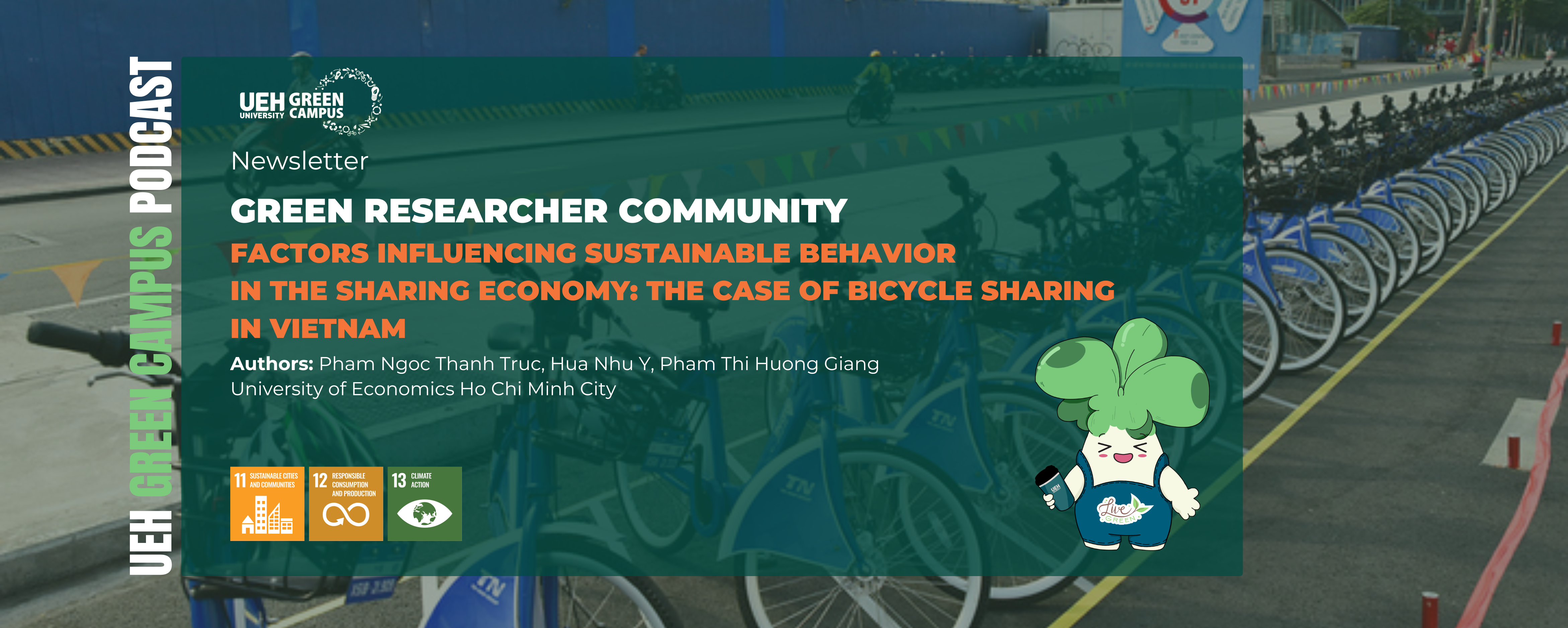
The development of public bicycle models in Vietnam is happening in parallel with the trend of the sharing economy, where users can access services without owning assets. In the context of crowded urban areas and increasing demand for short-distance travel, public bicycles are seen as a convenient, cost-effective option that contributes to reducing traffic congestion. However, along with economic and environmental benefits, this model also places higher demands on the collective use of resources, as the behavior of each individual not only affects the quality of service but also impacts the long-term sustainability of the system's operation.
The silent drivers shaping users' sustainable behavior
When participating in public bike-sharing services, user behavior is not simply a matter of following regulations or acting on personal feelings. Behind each of those choices is the interwoven influence of the social environment, management mechanisms, and especially the users' perceptions.
*Law becomes the "benchmark" for behavioral consciousness
Government laws are considered a strong guiding factor for user behavior. Clear regulations and strict penalties help increase the sense of responsibility and discipline when using public bicycles. When users perceive the legal system as well-established and deterrent, they tend to comply better, from parking in designated areas to keeping their vehicles clean and safe during use.
*Company regulations: Do they support or unintentionally create barriers?
Beside the legal framework, the policies and regulations set by service providers also significantly impact user behavior. Mechanisms such as credit point systems, usage rules, or internal sanctions can contribute to guiding sustainable behavior. However, the study also suggests that if regulations become too restrictive or complex, users may feel pressured and lose motivation to engage with the service long-term, which could affect the level of sustained positive behavior in actual use.
*The weight of social moral norms
Beyond the framework of laws, ethical norms and perceptions of "appropriate" behavior within the community also play a significant role. When users witness positive behaviors like returning bikes to their designated spots or taking care of shared vehicles, they tend to agree, follow suit, and feel the need to act in accordance with the community. Conversely, unconscious behaviors are likely to create discomfort and remind each individual of their moral responsibility in a shared environment.
*Autonomy awareness – when users actively choose the right behavior
Another prominent factor comes from within each individual: the feeling of autonomy in behavior. When users are aware that they are actively choosing how to use a service – rather than acting under pressure or orders – they tend to behave more sustainably. Compliance with regulations, using vehicles for their intended purpose, and avoiding causing inconvenience to others are not only obligations, but have become a conscious choice consistent with personal values.
*Cognitive ability – understanding correctly to act correctly
The study also highlights the role of cognitive ability in shaping sustainable behavior. When users clearly understand the consequences of violating regulations and recognize the difference between appropriate and harmful behavior, they tend to make more cautious decisions. Good awareness not only helps users avoid mistakes but also proactively maintain positive behaviors during their public bike service experience.
*A sense of belonging – when every action isn't just your own
The final factor mentioned is the sense of relevance and connection to the user community. When individuals perceive that their behavior affects others – and vise versa – they tend to adjust their actions to align with common norms. Feeling "part of a collective" makes users more aware of their responsibility to maintain the service sustainably, while also encouraging the spread of positive behaviors within the public bike-sharing community.
Sustainable behavior is not just a personal choice, but the foundation for long-term service operation
Sustainable user behavior in public bike-sharing services is not solely driven by individual awareness, but is shaped within a context where policy, businesses, and the community interact with each other. Therefore, developing a sustainable sharing economy model cannot rely solely on the self-awareness of users, but requires the coordination of multiple stakeholders.
First, for government agencies, research shows that the legal framework and the strictness of enforcement play a crucial role in shaping user behavior. Clear regulations on the use of public property, appropriate penalties for violations, and public awareness campaigns on the benefits of sustainable development can help users develop a greater sense of responsibility when using the service. Beyond sanctions, combining community outreach and education on protecting common assets is also considered a necessary supplementary factor to reinforce positive behavior in the long run.
Second, for businesses operating services, research suggests that the design of internal regulations and incentive mechanisms can directly impact user experience and attitudes. Instead of solely focusing on restrictive measures, businesses can establish credit point systems, reward and recognition policies, or other forms of positive reinforcement to stimulate voluntary motivation. When users feel that sustainable behavior provides real value to them, they tend to be more engaged with the service and maintain appropriate usage habits throughout their experience.
Thirdly, from the perspective of users and the community, the study emphasizes the role of intrinsic motivation, autonomy, and a sense of social connectedness. When individuals understand the impact of their behavior on other users and feel they are part of a collective sharing resources, they tend to adjust their actions in a more civilized and responsible manner. Therefore, promoting positive stories, spreading images of proper service usage, or building a community of conscious users will contribute to strengthening the sustainable cultural foundation of the public bicycle model.
The research paper has indirectly contributed to SDGs 11, 12, and 13. See the full research paper “Factors influencing sustainable behavior in the sharing economy: The case of bicycle sharing in Vietnam” HERE
Authors: Pham Ngoc Thanh Truc, Hua Nhu Y, Pham Thi Huong Giang - University of Economics Ho Chi Minh City.
This article is part of the Green Research Community series with the message “Research Contribution for UEH Living Lab Green Campus” UEH sincerely invites the community to follow the next Green Research Community newsletter.
|
*To create maximum conditions for the development of the “UEH Green Researcher Community” members of the community will be able to attend scientific research methods classes related to the topics of Living Lab and Green Campus. Additionally, upon meeting the standards, the research team will receive a certificate from the UEH Sustainable University Project Board and financial support for a standard-compliant project. |
More Information:
SDG 11 – Sustainable Cities and Communities seeks to develop urban areas and communities that are resilient, safe, and sustainable by improving living environments, managing waste effectively, and ensuring access to basic services for all citizens. A sustainable city is not only about physical infrastructure but also about raising awareness and shaping residents’ behavior to protect their shared environment.
SDG 12 – Responsible Consumption and Production focuses on ensuring sustainable production and consumption patterns, thereby reducing pressure on natural resources, minimizing waste, and limiting environmental pollution. This goal emphasizes the importance of effective waste management, optimal use of resources, and promoting changes in consumer behavior at both individual and community levels, particularly through education and awareness.
SDG 13 – Climate Action calls for urgent measures to combat climate change and its adverse impacts by reducing greenhouse gas emissions, enhancing adaptive capacity, and raising public awareness. This goal goes beyond national-level policies and requires changes in individual and community behaviors in daily life, especially in areas directly linked to waste generation and management.
News, photos: UEH Green Campus Project, UEH Youth Union - Student Association, UEH Communications and Partnership Development Department
Voiceover: Thanh Kieu

