




28/06/2026
Share

Keywords: ESG; Financial performance; Listed companies; Southeast Asia; Sustainable development; Corporate governance; COVID-19; ROA (Return on Assets).
In recent years, ESG has increasingly appeared in corporate reports, investment decisions, and even long-term development strategies. But one question always arises: does ESG really help businesses operate more efficiently in terms of finance, or is it just a "nice commitment" to build an image? Especially in Southeast Asia, where businesses must race for growth while facing the pressure of sustainable development after COVID-19, this issue becomes even more noteworthy.
In search of empirical solutions, the study "Impact of environmental social governance on financial performance: A study of Southeast Asian listed companies" "conducted by the University of Economics Ho Chi Minh City (UEH) has analyzed data from 225 enterprises in 6 countries (2020 - 2022). The topic provides a clear lens on the true value of ESG, set against the backdrop of macroeconomic influences and the "shock" of COVID-19.
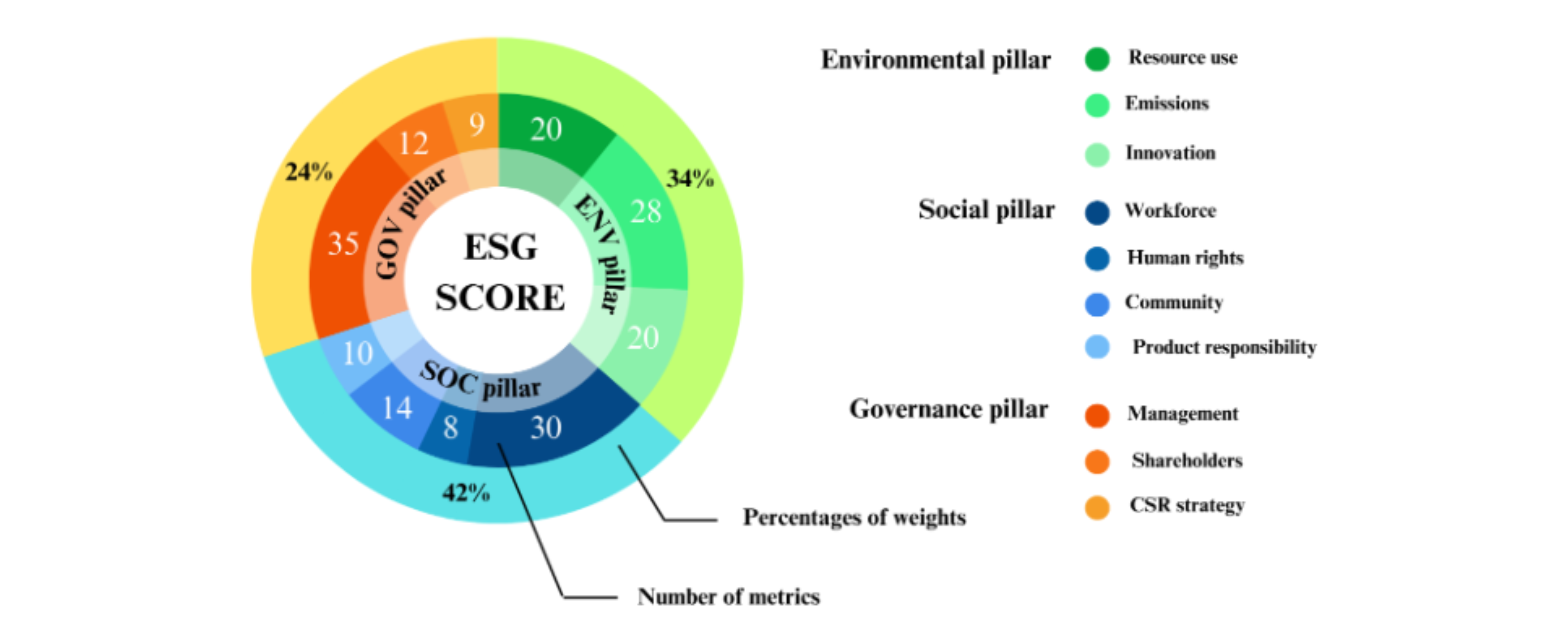
Before delving into the research results, it is essential to understand what ESG truly is and why it is increasingly regarded as a "new measure" for business development. ESG is a set of criteria for assessing the level of sustainable development based on three main aspects: Environmental, Social, and Governance. Instead of only looking at profits or growth rates, ESG also evaluates how companies use resources, control emissions, treat employes, contribute to the community, and maintain transparency in governance.
Currently, ESG is becoming an important trend in global corporate governance as more and more investors, financial funds, and customers view it as a criterion for assessing the sustainability of businesses. Among them, the social factor often accounts for a significant proportion of the total ESG score, alongside environmental criteria such as emissions or resource usage and governance criteria such as CSR strategy, shareholder rights, or management quality. This shows that businesses today are not only evaluated by their ability to generate profits but also by how they create value for society and the environment in the long term. However, whether ESG truly brings financial benefits to businesses, especially in Southeast Asia where the level of ESG implementation still varies significantly between countries, remains a question that needs to be verified.
So, does ESG really help businesses make more money, or is it just an "image boost"?
First, ESG does not seem to create immediate results, but it shows positive long-term impacts. Companies with better ESG scores in the previous year often achieve higher financial performance in the following year, measured by ROA. This shows that ESG is not merely about communication or social responsibility activities, but can create real value by enhancing corporate reputation, improving risk management, and increasing investor trust. In other words, ESG is more like a long-term investment rather than an "expense to incur."
Secondly, the scale of the business and operational capabilities also significantly impact financial performance. Businesses with larger scales and more efficient asset utilization often achieve more positive business results. This is quite understandable, as larger enterprises often have more resources to invest in technology, management, and ESG initiatives, while good asset turnover enables them to generate profits more efficiently from available resources.
Thirdly, not every factor pulls the business upwards. While GDP growth has a positive relationship with financial performance, COVID-19 has shown a quite clear opposite effect. When the economy grows well, market demand increases, and businesses have more opportunities to expand operations and improve profits. Conversely, the pandemic period caused many businesses to face supply chain disruptions, rising costs, and declining consumer demand, leading to a decrease in operational efficiency. This shows that the macroeconomic context still plays a significant role, even for companies heavily investing in ESG.
Fourth, a noteworthy signal is that ESG in Southeast Asia is gradually receiving more attention, but not yet uniformly. The average ESG score of businesses in the region has increased over the years, indicating that more and more companies are beginning to pay attention to sustainable development. However, the gap between countries remains quite large, reflecting that ESG in Southeast Asia is still in the process of transformation, where some businesses view it as a long-term strategy, while others are still in the initial stages.
What do businesses need to do with ESG to achieve sustainable development?
From the findings of the research, the authors believe that businesses in Southeast Asia should not view ESG merely as a "secondary criterion" or a tool for building brand image, but rather as a long-term investment strategy for financial effectiveness. Instead of solely focusing on short-term profits, businesses need to proactively integrate environmental, social, and governance factors into their operations, as the positive impact of ESG often takes time to become evident.
In addition, the research also emphasizes the role of transparency and the disclosure of ESG information. When businesses are more transparent about their environmental activities, social responsibilities, or internal governance, investors and stakeholders will have more grounds to assess the sustainability level of the business. This not only helps increase market confidence but can also improve long-term access to capital.
For policymakers, the authors suggest that there is a need to strongly promote ESG standards and build mechanisms to encourage businesses to implement ESG in a substantive manner, especially in the context of Southeast Asia, where there are still significant disparities between countries in the level of ESG adoption. Instead of viewing ESG as a compliance burden, transforming ESG into a competitive advantage can help businesses both enhance their resilience to crises and improve their long-term financial performance.
The research has indirectly contributed to SDG 8, 12, and 16. View the full research article "Impact of environmental social governance on financial performance: A study of Southeast Asian listed companies" HERE
Author: PhD Le Thanh Loan - Faculty of Economics - University of Economics Ho Chi Minh City.
This article is part of the Green Research Community series with the message “Research Contribution for UEH Living Lab Green Campus” UEH sincerely invites the community to follow the next Green Research Community newsletter.
|
*To create maximum conditions for the development of the “UEH Green Researcher Community” members of the community will be able to attend scientific research methods classes related to the topics of Living Lab and Green Campus. Additionally, upon meeting the standards, the research team will receive a certificate from the UEH Sustainable University Project Board and financial support for a standard-compliant project. |
More Information:
SDG 8 – Decent Work and Economic Growth focuses on building an inclusive economy that generates quality, fair, and sustainable jobs for all. This is not only about driving GDP growth but also about improving working conditions, expanding opportunities for youth and women, encouraging innovation, and developing businesses that integrate social responsibility.
SDG 12 – Responsible Consumption and Production focuses on ensuring sustainable production and consumption patterns, thereby reducing pressure on natural resources, minimizing waste, and limiting environmental pollution. This goal emphasizes the importance of effective waste management, optimal use of resources, and promoting changes in consumer behavior at both individual and community levels, particularly through education and awareness.
SDG 16 – Peace, Justice, and Strong Institutions centers on building peaceful societies, reducing violence and conflict, and ensuring equal access to justice for all. It also promotes transparent, accountable, and effective institutions that build public trust, thereby strengthening the foundation for sustainable development.
News, photos: UEH Green Campus Project, UEH Youth Union - Student Association, UEH Communications and Partnership Development Department
Voiceover: Thanh Kieu

