


22/06/2026
Share

Inequality is not merely a gap in income; it also exists in the invisible barriers that limit access to education, employment, healthcare, and participation in social life. As millions of people around the world continue to face discrimination and unequal opportunities for development, promoting equality and inclusion has become a fundamental prerequisite for building a sustainable future. Through inclusive policies and comprehensive support for vulnerable groups, UEH is steadily advancing the implementation of SDG 10 - Reduced Inequalities within its academic community. This week's Green Monday Series invites readers to explore UEH's practical initiatives in fostering a fair, inclusive, and equitable educational environment.
Inequality remains one of the greatest challenges to sustainable development worldwide. It extends beyond income disparities to encompass differences based on gender, age, disability, race, ethnicity, religion, sexual orientation, and access to social resources and opportunities. Although the incomes of the poorest 40% of the population in many countries have grown faster than the national average in recent years, the long-term impacts of the COVID-19 pandemic have significantly slowed this progress. At the same time, the global refugee population has risen to 37.8 million people, primarily from countries such as Afghanistan, Venezuela, Syria, and Ukraine, placing additional pressure on social protection systems and humanitarian assistance efforts across the world.

Beyond economic disparities, discrimination continues to be widespread in many countries. Globally, one in five people has experienced discrimination based on characteristics protected under international human rights law, while this figure reaches 24.3% in the least developed countries. Women, persons with disabilities, people living in poverty, migrants, refugees, and individuals with lower levels of education are among those most severely affected. Young people aged 15-29 often encounter discrimination related to migration status, ethnicity, and sexual orientation, whereas older adults aged 60 and above are more likely to face barriers associated with health conditions, age, and disabilities. These inequalities not only diminish quality of life and hinder poverty reduction efforts but also contribute to broader social challenges, including crime, disease, and environmental degradation.
In line with its commitment to advancing SDG 10, UEH promotes equality and inclusion through equitable admissions policies, comprehensive support mechanisms, and the cultivation of a fair educational environment. In 2024, UEH welcomed 4,687 new students out of 7,805 admissions, including 41 international students from developing countries and 9 students with disabilities among a total student population of 29,902. UEH's admissions regulations are reviewed annually to ensure fairness, transparency, compliance, and alignment with the latest regulations issued by the Ministry of Education and Training. At the same time, UEH has implemented priority policies for vulnerable and underrepresented groups, including persons with disabilities, ethnic minorities, low-income households, women, the LGBTQ+ community, refugees, and non-traditional learners. To ensure equitable access to education, UEH's online admissions system integrates data on gender, economic background, geographical location, and priority categories to effectively monitor and support applicants. In 2024, ethnic minority students accounted for 5.54% of newly enrolled students (432 students), while students from low-income and disadvantaged households represented 2.17% (169 students). Female students made up 67.11% of new enrollments, complemented by priority admission bonus points ranging from 2.5 to 7.5 points for eligible policy beneficiaries in accordance with national regulations.
Beyond ensuring equal access to education, UEH has established a comprehensive support ecosystem for students and staff belonging to vulnerable groups. The University maintains anti-discrimination and anti-harassment policies alongside transparent complaint-handling mechanisms to safeguard the rights and well-being of its community members. For persons with disabilities, UEH has continuously improved campus accessibility through wheelchair ramps, elevators equipped with handrails, accessible restrooms, inclusive learning spaces, and bilingual accessibility guides. In addition, the University provides financial assistance, healthcare services, psychological counseling, career guidance, scholarships, and annual gifts for students with disabilities. In 2024, 25 scholarships valued at USD 500 each, sponsored by KEB Hana Bank, were awarded with a total funding amount of USD 10,000. Through academic mentoring programs, skills development initiatives, industry networking opportunities, and activities that promote diversity, equity, and inclusion, UEH continues to cultivate an educational environment where every individual is respected, empowered with opportunities for growth, and encouraged to realize their full potential.
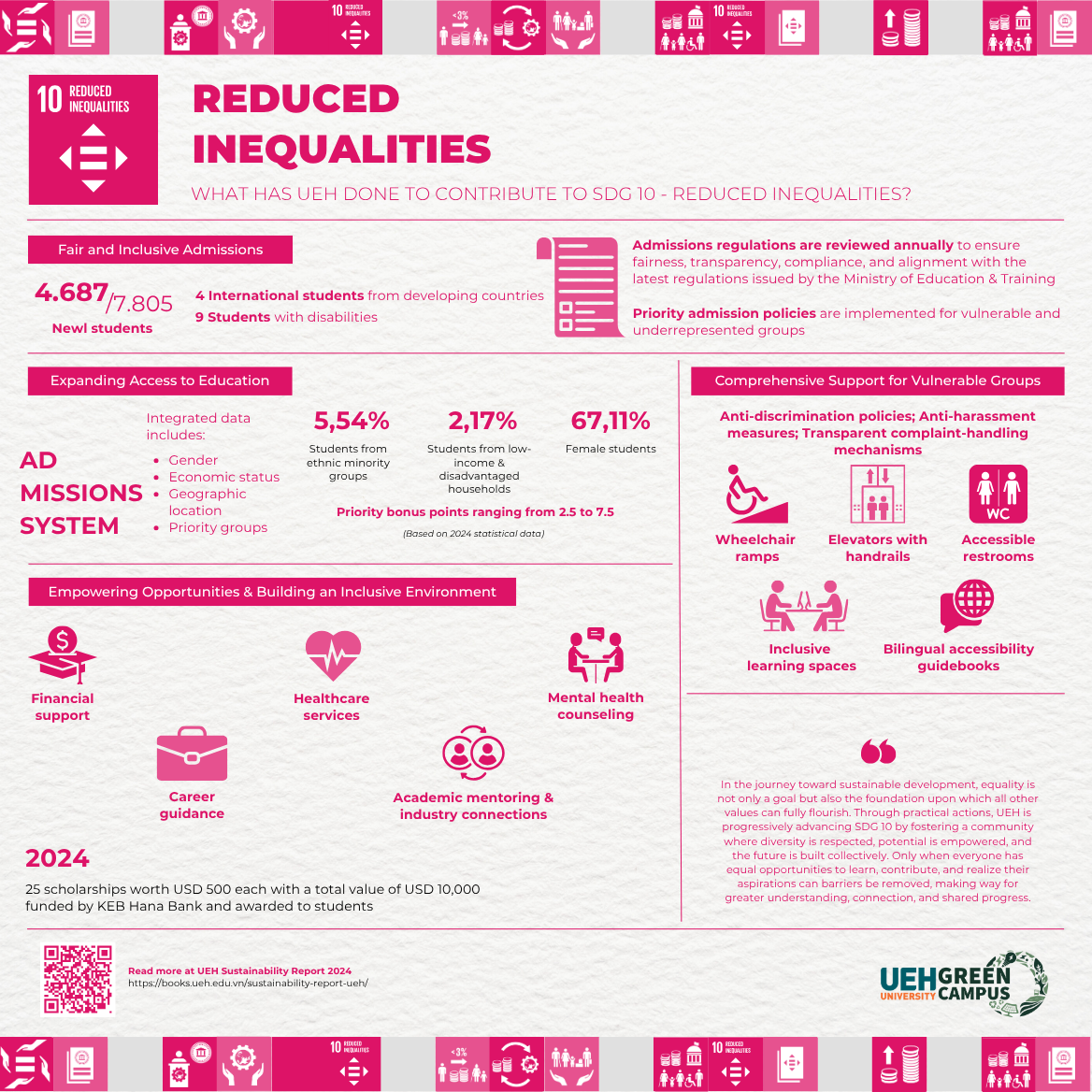
Infographic of UEH's contributions to SDG 10 - Reduced Inequalities
Within the broader vision of sustainable development, equality is not merely a goal to be achieved but the foundation upon which all other values can flourish. When every individual is given equal opportunities to learn, contribute, and reach their full potential, social divides gradually give way to understanding, connection, and shared progress. Through concrete actions in education, community engagement, and inclusive development, UEH is steadily advancing SDG 10, contributing to the creation of a community where differences are respected, potential is empowered, and the future is shaped collectively by everyone.
|
What can we do to contribute to SDG 10?
|
This article was prepared with reference to:
1. UEH Sustainability Report 2024: https://books.ueh.edu.vn/sustainability-report-ueh/
2. SDG 10 - Reduced Inequalities: https://www.un.org/sustainabledevelopment/inequality/
Additional Information:
UEH Green Campus - Green Monday Series is a communication activity series under the UEH Green Campus Project, posted every Monday to start the week with positive energy and encourage a green lifestyle by providing knowledge, updating news, sharing inspiring stories about environmental protection and sustainable development.
News and photos: UEH Green Campus Project